





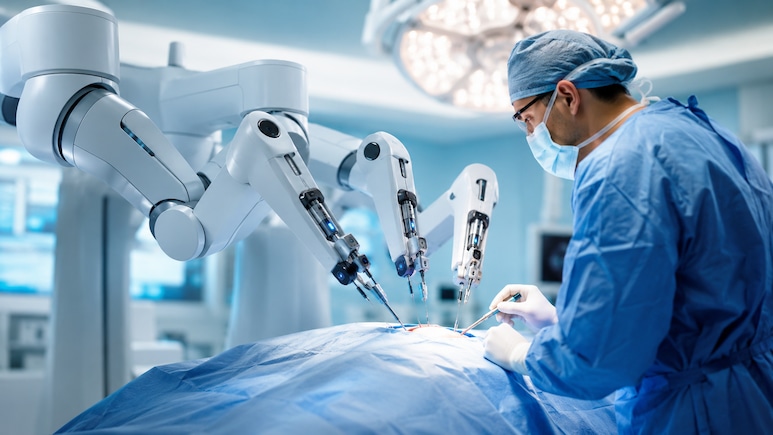
So when billionaire tech founder and the man behind xAI, SpaceX, and Tesla says that doctors, especially surgeons will become obsolete in three years, you can't help but sit up and take notice. Musk believes AI-powered humanoid robots will replace human surgeons and render medical school "pointless".
"Everyone will have access to medical care that is better than what the (US) President receives right now," he said earlier this year.
His prediction is that within three years, technologies like the Tesla Optimus robot will perform surgeries more precisely than humans and provide universal access to world-class healthcare at a fraction of the current cost. Robotic-assisted surgery is already widely used globally through systems such as Intuitive Surgical's Da Vinci platform, though these systems remain surgeon-controlled rather than autonomous.
-

-
 Neeru Dhanda Carried Homemade Churma To Asiad, Returned With Two Gold Medals
 -
 Inside The Mind Of Archer Kumkum Mohod, Who Dared To Challenge South Korea
 -
 "High Inflation Is Like Tax On Everyone": RBI Governor At NDTV World Summit
 -
 AI Agents To Outnumber Humans Soon? What Futurist Mike Walsh Told NDTV
 -
 This Delhi Boy Has 3 Michelin Stars. His Heart Still Goes To Rajindar Da Dhaba
 -
 Ashwini Vaishnaw Explains Semiconductor Complexity: 'Everything On This Tiny Nail'
 -
 Indian-Branded Mobile Phones By October 23, 2028, Says Ashwini Vaishnaw
 -
 AI Law In India Soon? What Ashwini Vaishnaw Said At NDTV World Summit
 -
 World's 1st AI Actor Tilly Norwood Was Asked If She Knew Hindi. A Conversation Followed
 -
 Iran's Supreme Leader's Representative Says India Can Play 'Big Role' In Middle East Peace
Musk said: "We've seen some advanced cases of automation, like Lasik, for example, where the robot just lasers your eyeball. Now, do you want an ophthalmologist with a laser? No."
There's no doubt about the fact that AI is disrupting medical science in a huge way from drug discovery to early diagnosis and detection. But to say it will replace doctors and surgeons by 2028 seems like a typical Elon Musk-ish long shot. While some surgeons do concede that in the years to come fewer people may need to go to medical school as it may be possible that one doctor is able to do the work of 10 with advanced technology, nobody is willing to agree that the profession or education itself is vanishing.
What Do Surgeons Say
Among surgeons and medical experts, there is deep skepticism about Musk's timeline and whether autonomous surgery can truly ever replace human judgement, intuition and patient interaction.
Dr Mohan Keshavamurthy, Principal Director - Renal Sciences, Fortis Hospitals, Bengaluru told NDTV: "In my opinion, robots cannot independently perform complex intracavitary or intra-abdominal surgeries, including delicate procedures involving organs such as the brain or kidneys. Every patient is unique, and surgical decision-making involves billions of possibilities that must be assessed and acted upon within split seconds. These decisions also depend on the surgeon's experience, judgement and skill - factors that cannot simply be replicated by algorithms."
Dr. Bharat Mody, Director & Chief Orthopaedic Surgeon, Welcare Hospital conceded that in diagnostics and prognostication, AI's role will indeed be massive and undeniable. Routine cognitive medical work will be significantly automated, and the physician workforce required for such tasks will shrink, he believes. Fewer people may need to go to medical school as one doctor may do the work of ten, but doctors becoming obsolete is not a possibility, Dr Mody added. "In surgery, the reality is far more sobering. The most advanced robots, even when paired with AI, cannot reliably grasp the individualised anatomy of a human being - in sickness or in health. True autonomous robotic surgery accounts for less than 0.0001% of surgical work globally. What is marketed aggressively as 'surgical robotics' today remains, in truth, a tool in the surgeon's hand and is driven more by commercial interest than clinical revolution.
Human touch and communication will always remain an essential part of healing, believes Dr Sanjay Singh, M.D. Paediatrics, Hill Candy Hospital. "Medical education is not just accumulation of knowledge and recall during treatment. A doctor needs hands-on training of various skills and procedures, which cannot be fully replaced by AI. If we can differentiate between treatment and healing,then we can understand Human vs AI," he said.
Globally too, there seems to be a consensus among doctors. Arthur Caplan, Bioethicist, NYU Grossman School of Medicine, for example, has publicly dismissed Musk's three-year timeline as "not credible," noting that surgery borders on art (trauma, burn repair, plastic surgery) and that proving robotic equivalence will require decades of comparative clinical trials.
Dr. Eric Topol, author of Deep Medicine, and a leading voice on AI in healthcare believes that AI's true gift to medicine is "bringing back the human touch." By letting AI handle the charts, notes, and diagnostics, doctors finally get time to actually look their patients in the eye, the exact opposite of replacing them with a humanoid.
Musk's three-year timeline may sound far-fetched to many in medicine and beyond, but his broader point that AI could radically increase the scale and efficiency of healthcare is already playing out and will likely only pick up more pace in the days to come.
Track Latest News Live on NDTV.com and get news updates from India and around the world

