





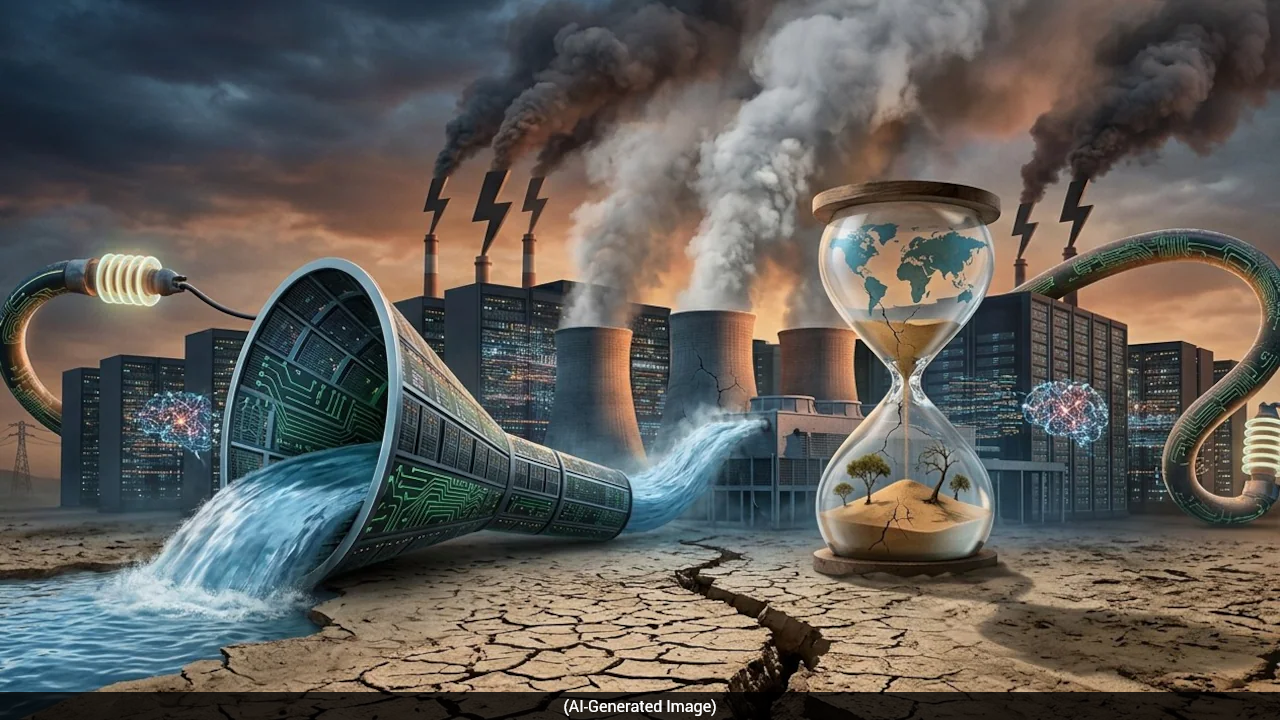
Artificial intelligence is often seen as a digital revolution, but a new United Nations University report warns that its growing environmental cost could soon become impossible to ignore. According to the latest study from the United Nations University Institute for Water, Environment and Health, the rapid expansion of AI could lead to an unprecedented rise in water consumption, energy demand and land use by the end of this decade.
The report estimates that data centres powering AI systems could consume enough water by 2030 to meet the basic domestic needs of 1.3 billion people. That figure is close to the number of people living across the entire African continent today.
Researchers say the public debate around AI has focused heavily on carbon emissions while overlooking another critical issue: water. Vast amounts of water are required to cool servers and support the electricity generation needed to run increasingly powerful AI models.
The United Nations University report also projects that AI-driven data centres could consume 945 terawatt-hours of electricity annually by 2030. That is nearly three times the combined annual electricity use of Pakistan, Bangladesh and Nigeria.
The UN-backed study argues that AI is not just a digital technology. It depends on a vast physical network of data centres, advanced computer chips, cooling systems and energy infrastructure, all of which leave significant environmental footprints.
Another striking finding is that everyday use of AI may be a bigger environmental burden than training the models themselves. Researchers estimate that daily interactions with AI account for around 80 to 90 per cent of total energy demand. Tasks such as generating images and videos consume far more energy than simple text-based requests.
The United Nations University and the UN are not calling for a halt to AI development. Instead, they are urging governments, technology companies and users to adopt a more responsible approach that considers water, land and energy impacts alongside innovation.
As AI becomes part of everyday life, the report raises a pressing question: can the world afford the hidden environmental cost of its most powerful technology?
Track Latest News Live on NDTV.com and get news updates from India and around the world

