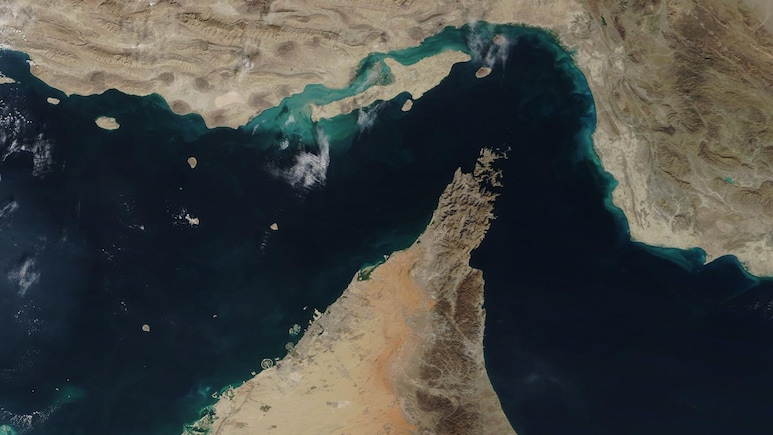
Disruption of the Strait of Hormuz has exposed a potential structural risk for global energy markets - an overreliance on five maritime passages that carry an average 60 million barrels of crude oil daily and affect energy flow between Europe and Asia.
Together, they form what can be described as a 'five straits' system.
The red flag began flying Feb 28 after the US-Israel war on Iran and Tehran's subsequent blockade of the Hormuz, which is a 33km-wide passage linking the Persian Gulf to the Indian Ocean and ships 20-25 per cent of global seaborne crude.
Iran exerts near-complete geographical control over the strait.
Anti-ship missiles stationed along Iran's southern coast, and naval drones fired from the 'underwater missile city' on Qeshm Island, threaten any commercial ship or tanker navigating the entry or exit tracks, each of which is only 3.2 km wide.
Traffic through the strait slowed to a crawl after the blockade.
This weaponisation alerted the world to the 'five straits' pain point.
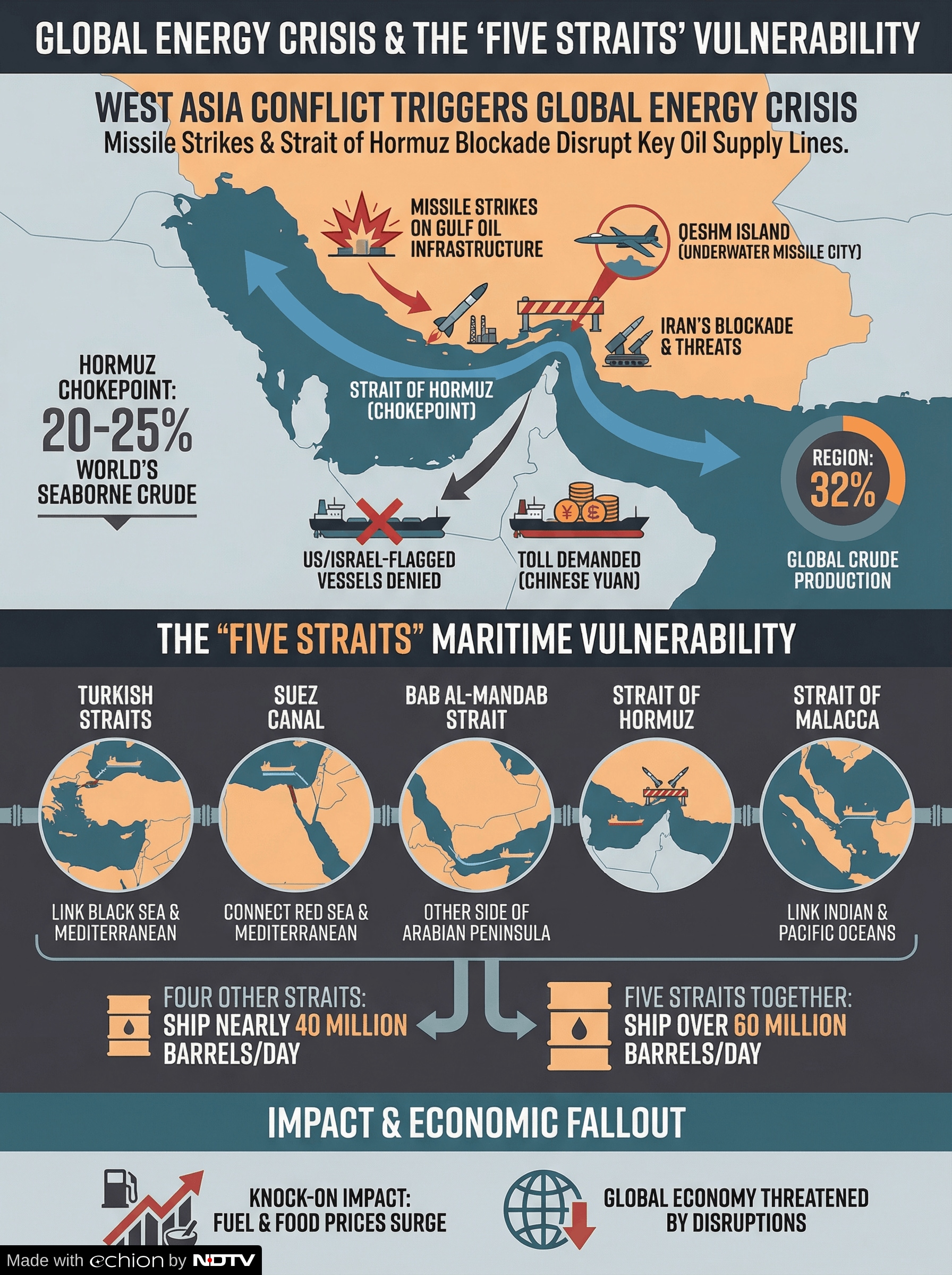
The others are the Bab al-Mandab in the Arabian Peninsula; the Strait of Malacca that links the Indian and Pacific oceans; the Suez Canal linking the Red Sea to the Mediterranean, and the Turkish straits that link the Black Sea to the Mediterranean.
The five straits problem
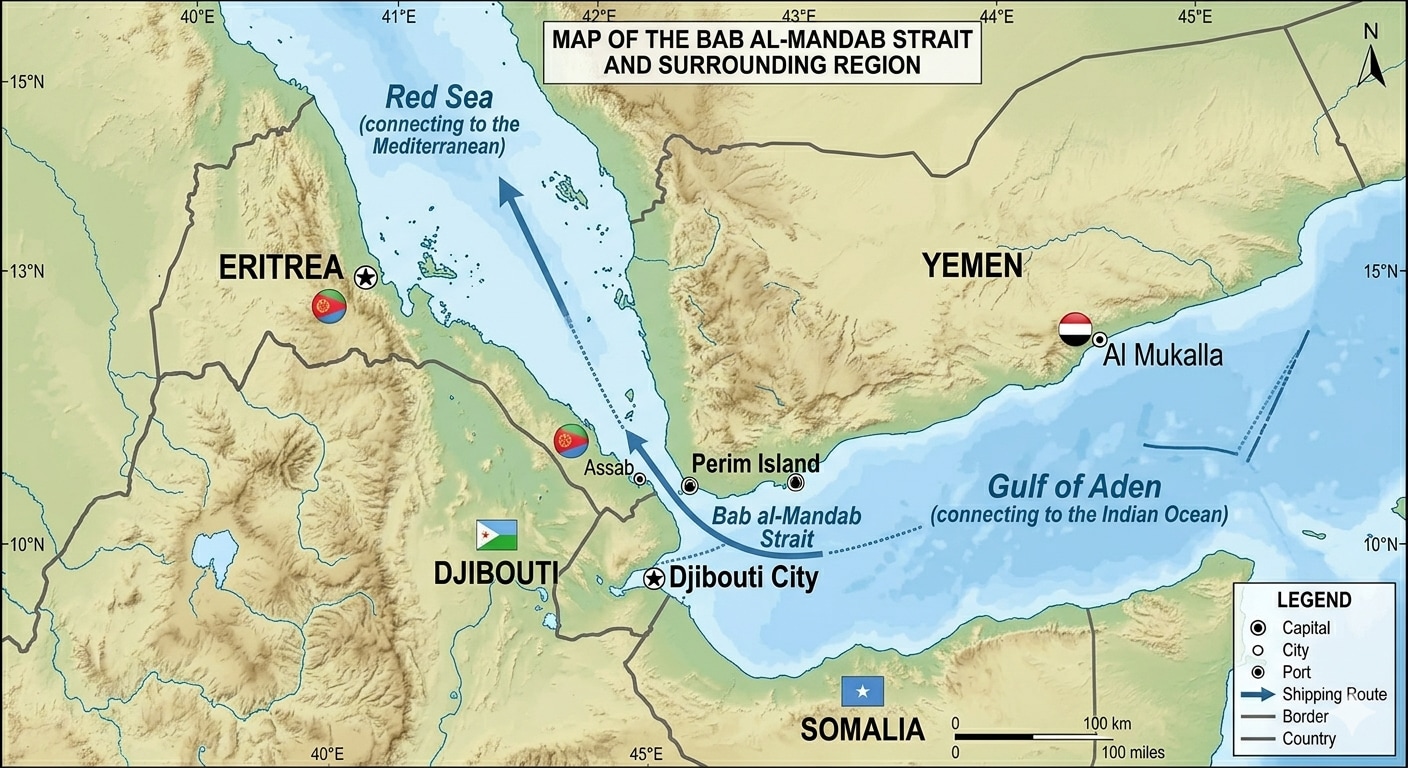
The Bab al-Mandab Strait links the Red Sea to the Arabian Sea.
Before the war, ten to 12 per cent of the world's seaborne crude shipped via this channel.
Early 2023 peak flows were between 8.7 and 9.3 million barrels daily.
But Iran-backed Houthi rebels - whose Yemeni mountain strongholds mean they can (and in past have) launched pirate attacks in the past) - threaten oil tankers exiting the strait.
Locations of the Bab al-Mandab and Hormuz straits. Credit: Google Maps
It was hoped Saudi Arabia, the Gulf's largest oil producer, could pipe crude from its eastern to western coasts to be loaded on tankers at its Yanbu Port, thereby bypassing the Hormuz.
Houthis Threaten Strait No 2 As Iran War Expands. What It Means For India
The Strait of Malacca is the busiest oil route in the world and handles between 22 and 29 per cent of global seaborne crude - i.e., an average of 23-24 million barrels a day.
Most of this is oil flowing from West Asia to far eastern Asian countries.
The major threat here is piracy. Over 100 such incidents were reported in 2025 - a 19-year high - and the Malacca waterway recorded 82 per cent of all maritime piracy reported in Asia.
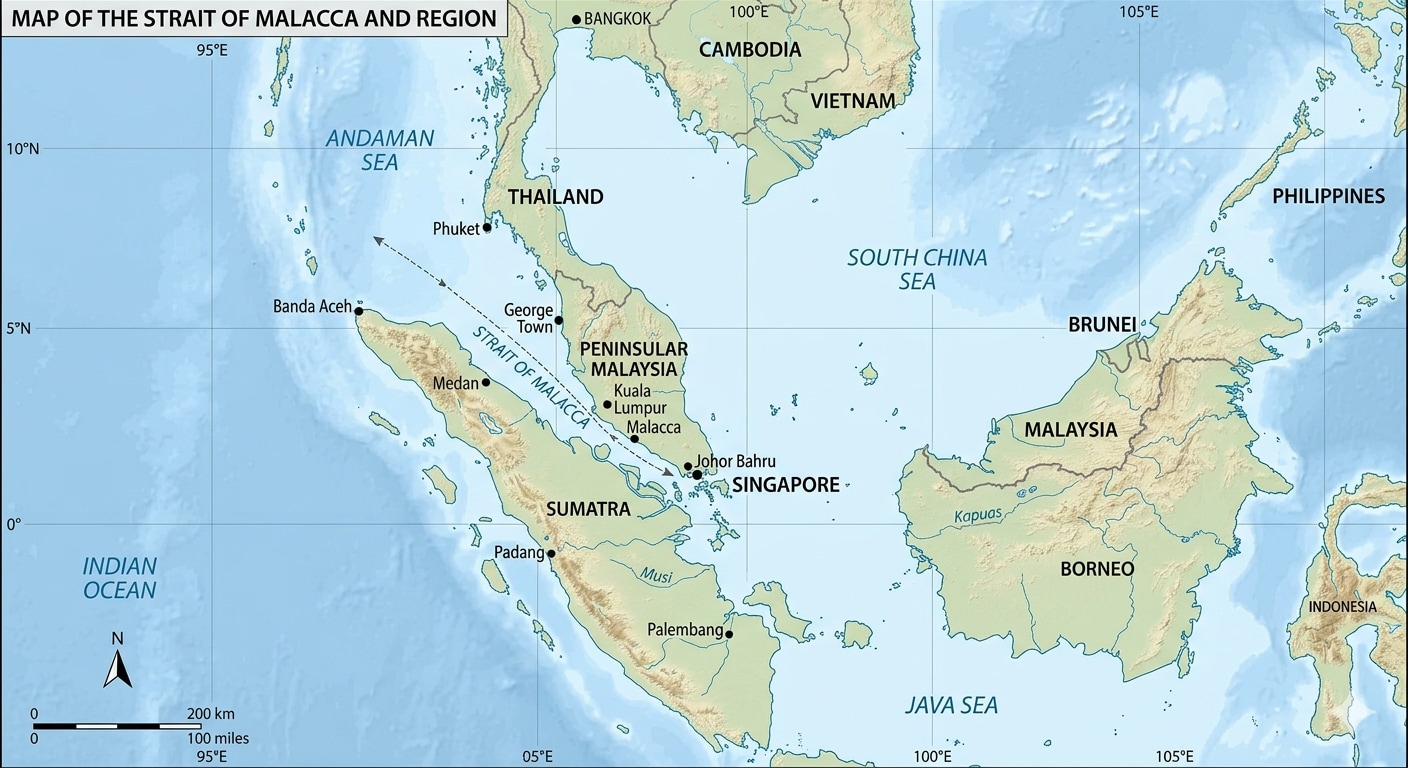
Image generated by AI
Bulk carriers - which carry unpackaged cargo, like grain - were the most affected ship type.
Regional tension arising from Chinese ship movements are also a potential threat.
The Suez Canal connects the Mediterranean to the Red Sea and carries between seven and 10 per cent of the world's seaborne oil, which is about 7.5 million barrels daily.
This has risen sharply from below two million in 2020 but Red Sea issues - the canal is at the other end of the Red Sea, meaning entry (for Asia-Europe traffic) or exit (Europe-Asia) depends on how active the Houthi rebels are.
As with the Bab al-Mandab Strait, re-routes via the Cape of Good Hope, i.e., around the African continent, can prove costly, time-consuming, and dangerous.
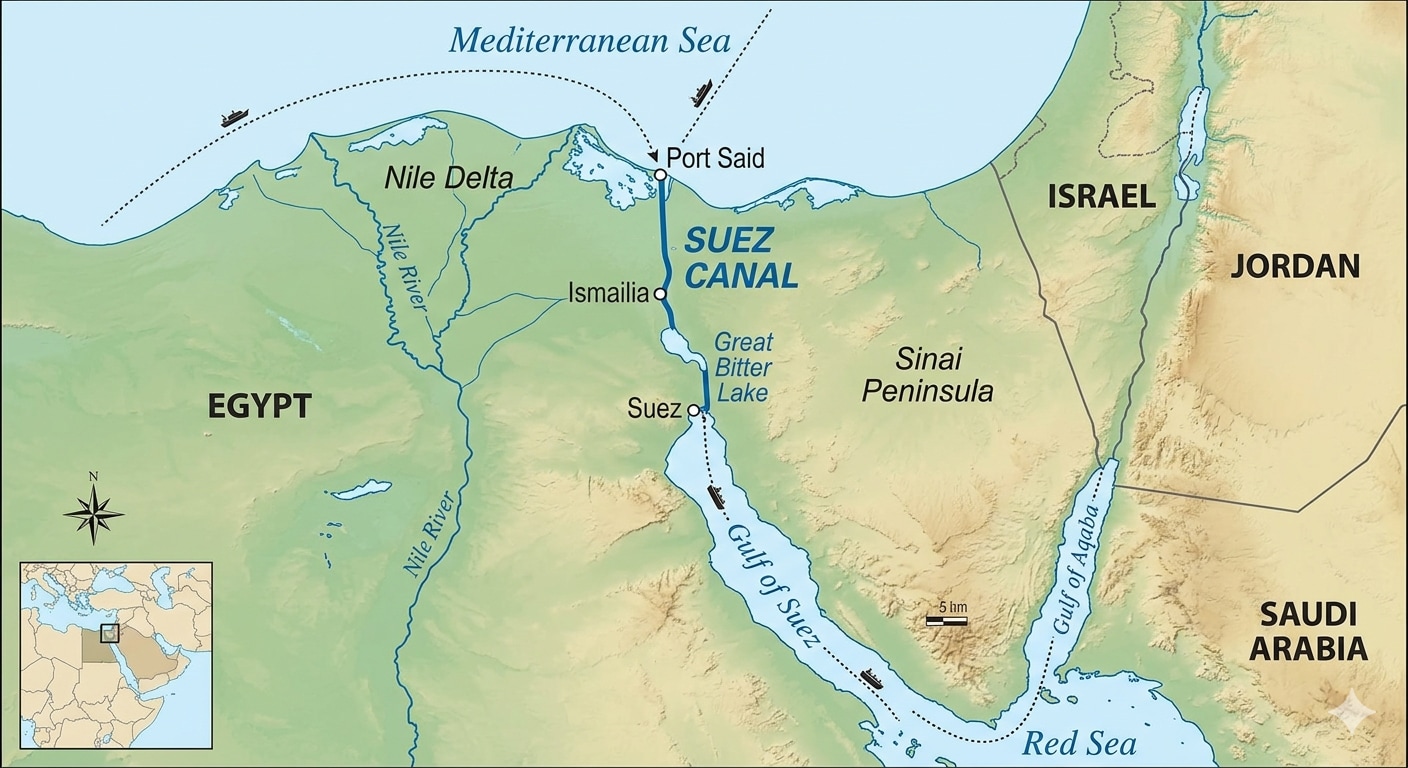
Image generated by AI
The canal is also prone to blockages like in 2021, when the Ever Given container ship ran aground in a sandstorm, stopping over 400 ships for six days and costing an estimated US$54 billion in lost trade.
The Turkish straits link the Mediterranean to the Black Sea and handle between two and three million barrels of oil daily, which is around two per cent of global demand.
Much of this is Russian and Caspian Sea oil, meaning disruptions do not really threaten Asian economies, unlike the other four on this list.
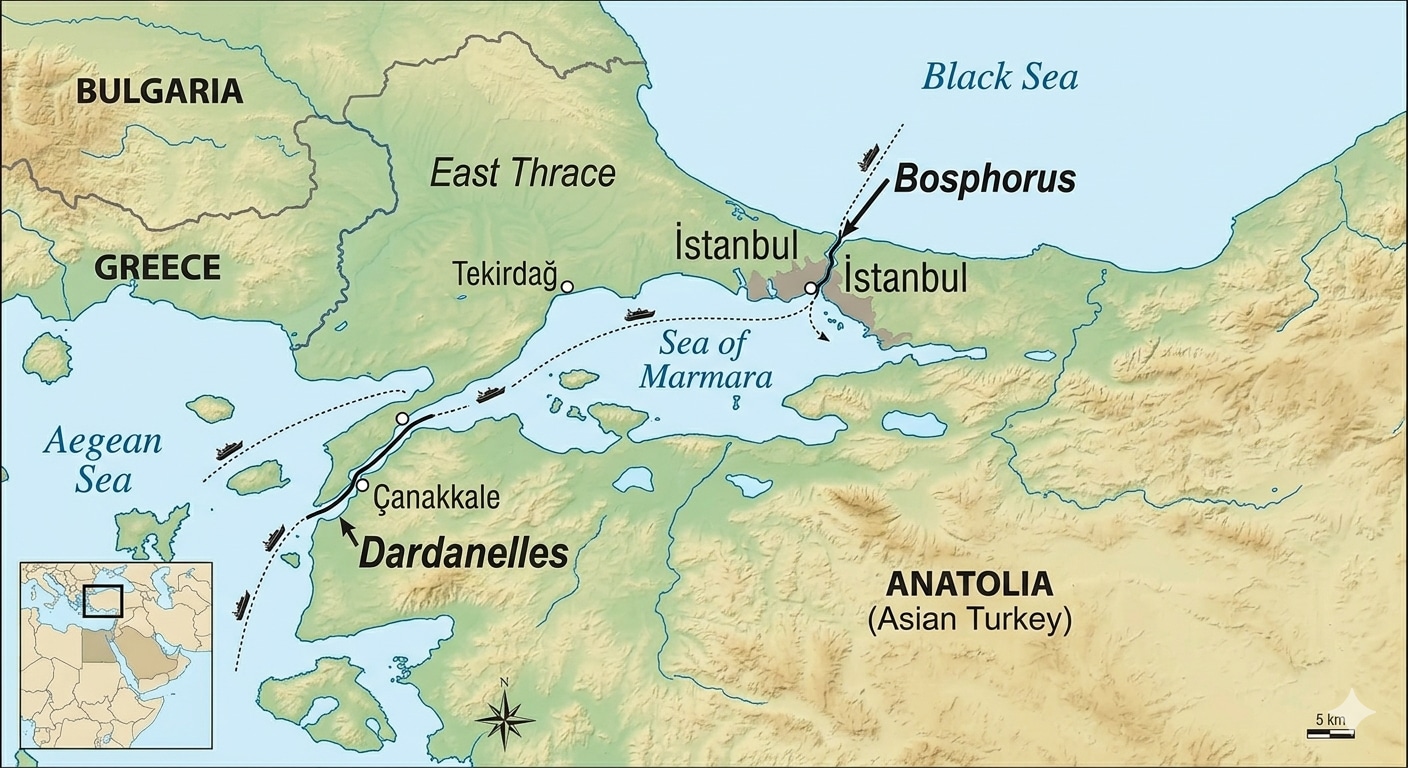
Image generated by AI
Traffic volumes were as high as 2.6 million barrels a day in 2006 but the average has been between 1.85 and 2.5 over the past five years, particularly with viable overland alternatives.
And the Hormuz
Pre-war the Iran-controlled strait shipped an estimated 20 million barrels of crude daily. Even during the pandemic, when flows dipped significantly, it still averaged 18.5 million barrels daily.
The majority - around 38 per cent - is usually picked up by China.
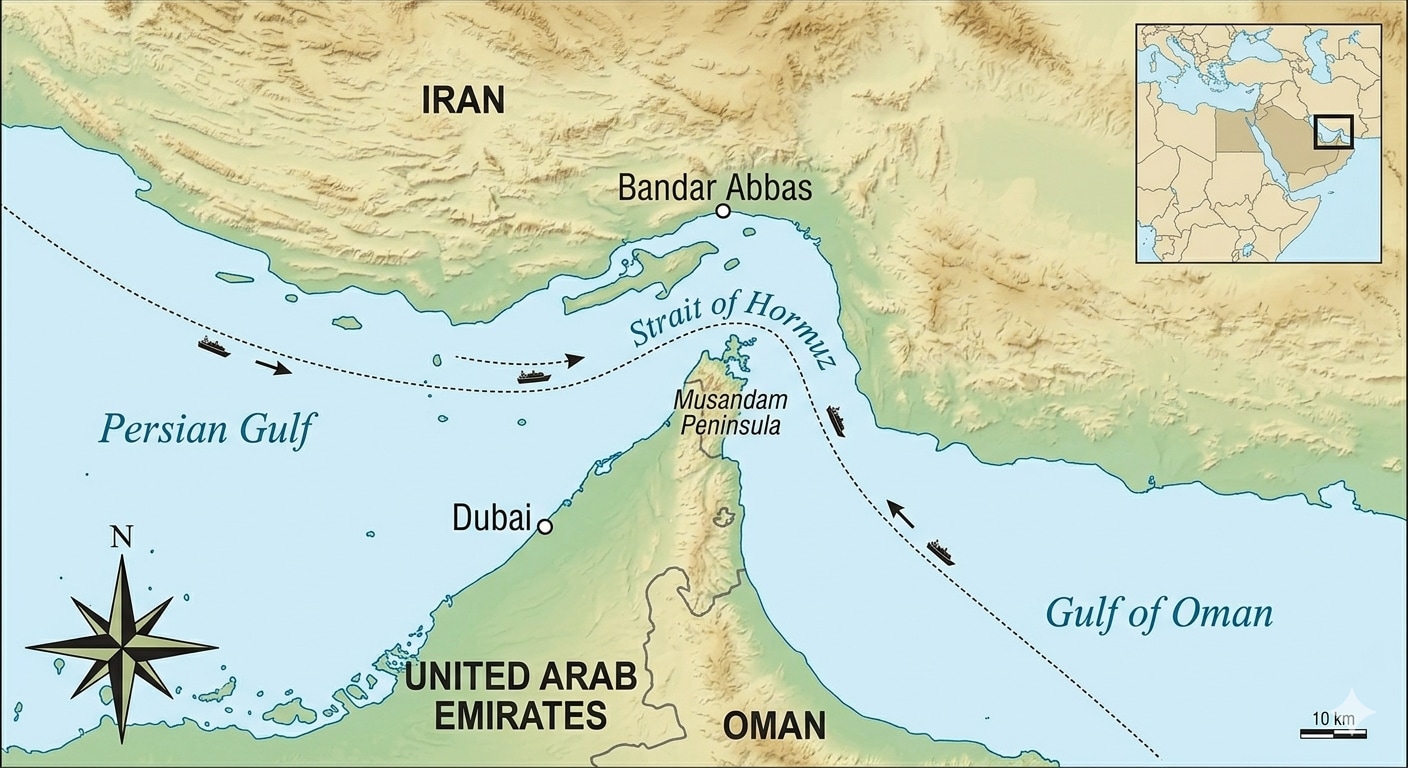
Image generated by AI
India bought between 12 to 15 per cent, which accounted for 40-50 per cent of its overall crude requirements. And Japan and South Korea collected 23 per cent between them.
Hormuz Shutdown Affects Asia's Crude Oil Supply, Pipelines Can't Cover Loss
Together these four contribute around 30 per cent of the global GDP and that number means the world simply cannot afford to risk energy supply to these nations.
Disruptions to any of these maritime channels leaves the world exceptionally vulnerable.
Countries that import oil and gas are "very much reliant on a continuous flow of energy", said Vegard Wiik Vollset, head of renewables and power research at consultants Rystad Energy.
"When that is disrupted supply chains can shatter, prices soar and people face deep economic pain," he told CNN.
The end game
Ultimately, what the Iran crisis today shows is not just that the Hormuz is a chokepoint, but that it is a system risk, a potential destabilising force, embedded into the global energy network.
On an average, over 60 million barrels of crude are shipped daily through five narrow and politically and militarily volatile straits. For India, and indeed much of Asia, the big takeaway from the Iran war is that its energy security is no longer just a question of sourcing crude.
It is now a question of route resilience prompting serious questions on diversification and strategic reserves.
Track Latest News Live on NDTV.com and get news updates from India and around the world


