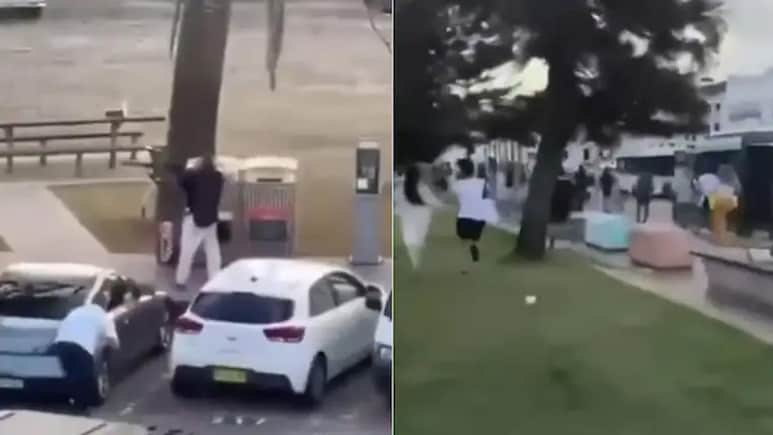
At least 11 people were killed after two gunmen opened fire at Sydney's Bondi Beach on Sunday during a Jewish religious gathering. One of the attackers was shot dead by police as emergency services rushed to the scene. Witnesses said around 50 shots were fired during the attack. Australian Prime Minister Anthony Albanese described the incident as “shocking and distressing.”
The shooting is being described as one of Australia's deadliest mass-casualty attacks in decades and could be the worst since the Port Arthur massacre in 1996.
The 1996 Port Arthur Massacre
On April 28, 1996, a mass shooting at the Port Arthur historic tourist precinct in south-east Tasmania killed 35 people and injured many. The attack remains the worst mass murder in Australian history.
Who Was The Gunman
The shooter, Martin Bryant, was later sentenced to 35 life terms in prison without the possibility of parole.
At the time, Bryant was 28 years old and lived in New Town, Hobart. He was intellectually disabled, had a history of erratic behaviour, and quit school early. Following a psychiatric assessment, he received a disability pension.
In 1987, Bryant began working as a handyman for Helen Harvey, a lottery heiress. After her death in a car accident in 1992, Bryant became her sole inheritor. Following his father's suicide in 1993, he travelled extensively and is believed to have stockpiled firearms.
About The 1996 Port Arthur Shooting
On April 28, Bryant first drove to Seascape Cottage, a nearby guesthouse his father had once tried to purchase, where police believe he murdered the owners.
Armed with three high-powered firearms, he then went to the Port Arthur Historic Site, where he pulled a semiautomatic rifle from a bag and opened fire on visitors and staff. About 20 people were killed within two minutes.
As he fled, Bryant shot people in the car park and nearby roads, killed occupants of a vehicle at a toll booth and stole their car, fatally shot a woman at a petrol station, and took a hostage before returning to Seascape Cottage.
Police surrounded the building and attempted to negotiate, but Bryant fired at officers. On the morning of April 29, he set the guesthouse on fire and tried to escape before being captured by police. Investigators later found three bodies, including the hostage, inside the cottage.
In November 1996, Bryant pleaded guilty to the charges. He was convicted of murder, and was sentenced to 35 life terms with no eligibility for parole. Bryant never gave a motive for the massacre.
Australia's Gun Laws: Before And After 1996
Before Port Arthur, Australia's gun laws varied widely across states and were based on outdated colonial regulations, with weak licensing and oversight. Some states allowed licensed shooters to own multiple rapid-fire weapons.
After the massacre, then Prime Minister John Howard pushed through sweeping national reforms under the National Firearms Agreement, which banned automatic, semiautomatic and pump-action firearms, introduced strict licensing and registration, background checks, a 28-day cooling-off period, compulsory safety training, and a “genuine reason” requirement for gun ownership.
The reforms also included a national gun buyback scheme, under which more than 6.5 lakh firearms were surrendered or destroyed.
Track Latest News Live on NDTV.com and get news updates from India and around the world


