In just over a week's time, Nepal will vote to elect a new government. This comes months after a youth-led nationwide protest forced KP Sharma Oli, the former PM, out of power.
Close to 1.9 crore voters are expected to take part in the election for the House of Representatives, the lower house of the country's parliament.
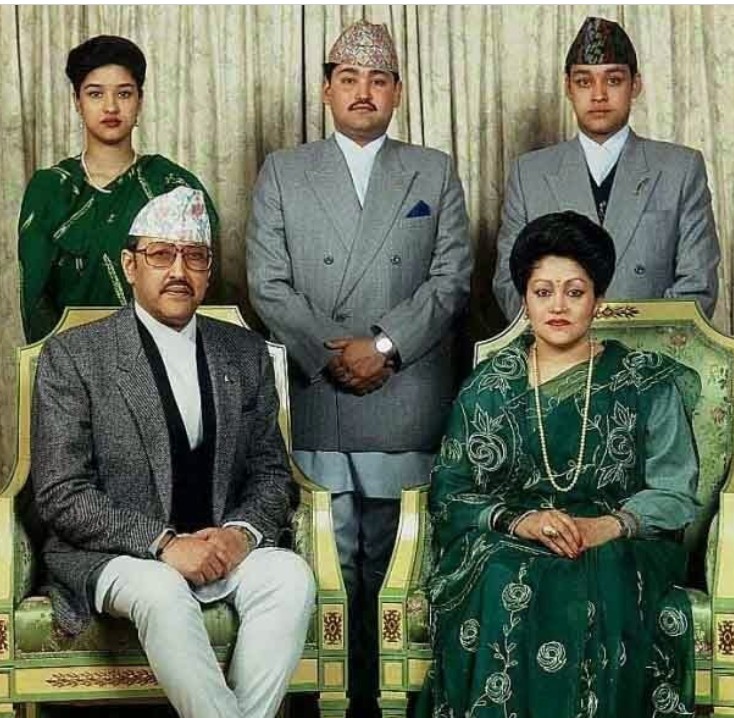
The Himalayan nation, in recent months, has seen political upheaval, but nothing comes close to that 2001 night when a massacre at the Narayanhiti Royal Palace shook the country.
What Happened On June 1, 2001
The royal family had assembled at the Narayanhiti Palace in Kathmandu on June 1, 2001. A party was underway; Crown Prince Dipendra was seen offering drinks, according to Time Magazine. He stepped out for a while, then returned wearing commando gear and wielding two assault rifles.
“Dipendra just looked at his father, said nothing, and squeezed the trigger once,” recalled Ravi Shumshere Rana, the Crown Prince's uncle. “The King stood there for a few seconds after the firing, and then slowly he sat down on the ground. It was about this time that the King finally spoke: ‘Kay gardeko?' (What have you done?).”
Dipendra then shot and killed his mother, Queen Aishwarya, his brothers Shruti and Nirajan, and five other relatives. The Crown Prince was later found with a bullet wound to the head, likely self-inflicted. He went into a coma, during which he was named king. Days later, on June 4, he died. Dipendra's uncle, Gyanendra, ascended to the throne and remained king until the end of the monarchy in 2008.
Conspiracy Theories
The findings of a two-member investigation did not convince the public, according to Nepal News. There were doubts about the whereabouts of King Gyanendra on the night the massacre occurred. He claimed to be in Pokhara, which seemed suspicious to many people. There were no photos or autopsy results that were released. The quick cremation of the bodies and palace clean-up sparked rumours of a conspiracy.
People also questioned how Dipendra, reportedly intoxicated and drugged, could handle multiple weapons with such precision. Gyanendra's swift coronation within days further fuelled speculation, with many portraying his ascension as opportunistic.
In March 2025, Nepal's former Prime Minister Pushpa Kamal Dahal ‘Prachanda' claimed that the Nepalese people know who was behind the 2001 royal palace massacre. Prachanda suggested that the killings were carried out by members within the royal family itself. “Who would kill their own brother?” he said, hinting at serious allegations against Gyanendra.
Another theory speculates that foreign intelligence agencies could have played a role in the massacre. In 2007, a former military aide to the slain monarch claimed that the massacre was part of a “political conspiracy,” possibly involving a foreign agency. Vivek Bikram Shah, who had served more than 30 years in the royal palace's military wing, was dismissed after Gyanendra assumed the throne following the June 1, 2001, killings.
Then, in 2009, a 65-year-old man, describing himself as a former chief of the Intelligence Bureau, claimed responsibility for the royal massacre. The man, Tul Prasad Sherchan, said that he had planned the massacre in 1975, motivated by anger over the royal family's vast wealth abroad.
Track Latest News Live on NDTV.com and get news updates from India and around the world


