Bangladesh Highlights: Khaleda Zia, Bangladesh's first woman prime minister, has died after a prolonged illness this morning. She was 80.
The ex-prime minister and the chairperson of the Bangladesh Nationalist Party (BNP) died at 6 am, according to a statement issued by her party on Facebook.
Prime Minister Narendra Modi expressed grief over Zia's death.
In a post on X, he noted that as the first woman Prime Minister of Bangladesh, Zia's important contributions towards the development of Bangladesh, as well as India-Bangladesh relations, will always be remembered.
"I recall my warm meeting with her in Dhaka in 2015. We hope that her vision and legacy will continue to guide our partnership. May her soul rest in peace," he wrote.
China's Li Qang Remembers "Old Friend" Khaleda Zia
Chinese Premier Li Qiang described Khaleda Zia as a veteran politician and an "old friend" of the Chinese people who played an important role in advancing relations between Bangladesh and China during her tenure as prime minister.
Chinese foreign ministry spokesperson Lin Jian said during her tenure as prime minister, Zia actively advanced bilateral ties establishing a long-term, friendly, equal, and mutually beneficial comprehensive cooperative partnership.
Chinese Ambassador to Bangladesh Yao Wen said Zia was a steadfast champion of freedom and a key figure in her country's political history.
Yao said Zia "embodied the democratic aspirations" of the Bangladeshi people and inspired the nation through her resilience, courage and leadership.
All Eyes On Khaleda Zia's Son Tarique Rahman As Leader For BNP's Next Chapter
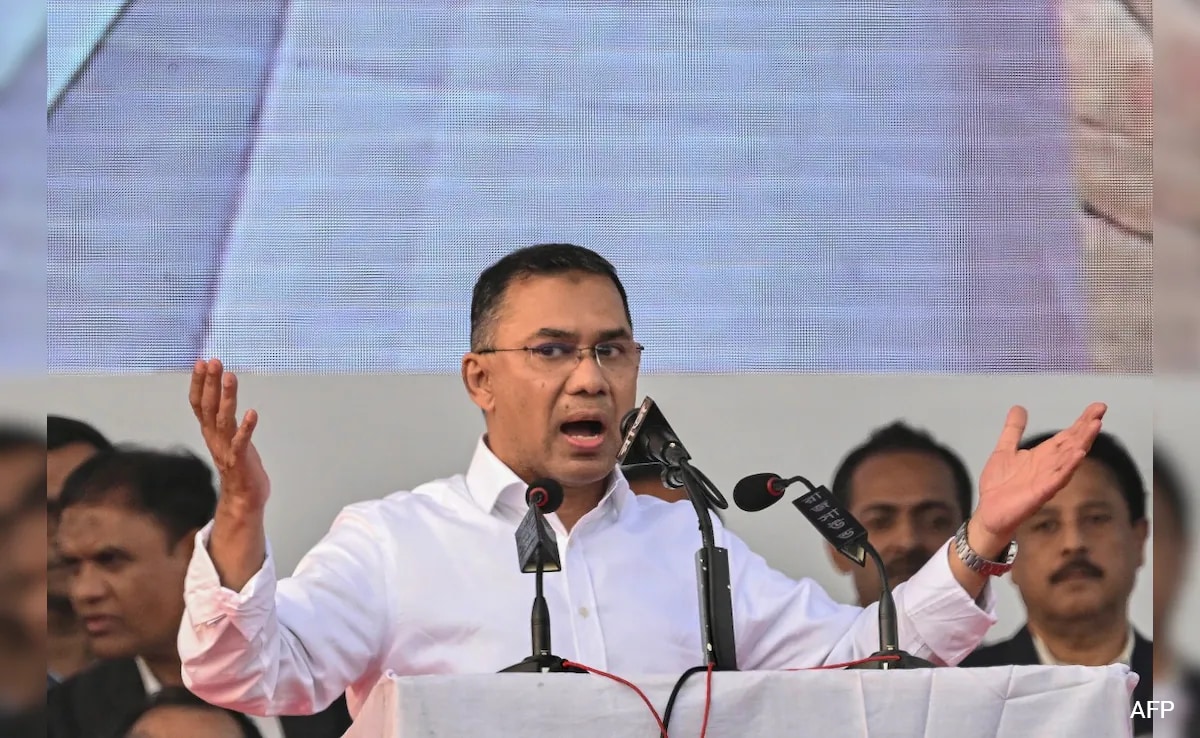
With the Bangladesh Nationalist Party Acting Chairperson Tarique Rahman overseeing the party for a while now, the answer to 'Who's next?' has always been known.
Bangladesh Premier League Matches Postposed To Wednesday
The Bangladesh Cricket Board (BCB) has called off the two BPL matches scheduled for Tuesday, following the death of former prime minister of the country Khaleda Zia this morning. The two matches have been re-scheduled for Wednesday.
"BPL 2026 stands united in respect during the period of national mourning for Former Prime Minister of Bangladesh, Begum Khaleda Zia. Matches scheduled for 30 December 2025 have been rescheduled to 31 December 2025," the BCB said on its X handle.
"All remaining Sylhet Phase matches will continue as per the original schedule." Dhaka Capitals and Rangpur Riders were scheduled to play the second match on Tuesday.
Rahul Gandhi Condoles Khaleda Zia's Death
Saddened by the passing of former Prime Minister of Bangladesh, Begum Khaleda Zia. Over her long career in public life, she played a significant role in Bangladesh’s political journey.
— Rahul Gandhi (@RahulGandhi) December 30, 2025
My heartfelt condolences to her family, supporters, and the people of Bangladesh.
Opinion | How A Pak-Friendly BNP Is Now In Pole Position In Bangladesh
The baton has passed. Bangladesh's first woman Prime Minister, Begum Khaleda Zia, died this morning in Dhaka. Her legacy includes keeping the Bangladesh Nationalist Party (BNP) firmly together, even strengthening it, after the death of her husband, President Ziaur Rahman. She will be remembered for joining hands with Sheikh Hasina in bringing a peaceful end to President Hussain Muhammad Ershad's dictatorship and ensuring Bangladesh's return to democracy through the 1991 elections, which she won. Relations with India under the BNP rule have never been comfortable, and the legacy of BNP's strong links with Pakistan and with Jamaat-e-Islami has a lot to do with this.
On the face of it, Tarique Rahman's return to Dhaka on Christmas Day 2025, and now the passing away of his mother, Begum Khaleda Zia, have placed the BNP in pole position to win the forthcoming general elections in Bangladesh, scheduled for February next year. However, it is important not to get carried away by the media hype generated by print, electronic and social media outlets, most of which are thoroughly controlled and managed by the Yunus regime.
World Leaders React To Death Of Khaleda Zia, Bangladesh's Ex-PM
The death of Khaleda Zia, Bangladesh's first woman prime minister, has prompted an outpouring of condolences from across the world, with global leaders highlighting her service to the South Asian nation. Zia died on Tuesday at a hospital in Dhaka after a prolonged illness at the age of 80.
Read here
Bangladesh Declares Three-Day State Mourning For Khaleda Zia
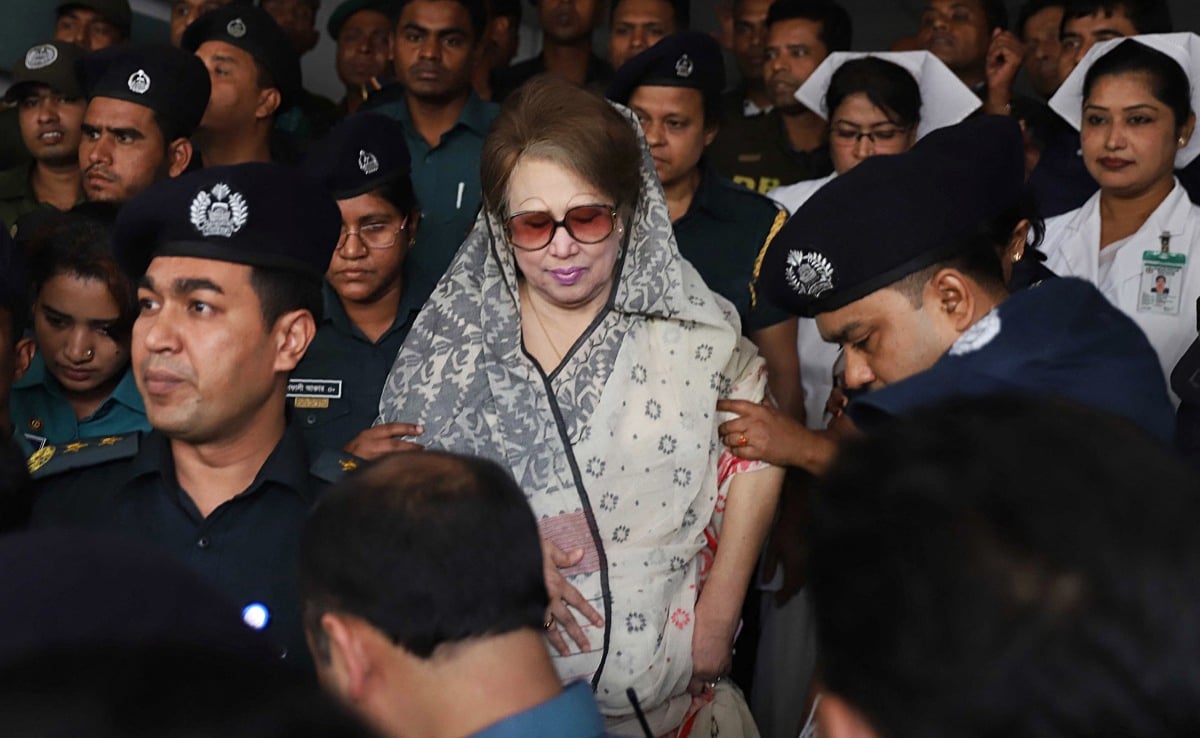
Bangladesh has declared three days of state mourning for former prime minister Khaleda Zia, with her funeral to be held on Wednesday.
Zia, aged 80, died in hospital on Tuesday morning.
Interim leader Muhammad Yunus, in a television broadcast to the nation, appealed for calm.
"I humbly appeal to everyone to maintain discipline while observing all forms of mourning, including the funeral prayers. I know you are all deeply emotional at this time," Yunus said.
"I hope that during this difficult period, you will show utmost patience and support one another in carrying out her last rites, including the funeral."
(AFP)
Battle Of Begums: All About Rivalry Between Khaleda Zia And Sheikh Hasina
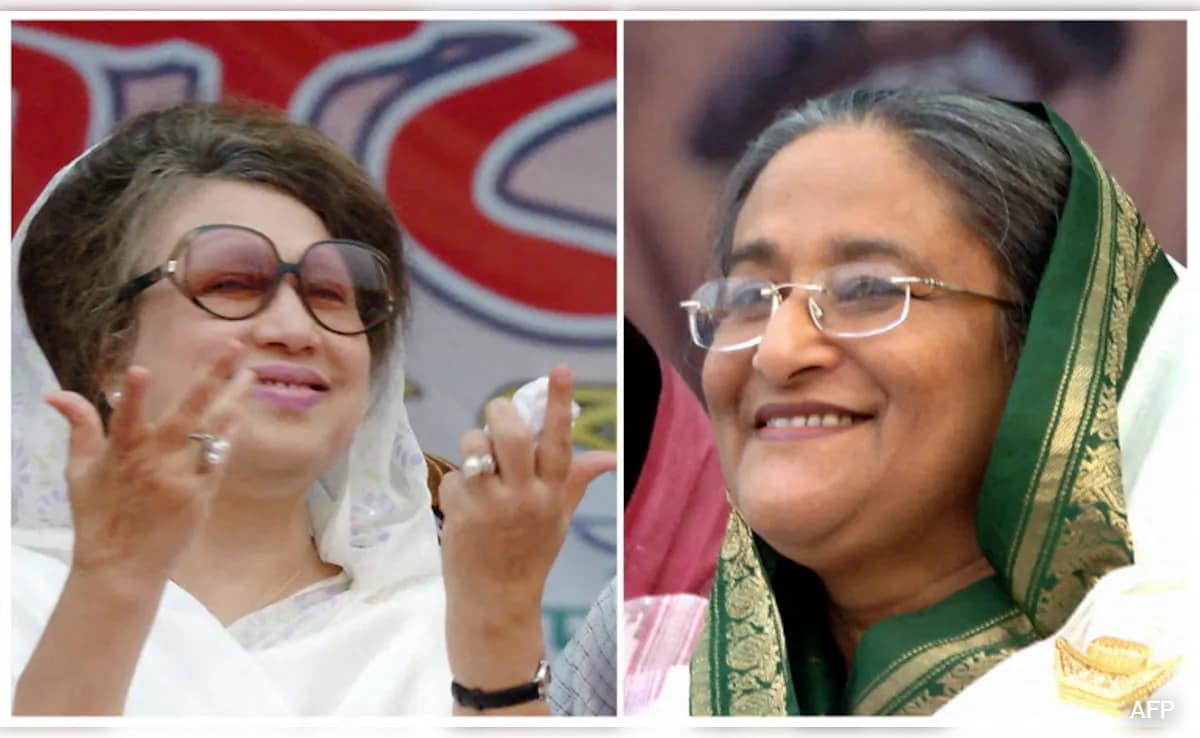
Khaleda Zia, who became Bangladesh's first female prime minister in 1991, died on Tuesday after a long illness at the age of 80. The Bangladesh Nationalist Party (BNP) boss was one of two women who had dominated Bangladeshi politics for the past four decades. The other is Sheikh Hasina, a five-time prime minister who was ousted from power in August 2024 amid violent student-led protests.
'Profound Loss For Bangladesh': Sheikh Hasina Pays Tribute To Khaleda Zia
Bangladesh's deposed prime minister Sheikh Hasina on Tuesday expressed condolences over the death of her archrival Khaleda Zia, who dominated the country's politics alongside her for decades.
In a condolence message posted on the Awami League's X account on Tuesday, Hasina described Zia as a significant figure in the country's political history.
The 78-year-old Awami League leader highlighted her role as Bangladesh's first woman prime minister and her contributions to the struggle to establish democracy.
"As the first woman prime minister of Bangladesh, and for her role in the struggle to establish democracy, her contributions to the nation were significant and will be remembered," Hasina said.
Khaleda Zia's India Equation: From 'Slavery' Attacks To Anti-Terror Vow
Zia and Hasina – who is now in exile in India and faces a death sentence if she returns home – differed in their approach to foreign policy, specifically when it came to the India question.
While the latter is widely seen as a friendly face, Zia maintained an overall cautious, even adversarial in some respects, position in her early years, underscored by prioritising Bangladeshi sovereignty.
An example of this is her sustained opposition to overland transit and connectivity links with India, both as PM and as Leader of the Opposition, a post she held twice from 1996 to 2014.
As Prime Minister, Khaleda Zia refused India transit rights across Bangladeshi territory to the northeastern states, arguing it infringed on her country's security and sovereignty. She also argued Indian trucks' toll-free use of Bangladeshi roads was akin to 'slavery'.
She also opposed renewal of the 1972 Indo-Bangladesh Friendship Treaty, which many saw as strategically important from a military perspective, arguing, again, it had 'shackled' her country.
PM Shehbaz Sharif Saddened On Death Of A "Committed Friend Of Pakistan"
"Begum Zia was a committed friend of Pakistan. My government and the people of Pakistan stand with the people of Bangladesh in this moment of sorrow. Our thoughts and prayers are with her family, friends and the people of Bangladesh during this difficult time," Pakistan Prime Minister Shehbaz Sharif wrote on X (formerly Twitter).
Deeply saddened by the passing of Begum Khaleda Zia, Chairperson of the BNP and former Prime Minister of Bangladesh. Her lifelong service to Bangladesh and its growth and development leaves a lasting legacy.
— Shehbaz Sharif (@CMShehbaz) December 30, 2025
Begum Zia was a committed friend of Pakistan. My Government and the…
"Khaleda Zia Played A Pivotal Role In Shaping Bangladesh's Modern History": US
The United States extends deepest condolences on the passing of former Prime Minister Begum Khaleda Zia. Mrs. Zia played a pivotal role in shaping her country’s modern history, and her leadership was instrumental in advancing Bangladesh’s development. pic.twitter.com/vjV5CMUBlF
— U.S. Embassy Dhaka (@usembassydhaka) December 30, 2025
PM Modi Extends Condolences To Khaleda Zia's Family, People Of Bangladesh
Condoling the death of three-time Bangladesh Prime Minister Khaleda Zia, PM Modi remembered their 2015 meeting in Dhaka.
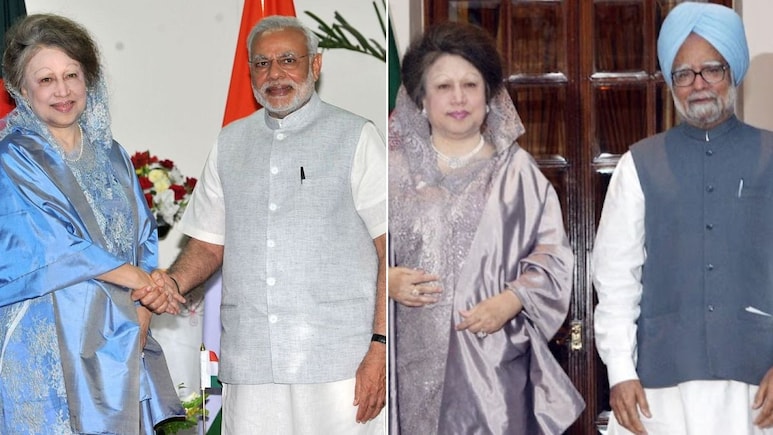
"As the first woman Prime Minister of Bangladesh, her important contributions towards the development of Bangladesh, as well as India-Bangladesh relations, will always be remembered. I recall my warm meeting with her in Dhaka in 2015. We hope that her vision and legacy will continue to guide our partnership," PM Modi wrote on X.
Deeply saddened to learn about the passing away of former Prime Minister and BNP Chairperson Begum Khaleda Zia in Dhaka.
— Narendra Modi (@narendramodi) December 30, 2025
Our sincerest condolences to her family and all the people of Bangladesh. May the Almighty grant her family the fortitude to bear this tragic loss.
As the… pic.twitter.com/BLg6K52vak
Exiled Bangladeshi Author Taslima Nasrin Asks Will The Ban On Her Books Be Lifted Now
Exiled Bangladeshi author Taslima Nasrin raised the issue of freedom of expression and her return to Bangladesh after the death of former Prime Minister of Bangladesh Khaleda Zia. In a post on X, Nasrin asked if the bans on her books could be lifted now. Calling her expulsion "unjust," Nasrin also asked about her return home.
"I am thinking: with her death, will the bans on the books she had banned not be lifted? They should be lifted. She banned my Lajja in 1993. She banned Utal Hawa in 2002. She banned Ka in 2003. She banned Those Dark Days in 2004. While she was alive, she did not stand up for freedom of expression by lifting the bans on those books. If her death now ends up protecting freedom of expression, so be it," wrote Nasrin on X.
"Will her death bring an end to my 31-year sentence of exile? Or will unjust rulers continue to carry injustice, ruler after ruler, generation after generation?"
Khaleda Zia has passed away. She was 80 years old. From a housewife she became a party chief, and served as the country’s prime minister for ten years. She lived a successful life—a long life. Sheikh Hasina kept her in jail for two years; apart from that period, I don’t think she…
— taslima nasreen (@taslimanasreen) December 30, 2025
"Nation Has Lost A Great Guardian": Muhammad Yunus On Death Of Khaleda Zia
In a long post on social media, Muhammad Yunus expressed "profound sorrow" on the death on Khaleda Zia, three-time former Prime Minister of Bangladesh.
Yunus said, her role "in the struggle to establish democracy, a multi-party political culture, and the rights of the people in Bangladesh will be remembered forever."
"Through her uncompromising leadership, the nation was repeatedly freed from undemocratic conditions and inspired to regain liberty. The nation will remember her contributions to the country and its people with respect," he added.
Chief Adviser's Condolence message on the Death of Former Prime Minister Begum Khaleda Zia
— Chief Adviser of the Government of Bangladesh (@ChiefAdviserGoB) December 30, 2025
Dhaka, 30 December 2025: The Chief Adviser of the interim government, Professor Muhammad Yunus, has expressed profound sorrow at the death of Begum Khaleda Zia—three-time former Prime…
Battle Of The Begums: Khaled Zia, Sheikh Hasina
For decades, Bangladesh's politics was defined by the bitter rivalry between Khaleda Zia and Sheikh Hasina -- a feud dubbed the "Battle of the Begums", an honorific title in South Asia for a powerful woman.
The hatred traces back to the 1975 assassination of Hasina's father, independence leader Sheikh Mujibur Rahman, along with most of her family, in a coup.
Three months later, Zia's husband, Ziaur Rahman, then deputy army chief, effectively took control. He became president in 1977. He was himself assassinated in 1981.
Zia, then a 35-year-old mother of two, inherited the BNP leadership.
Initially dismissed as a political novice, Zia proved a formidable opponent, rallying against military dictator Hussain Muhammad Ershad, and later joining forces with Hasina to oust him in 1990.
The two women alternated in power for the next decade and a half.
Their intractable rivalry fuelled crises, including the January 2007 standoff that brought military-backed emergency rule. Both women were detained for more than a year.
Hasina later dominated, ruling from 2008 until her violent downfall in 2024.
Zia's own tenure left a mixed legacy: she was admired for her resolve but criticised for her refusal to compromise, which often left her isolated, domestically and internationally.
But Zia's political legacy may yet continue.
Her son, Tarique Rahman, 60, long seen as her political heir, has also said he will run in the polls.
(AFP)
Khaleda Zia Holds A Unique Record Of Never Losing In Any Constituency
Khaleda Zia was elected in five separate parliamentary constituencies in the general elections of 1991, 1996, and 2001. In 2008, she won in all three constituencies from where she contested.
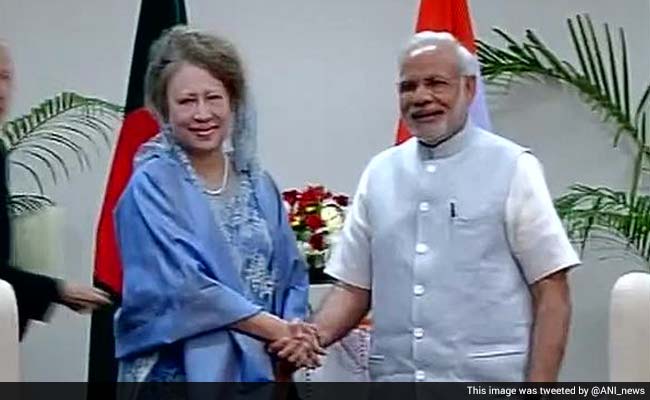
When Khaleda Zia Met PM Modi
In June 2015, during a two-day visit to Bangladesh at the invitation of then Prime Minister Sheikh Hasina, Prime Minister Narendra Modi met Khaleda Zia.
Bangladesh Envoy To India Reaches Dhaka On "Urgent" Summons: Report
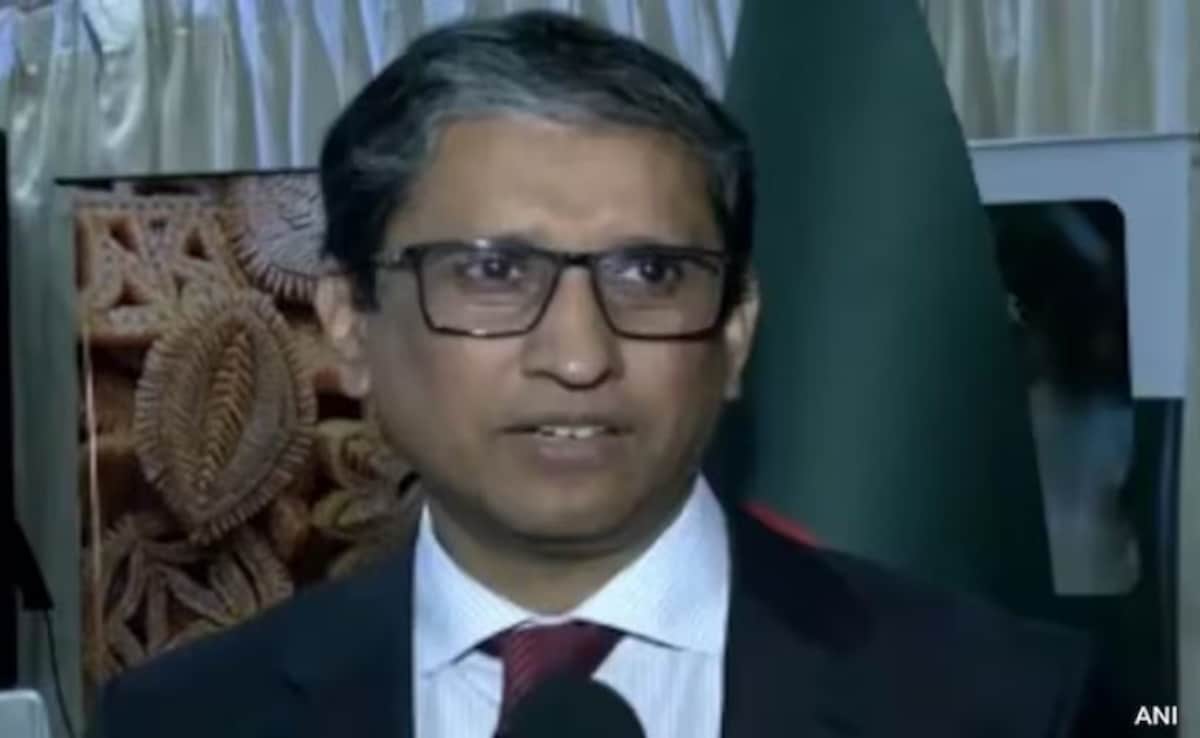
Bangladesh High Commissioner to India Reaz Hamidullah reached Dhaka overnight following an "urgent call" from the foreign ministry amid strained bilateral ties, reports said late Monday.
"In view of the recent situation in bilateral ties with India, Bangladesh High Commissioner in New Delhi, M Reaz Hamidullah, was called to Dhaka on an urgent basis," mass-circulation daily Prothom Alo reported.
Quoting an unnamed "responsible source" in the foreign office, the newspaper said Hamidullah reached Dhaka on Monday night in response to the call.
"He has been summoned to Dhaka for discussions on the recent situation of bilateral relations," the report said.
Khaleda Zia's Exiled Son Returned To Bangladesh On Christmas
Bangladesh Nationalist Party (BNP) acting chairman Tarique Rahman landed in Dhaka on December 25, ending more than 17 years of self-exile in the United Kingdom. The 60-year-old BNP acting chairman, the son of former premier Khaleda Zia, has emerged as a leading contender for prime minister in the upcoming February general elections.
Khaleda Zia Served Bangladesh Thrice As Prime Minister
In 1991, Khaleda Zia became the country's first woman prime minister through a free and fair general election on February 27 of the year. She was reelected in 1996 and 2001.
Khaleda Zia's Entry Into Politics
After her husband, Ziaur Rahman's assassination in 1981, Khaleda joined the Bangladesh Nationalist Party (BNP) as a general member on January 2, 1982, and was later elected vice-chairman of the party in March 1983. A year later, in August 1984, the party elected her as the chairperson.
Khaleda was the architect of forming a seven-party alliance in 1983 to put an end to the rule of the former Chief of the Bangladesh Army General Hussain Muhammad Ershad.
Who Was Khaleda Zia?
Born in 1945 in Jalpaiguri, in the then-undivided Dinajpur District, Khaleda Zia served as the Prime Minister of Bangladesh three times since 1991. She was the first woman to be elected as the Prime Minister of Bangladesh.
She was married to Ziaur Rahman, the former President of Bangladesh who was assassinated in 1981. When Ziaur Rahman became the President of Bangladesh, Khaleda Zia accompanied him as the First Lady.
Khaleda Zia Died After Fajr Prayer
"Khaleda Zia passed away this morning at around 6 am, shortly after Fajr prayer," said a post on the BNP's verified Facebook page.
Fajr prayer is one of the five daily mandatory Islamic prayers performed between the break of dawn and sunrise.
"We pray for the forgiveness of her soul and request everyone to offer prayers for her departed soul," it added.
When Khaleda Zia Was Put On Ventilator
On the night of December 12, as her health deteriorated, Khaleda Zia was placed on ventilator.
"Her breathing difficulties increased, her oxygen level fell, and carbon dioxide levels rose," according to a statement by the chief of the medical board cardiologist Shahabuddin Talukdar.
It said the 80-year-old former premier was previously being treated with "High Flow Nasal Cannula and BiPAP support, but as there was no improvement, she was placed on elective ventilator support to give rest to her lungs and other vital organs."
Khaleda Zia Was In Hospital Since November
Khaleda Zia was admitted to Evercare Hospital on November 23 on the advice of her medical board after being diagnosed with infections in her heart and lungs, reported The Daily Star. She was also suffering from pneumonia.
Zia returned to Dhaka this May after four months of medical treatment in London.
Khaleda Zia Had Liver Cirrhosis, Arthritis
Khaleda Zia had advanced cirrhosis of the liver, arthritis, diabetes, and chest and heart problems, her doctors said.
Former Bangladesh Prime Minister Khaleda Zia Dies At 80
Bangladesh's former Prime Minister Khaleda Zia, who many believed would sweep elections next year to lead her country once again, has died of a long-term illness while under treatment at Dhaka's Apollo Hospital. She was 80.


