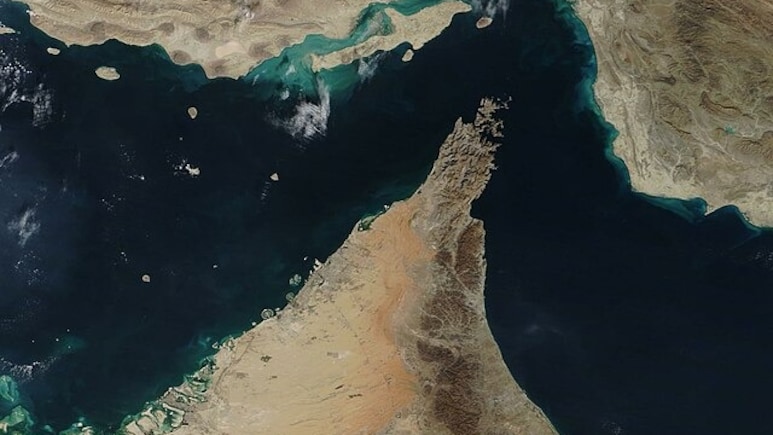
Strait of Hormuz, the world's most vital oil artery is no longer just tense, it's under fire. After US–Israeli strikes on Iran escalated into a widening Iran war, the Strait of Hormuz has morphed from a crowded commercial corridor into a high-risk combat zone.
Multiple ships have reportedly been hit in recent days by drones and projectiles in the Gulf and near the strait's approaches. Tankers have suffered damage, fires have broken out on board, and at least one crew member was reported killed.
What Is Happening Right Now?
In normal conditions, Lloyd's List data show about 107 cargo-carrying vessels transit Hormuz daily. Now, only a few dozen ships are making the passage and very few are large crude tankers. Lloyd's March 1 list recorded just 19 vessel transits, compared with more than 100 on a typical day.
Crucially, there were no major crude tankers moving through the main flow.
Bloomberg and Vortexa data underscore the collapse. Just four supertankers transited on March 1, down from 22 the day before, a dramatic drop in big-tanker traffic.
Also Read | "Oman Not Our Choice": Iran Minister Says Elite Force Now "Independent"
S&P Global and Kpler estimate overall vessel movements are down roughly 40 per cent to 70 per cent since the attacks, with most laden crude tankers waiting at what operators consider "safer" anchorages inside the Gulf or outside the strait.
Exact figures shift hour by hour based on live AIS tracking, but directionally the message is clear: instead of more than 100 ships per day, only a fraction are moving, and oil carriers are largely avoiding the choke point.

Markets Reprice Risks
The immediate economic shock is already visible. War-risk insurance premiums have surged as underwriters factor in missile and drone threats. Freight rates are climbing. Ships that do sail often slow-steam or reroute, stretching voyage times and tightening supply chains.
Energy markets respond not only to barrels physically lost, but to fear. Traders are pricing in the possibility that tomorrow's cargo may not sail at all. Oil and gas prices are reflecting risk before any total shutdown.
Also Read | Iran's Drones Hit Aramco Oil Refinery In Saudi Arabia
What If Hormuz Closes Completely?
A full closure is the nightmare scenario energy planners have modeled for decades. Roughly one-fifth of the world's oil supply and a major share of global LNG normally pass through the narrow channel. If that flow drops near zero, the global energy system loses a pillar.
Governments could tap strategic reserves, but those buffers last months, not years. Some Gulf producers can reroute limited volumes through pipelines to the Red Sea, yet that capacity covers only a fraction of daily exports.
A sustained shutdown would likely trigger a step-change in prices for crude, diesel, jet fuel and LNG. Inflation would ripple across transport, food and industry. Energy-importing economies would face recession risks.
Also Read | F-15 Seen Crashing On Camera, Kuwait Says Several US Warplanes Fell
How Worried Should India Be?
Asia bears the heaviest exposure.
India and China import vast volumes of Gulf crude and gas that must pass through Hormuz. For India, prolonged disruption would swell the oil import bill, pressure the rupee and stoke inflation. Refiners would scramble for Russian, African or US barrels via longer, costlier routes.
China has larger storage reserves and pipeline links to Russia and Central Asia, but it still relies heavily on Gulf crude and Qatari LNG. A shutdown would drive up industrial energy costs and strain export competitiveness.
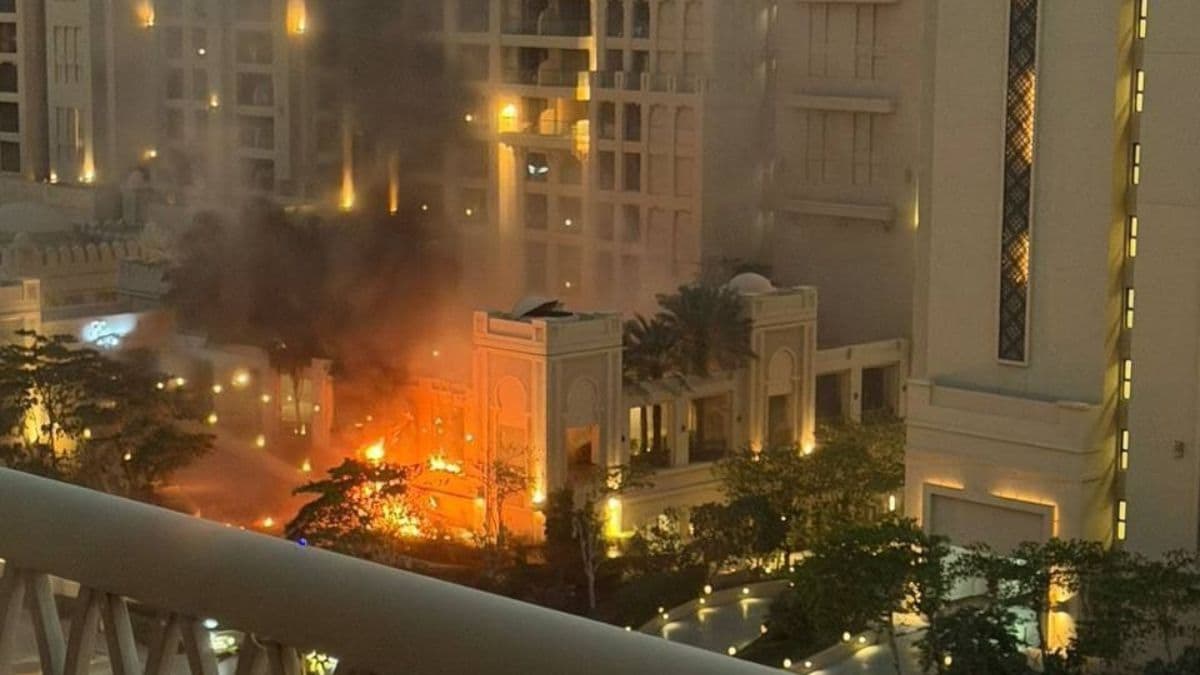
Also Read | Blasts In Dubai, Abu Dhabi, Doha, Sirens In Tel Aviv As Iran Strikes Continue
Can The US Intervene Here?
The US, while less directly dependent on the flows thanks to its own production, is deeply exposed to the global price and to the security of its partners. The American Navy can escort convoys, deploy minesweepers and air defences, and strike launch sites threatening ships; it can lower risk and, over time, help reopen some lanes. But "occupying" the strait in the sense of seizing and holding it is a different proposition.
That would mean extensive military operations against Iranian territory and assets, violation of coastal state control, and a major regional war with unpredictable escalation.
Track Latest News Live on NDTV.com and get news updates from India and around the world


