Opinion | How Khamenei's Killing Is Doing Exactly The Opposite Of What US-Israel Wanted
What Israel and the US have done is make Khamenei, who was running a country dealing with extreme economic hardships, protests and internal strife, a martyr. His killing has united Shias and Sunnis across the globe in anger.
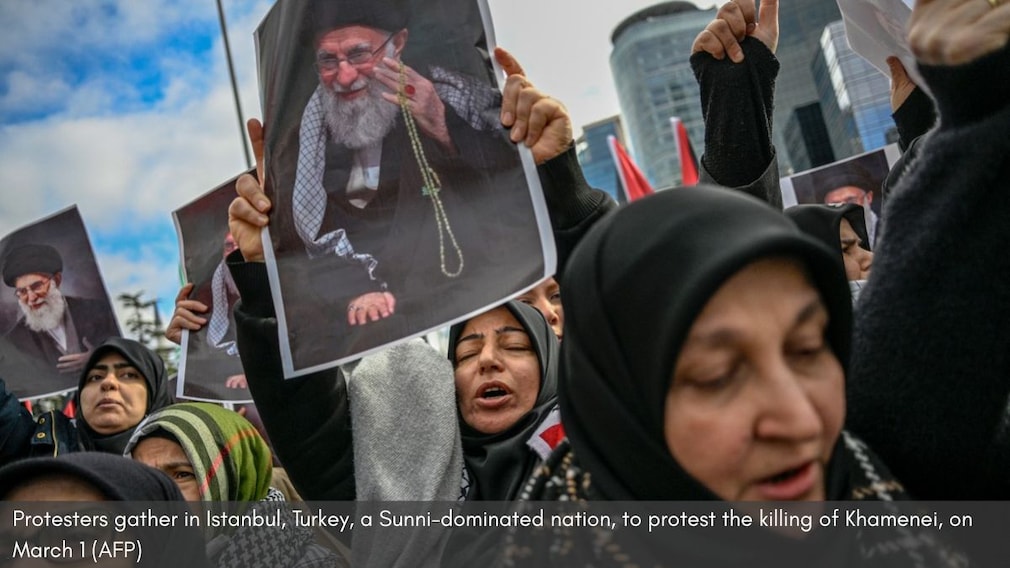
In 2019, I was on a reporting assignment to Kargil, which was my first visit to the place. I knew the town was Shia-majority, but I wasn't ready for what I saw outside the city centre mosque. There were larger-than-life cutouts of Iran's Supreme Leader, Ayatollah Ali Khamenei, who was killed on February 28 in Israeli-American air strikes on his office complex in Tehran. Back then, I was so struck by the cutouts that I wondered if I had gotten it wrong. Maybe it wasn't Khamenei at all, maybe it was someone else, I wondered.
A few men in Iranian-style black headgear stood outside the mosque, perhaps preparing for afternoon prayers. I walked up and asked if those were indeed cutouts of Ali Khamenei. They confirmed it. So I asked the obvious question: why would his image be displayed here, in faraway Kargil? They answered almost in unison. Khamenei was their number-one spiritual leader, the global temporal head of all Shias. A couple of years later, I happened to visit Lucknow and went to the iconic Bada Imambara. Once again, the walls were covered with photos and cutouts of the same man.
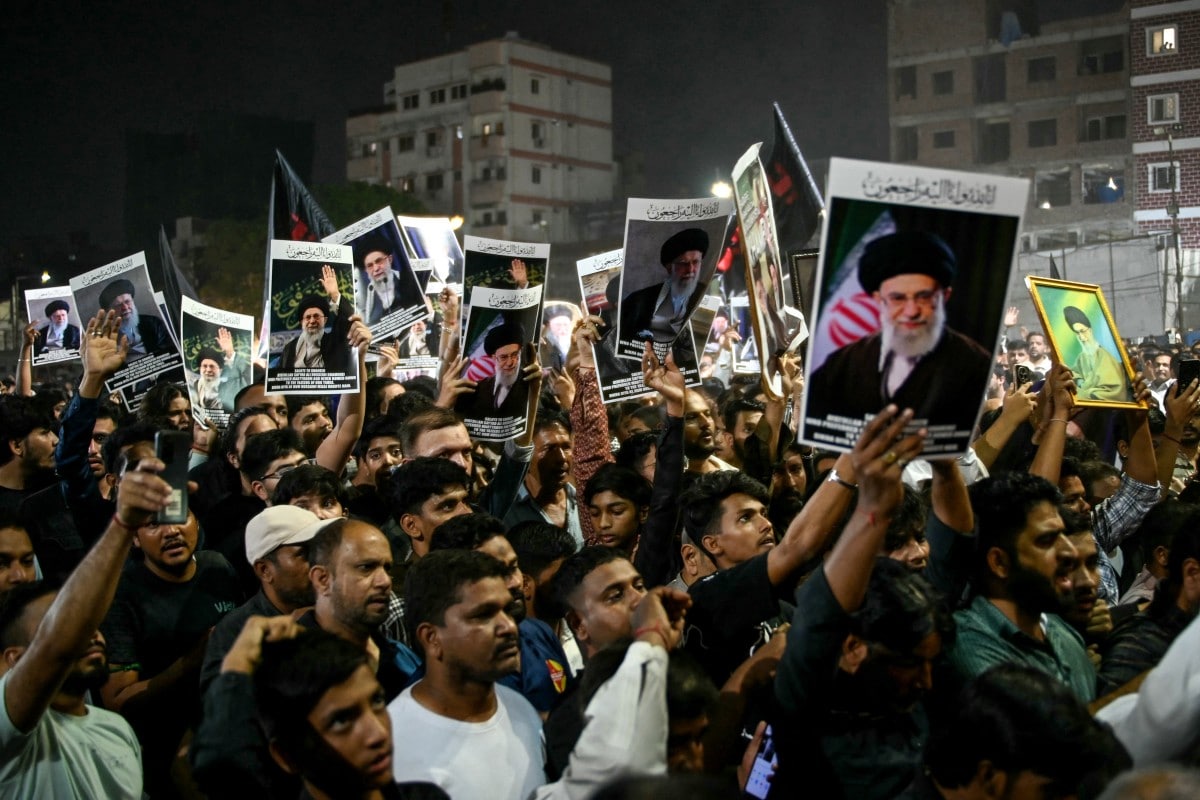
Protesters mourn the death of Khamenei in Hyderabad, India (AFP)
Cut to today. Outside the Iran Cultural Centre in Delhi, hundreds of mourners from across India have gathered, wearing black badges, visibly in mourning. Social media is flooded with videos of people marching through the main roads of Srinagar, grief smeared across their faces. In India's western neighbourhood, we have seen videos of at least eight mourners killed after security forces opened fire on pro-Iran protesters outside the US Consulate in Karachi.
Shias and Sunnis
The Muslim world is divided broadly between the majority Sunni and minority Shia. Outside Iran, which is almost entirely Shia, the largest Shia population lives in the Indian subcontinent. Shias have lived peacefully in India and are treated like any other community, though they have often been subjected to violence by Sunni groups in Pakistan.
But when it comes to the Ayatollah, both Shias and Sunnis revere him in nearly equal measure. And when it comes to his killing at the hands of Israel and the US, the majority in both communities will express their grief and solidarity in one voice. Some Shia and Sunni friends sent me messages yesterday saying it was "one of the worst days of their life".
Of course, there are reports from within Iran, reported by Western media, of celebrations over the news of Khamenei's death. And if you are looking at him from the Trumpian lens, he was, as the President said, "one of the most evil people in history".
Instead, however, we have witnessed lakhs of people take to the streets of Tehran, mourning the assassination of their beloved spiritual figurehead.
More visuals from Lucknow. Lucknow has never seen such huge crowds. From across communities(Shias, Sunnis, ahle hadith, and all other sects) pic.twitter.com/X4Yw8QwguU
— Syed Kamran Husain (@kamranhusain_) March 1, 2026
From Placeholder To The Ayatollah
What Israel and the US have done is make Khamenei, who was running a country dealing with extreme economic hardships, protests and internal squabbles, a martyr. But we will come to that in a bit. First, how did Khamenei acquire such a cult status? We need to turn the pages of history.
In 1979, Iran's Islamic Revolution toppled the corrupt regime of King Reza Shah Pahlavi and brought Ayatollah Ruhollah Khomeini back from exile in France, where he had spent 14 years orchestrating opposition through cassette tapes smuggled into Iran. Khomeini's return to Tehran was met by millions, and he swiftly established himself as the Supreme Leader of the new Islamic Republic. Those who lived during the revolution years and after would remember how Khomeini was revered by Shias all over the world. Fondly called the 'Ayatollah', he was successful in fusing religious authority with absolute political power.
Also Read | When Young Ali Khamenei, Before He Took On Ayatollah Role, Visited Karnataka
When Khomeini died in 1989, the succession was far from obvious. Ali Khamenei was not the most senior cleric. He was only a mid-ranking mullah, not an Ayatollah. He decidedly lacked the religious credentials typically required for the role. It is largely believed that his elevation was a political compromise engineered by President Akbar Hashemi Rafsanjani and the Revolutionary Guards, who needed someone loyal to the system but controllable. Khamenei was quickly promoted to Ayatollah to inspire legitimacy, a move that angered the traditional clergy in Qom.
What few know is that Khamenei's right arm has been paralysed since a 1981 assassination attempt - a bomb planted by the Left-wing opposition group, Mujahedin-e-Khalq, exploded during a meeting, nearly killing him. He wrote with his left hand, a visible reminder of the regime's violent early years. Over 36 years, Khamenei transformed from a placeholder into one of the world's most powerful unelected leaders, amassing control over the Revolutionary Guards, the judiciary, vast economic foundations and Iran's nuclear programme.
The Imam Hussein and the Psyche of Martyrdom
By killing Khamenei, the US and Israel perhaps assumed that the system in Tehran would collapse. If that is indeed true, that was a serious misreading of how power and faith operate in Iran. In Shia history, the central emotional story is that of a revered religious leader, Imam Husain, who was killed by a powerful ruler in the 7th century and whose death did not end his movement but made it immortal.
For millions of Shias, that memory is etched in their psyche from childhood. It is the lens through which every present conflict is seen. Khamenei's death in a US-Israeli attack would instantly recast him from being just a political leader with critics into a martyr who "stood up to global powers". And, martyrdom in this tradition creates unity, not collapse.
Tehran's Enghelab Square this morning.
— Arya - آریا (@AryJeay) March 1, 2026
Iran is mourning…pic.twitter.com/k86bbvCdPJ
Moreover, the Iranian state has for decades projected the Supreme Leader as the protector of the revolution and of national independence. So, a violent death at the hands of an external enemy would fuse nationalism, religion and resistance into a single, powerful narrative. Rival factions within the establishment would be forced to close ranks and public anger would shift away from domestic grievances towards the outside attacker. In other words, instead of weakening the system, such a strike has perhaps given it a new emotional legitimacy and a harder, more uncompromising leadership. It is the exact opposite of what the US and Israel intended.
More importantly, the Iranian system was designed to survive exactly such a scenario: the constitution mandates an interim leadership council and a rapid selection by the Assembly of Experts, ensuring continuity rather than collapse. The expected outcome was the appointment of Ayatollah Alireza Arafi, the 62-year-old cleric who runs Iran's main religious seminaries, as the religious member of a temporary three-person Leadership Council. He will share this interim authority with President Masoud Pezeshkian and Chief Justice Gholamhossein Mohseni Ejei, and together they will carry out the Supreme Leader's powers only until the Assembly of Experts chooses a permanent successor. This does not automatically make Arafi the next Supreme Leader. It simply places him in a caretaker role for now. In Iran's system, even holding the rank of Ayatollah does not guarantee political power or the top post, because many senior clerics have religious status without being part of the leadership structure.
Arafi Is No 'Friend'
If Arafi succeeds Khamenei, we must know that he is, if anything, not a moderate face who will open Iran to the West. He is a system insider and belongs to a younger generation than Khamenei. But his views are firmly conservative and he is deeply connected to the institutions that produce Iran's religious leadership and work closely with the Revolutionary Guards. He is not known for fiery speeches, yet he is exactly the kind of figure the establishment trusts to keep the present structure intact.
This is why the assumption in Washington, that military pressure will create space for reformists, is misplaced. When a country is under attack, it does not move towards liberalisation. Instead, it closes ranks and empowers its hardest, most security-minded leadership. A succession that takes place under bombardment will almost certainly strengthen the very forces the US and Israel want to weaken. In trying to force regime change, external pressure ends up producing a more rigid and more defiant Iran. Not a friendlier one.
(Syed Zubair Ahmed is a London-based senior Indian journalist with three decades of experience with the Western media)
Disclaimer: These are the personal opinions of the author
-
Opinion | India Faces A BRICS Challenge. Can It Find A Way Through?

The Delhi Summit is being held at a challenging time. Such circumstances have not been encountered since the BRICS Summits started in 2009 in Russia
-
Opinion | Why The Jauhar Scene In Padmaavat Needs To Be Seen For What It Does
The practice of 'jauhar' was certainly abolished long ago. But that does not mean that it should be romanticised or glorified in mass culture.
-
Opinion | Sachin Pilot's Long Wait Is Over. Can Congress Finally Use Him?
The grand old party is now betting that the man who turned 'waiting' into a virtue can deliver Punjab
-
Ground Report | Sunlight Is A Luxury In Delhi Students' Hub Where Building Collapse Killed 7
The civic infrastructure in Delhi's Satya Niketan hasn't caught up with the pace of development and appears to be crumbling under the weight of the influx of tenants and the greed of landlords.
-
Mayawati's Tough Love: Nephew Akash Anand Benched Again. What It Means For BSP
Akash Anand, the 31-year-old foreign-educated nephew of BSP boss Mayawati, finds himself out of favour, for at least the third time in three years, with the latest turn coming in Lucknow on September 3.
-
Blog | Why You Should Care Whether Schrodinger's Cat Is Dead Or Alive
Imagine going on a romantic Alpine getaway and returning with the equation that runs the modern world. The only snag: nobody can quite agree on what it says about reality.
-
Promote, Punish, Repeat: Decoding Mayawati's Akash Anand Puzzle
The development in the BSP is unprecedented. Never before has any Indian party elevated a family member and dumped him or her unceremoniously thrice within a span of three years.
-
Opinion | Nepal Needs $5 Billion To Rebuild. World's Climate Fund Doesn't Have Even 10% Of It
The fund caps support at USD 20 million per project; Nepal needs two hundred times that. And the board is not scheduled to sit until December.
-
Opinion | The Rise Of Indians In US Is Making Some Americans Very, Very Angry
A new report released yesterday shows how Indians are now among the biggest targets of racist attacks in America.
-
Opinion | China, Pak, A Stalled India Visit: How Signals From Bangladesh Are Getting Louder
A fighter jet deal with China, interest in Pakistan's military bloc, and a 'stalled' visit to India - all in a month. Bangladesh's drift is getting harder to ignore.