A village in Karnataka's Chikkaballapur has announced a three-day mourning period as a mark of tribute to Ayatollah Ali Khamenei, Iran's supreme leader, who was killed in the opening salvo of a massive US and Israeli attack that extended into a second day Sunday.
Aged 86, Khamenei dominated Iran since taking on the post for life in 1989 following the death of revolutionary founder Ayatollah Ruhollah Khomeini.
Khamenei lived under the tightest security, and his relatively infrequent public appearances were never announced in advance or broadcast live.
As supreme leader, he never set foot outside the country, a precedent set by his predecessor Khomeini following his triumphant return to Tehran from France in 1979.
Tension and anxiety has gripped Alipur village, which has a population of nearly 25,000, of whom an estimated 90% are Shia Muslims.
According to villagers, Ali Khamenei visited Alipura in 1986.
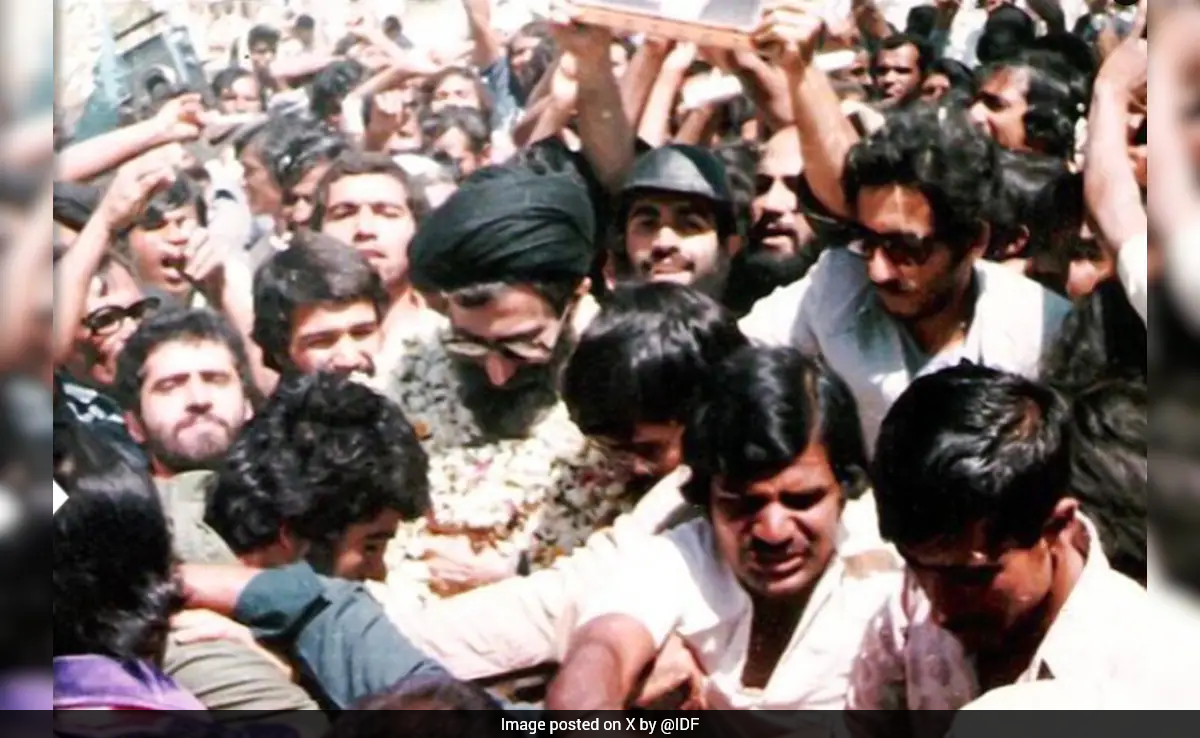
Two years after the Iranian Revolution, and shortly before he assumed the presidency of Iran in October 1981, Khamenei, show Iranian archives, visited India as part of the outreach efforts initiated by the government of Ruhollah Khomeini, which came to power after the 1979 revolution. He was 41 at the time.
At the start of the Revolution, I traveled to #India. I saw that the Revolution & Imam Khomeini had preceded us there.
— Khamenei.ir (@khamenei_ir) February 10, 2020
The same is true now. The message of Imam & the Revolution is strongly felt in popular & intellectual gatherings & in the gatherings of committed, pure people. pic.twitter.com/JJWku1LHeT
"At the start of the Revolution, I traveled to #India. I saw that the Revolution & Imam Khomeini had preceded us there. The same is true now. The message of Imam & the Revolution is strongly felt in popular & intellectual gatherings & in the gatherings of committed, pure people," read a post on the supreme leader's X account in 2020.
The picture shows him being welcomed by crowds.
Local accounts state that he visited the village in 1981 to 82 to inaugurate a hospital built in collaboration with the Iranian government.
For this small village, the visit marked the high point of its ties with Iran. Even today, dozens of youths from the village pursue religious studies in Iranian seminaries or attend universities in cities such as Tehran and Mashhad.
Iranian accounts and memoir literature also recall a visit to Kashmir in late 1980 or early 1981, where Khamenei reportedly addressed gatherings in Srinagar.
Massive protests also erupted across Kashmir against the killing of Ayatollah Ali Khamenei. In view of continuous protests and a shutdown call tomorrow, authorities have curtailed mobile internet service in Srinagar. The government has also announced closure of all the schools and colleges for two days.
Khamenei became Iran's supreme leader in 1989, wielding ultimate religious and political authority over the state and security apparatus.
As supreme leader, Ayatollah Khamenei sat above all other branches of government. He appointed the heads of the judiciary, state media and key security agencies, and held final authority over who can run for president.
At first dismissed as weak and indecisive, Khamenei seemed an unlikely choice for supreme leader after the death of the charismatic Ayatollah Ruhollah Khomeini, who founded the Islamic Republic of Iran. But Khamenei's rise to the pinnacle of the country's power structure afforded him a tight grip over the nation's affairs.
Khamenei was "an accident of history" who went from "a weak president to an initially weak supreme leader to one of the five most powerful Iranians of the last 100 years", Karim Sadjadpour at the Carnegie Endowment for International Peace told Reuters.
Track Latest News Live on NDTV.com and get news updates from India and around the world


