Hindustan Aeronautics Limited (HAL) on Wednesday signed two key agreements at Wings India 2026, one with Russia's United Aircraft Corporation (UAC) to explore licensed production of the SJ-100 regional jet in India, and another with Pawan Hans Limited for the supply of 10 Dhruv NG helicopters.
This underscores HAL's plan to sharply scale up its civil aviation footprint, which currently contributes barely five per cent of its turnover.
The announcements came as the SJ-100 regional jet emerged as a centrepiece at the four-day civil aviation show at Begumpet airport in Hyderabad.
The 100-seat, twin-engine aircraft, showcased on static display, drew sustained attention from policymakers, airline executives, and industry observers, highlighting HAL's intent to enter the commercial aircraft manufacturing space in a meaningful way.
"Our business is structured around military platforms, and we are now looking at diversifying into the civil sector as a corporate strategy. Around 25 per cent of our turnover is likely to come from non-military business in another 10 years," HAL Chairman and Managing Director DK Sunil said at the event.
Calling the SJ-100 central to this transition, Sunil said regional aviation would drive India's next phase of growth. "For India, regional connectivity is the real growth story. Aircraft like the SJ-100 are ideally suited for short-haul routes linking tier-2 and tier-3 cities," he said.
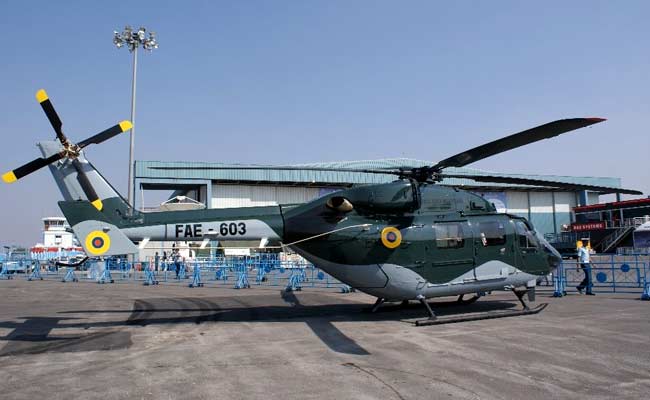
Alongside the SJ-100, HAL also showcased the Dhruv NG helicopter and the Hindustan-228 light transport aircraft, which Sunil described as the three pillars of the company's civil aviation strategy.
Under the teaming agreement with UAC, HAL aims to lay the foundation for manufacturing the SJ-100 in India within the next three years. As an interim step, the company will facilitate the leasing of up to 10 aircraft directly from UAC to Indian operators over the next 18 months. This, HAL said, would help it build experience in maintenance, ground handling and lifecycle support before local production begins.
Designed to carry up to 100 passengers over a range of about 3,000 km, the SJ-100 is optimised for domestic operations. It features fly-by-wire controls, a full glass cockpit and the ability to operate from short and semi-prepared runways, which is a key requirement for regional airports.
The aircraft also offers a quieter cabin, wider seating than older regional jets and lower operating costs, making it suitable for high-frequency, short-haul services.
On the sidelines of the show, HAL and UAC formally signed the agreement to advance collaboration on the programme, paving the way not just for licensed manufacturing but also for maintenance and long-term support in India. The partnership builds on a memorandum of understanding signed in Moscow in October 2025 and marks a strategic shift for HAL, which has traditionally focused almost entirely on defence production.
HAL is already in discussions with Indian airlines to induct the SJ-100 under the government's regional connectivity scheme. Sunil estimated demand for 150-200 aircraft in this segment over the next decade, calling the jet a strong fit for India's evolving route network. Internal projections by HAL suggest the country could need around 200 such aircraft over the next 10 years, with another 350 required to connect international tourist destinations across the Indian Ocean region.
To support the programme, HAL plans to repurpose its existing aerospace facilities. Plants in Nashik, known for producing frontline fighter aircraft, and Kanpur, which specialises in structures and components, are expected to be adapted for civil aircraft production.
"These facilities are already aerospaceready. With retooling and certification, they can be adapted for civil aircraft production," Sunil said, adding that a phased manufacturing approach would allow output to scale in line with airline demand.
The second agreement announced on Wednesday involves the supply of 10 Dhruv NG helicopters to Pawan Hans Limited, with deliveries scheduled to be completed by the end of the 2026-27 financial year.
Sunil said India would require around 400 helicopters in this category in the coming years, with potential buyers including the Border Security Force, state governments such as Karnataka and Odisha, and customers in Southeast Asia. HAL is also looking to tap heli-tourism opportunities in northern India to drive demand. Earlier variants of the Dhruv are already in service with the armed forces and the Coast Guard.
In December 2025, HAL achieved another milestone when it received certification from the Directorate General of Civil Aviation for the indigenous production of the Shakti civil engine, the first time the regulator has certified an aero engine manufactured in India.
HAL said the certification marked a major step towards self-reliance in critical aviation technologies. The twin-engine helicopter features a civil-certified glass cockpit, modern avionics for enhanced situational awareness, and safety systems such as crashworthy seats and self-sealing fuel tanks.
Looking beyond the domestic market, HAL is also targeting exports. Sunil said the company is eyeing customers in the Caribbean, Indonesia, Malaysia, and other countries for the Hindustan-228 aircraft, adding that an amphibious variant of the platform is expected to be rolled out next year.
Track Latest News Live on NDTV.com and get news updates from India and around the world


