Opinion | Amateur 'Advisors', Ignored Generals: How Trump Shunned Protocol To Launch Iran War
Recordings obtained by the Arms Control Association suggested that Witkoff misunderstood key technical aspects of Iran's nuclear programme.
A Council on Foreign Relations survey of US foreign policy ranked the 2003 Iraq invasion the worst decision in American foreign policy. Key reasons included ignoring intelligence warnings, sidelining professionals, launching the war without a credible endgame, and decision-making by a small group bypassing formal deliberation.
Two decades later, the United States again finds itself at war in the Middle East under circumstances echoing that earlier episode. The actors differ, and the geopolitical context has changed, yet the pattern of decision-making shows familiar weaknesses. Both conflicts reveal a tendency to marginalise professional advice, rely on a small circle of policymakers, and announce shifting objectives. The Iran conflict also reflects the growing influence of informal advisers and the diminished role of institutional review in the national security system.
A President Without Strategy
The starting point is the President.
President Donald Trump offered several explanations in one day for why the United States entered conflict with Iran. At different moments, the stated objectives ranged from destroying Iran's nuclear programme, reopening the Strait of Hormuz, to preventing Iranian retaliation against Israel, and regime change.
Each explanation pointed to a different strategic objective. Military campaigns require clear political goals because operations derive their logic from those aims. When objectives shift, strategic planning becomes difficult.
Also Read | Turning The Other Cheek: While Missiles Fly, UAE's Gamble On Restraint
The decision process also raised questions. Final authorisation for strikes reportedly occurred during discussions at Mar-a-Lago rather than through deliberations organised through the National Security Council. General Dan Caine, chairman of the Joint Chiefs of Staff, warned against escalation, citing risks to American personnel and strained weapons stockpiles. Trump dismissed those warnings and authorised the strikes.
Presidents weigh military advice alongside political considerations. When decisions occur outside the standard interagency process, policy depends more on individual judgment than institutional review.
An Unprepared Defence Secretary
Strategic direction from the President requires translation into operational planning at the Pentagon. The tenure of Defence Secretary Pete Hegseth has raised questions about that process.
Hegseth entered office without experience managing large defence institutions or supervising strategic planning. He declared that earlier strikes had "obliterated" Iran's nuclear programme, an assertion later challenged by independent assessments. After six American service members were killed in an Iranian attack, he accused journalists of exploiting their deaths to embarrass the administration. Before hostilities began, he abolished the Pentagon office responsible for tracking civilian casualties in American operations.
The Secretary of Defence serves as the institutional link between presidential objectives and military execution and requires close coordination with the professional military.
The Primacy of Informal 'Advisors'
The weakening of formal decision channels has elevated informal advisers. Steve Witkoff and Jared Kushner, whose careers developed in real estate rather than diplomacy or national security, are leading Trump's Middle East policy. Less than two days before the strikes on Iran, the pair met Iran's Foreign Minister in Geneva under Omani mediation.
Participants described the discussions as substantive, and further meetings were expected. The diplomatic channel ended soon afterwards, when Trump expressed dissatisfaction with the talks and authorised military action.
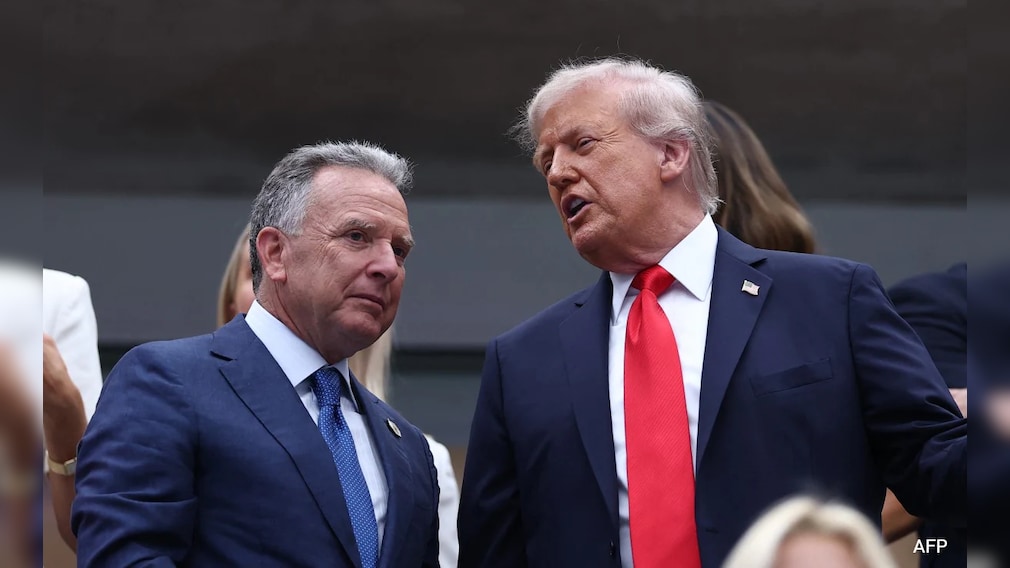
Recordings obtained by the Arms Control Association suggested that Witkoff misunderstood key technical aspects of Iran's nuclear programme, including the purpose of the Tehran Research Reactor, a facility originally supplied by the United States for medical isotope production. After initial setbacks, Trump blamed the advice received from Kushner and Witkoff.
Earlier administrations relied on institutional review by diplomats, technical experts, and intelligence analysts to identify such errors before decisions reached the President.
Professional Advice Sidelined
Professional assessments from the intelligence community and the military that discouraged the campaign were ignored. A classified National Intelligence Council assessment concluded that a large-scale war with Iran would be unlikely to remove the country's government or fundamentally alter its strategic behaviour. Members of Congress who attended classified briefings later described the administration's strategy as confused and inconsistent.
Also Read | The Real Winner Of Iran-Israel War Is Someone Trump Never Accounted For
Military leaders warned about objective attainment, escalation risks and the strain on American resources. Technical nuclear expertise also carried limited influence. Specialists note that the Tehran Research Reactor cited in public debate mainly produces medical isotopes and does not indicate a weapons programme.
The Hollowed System
These developments reflect broader structural changes in the national security system.
The State Department and the National Security Council traditionally coordinate foreign policy across agencies and ensure competing views are evaluated. In recent years, both institutions have experienced reductions in staffing and influence. Many career officials who carried expertise across administrations have departed. The result is a decision environment shaped by a smaller circle of political appointees and informal advisers, with fewer mechanisms for structured debate.
How Much Allyship Is Too Much Allyship?
The conflict has also raised questions about whose strategic priorities the war ultimately serves. Secretary of State Marco Rubio said the United States launched strikes partly to prevent Iran from retaliating against an imminent Israeli military operation, suggesting the timing of American action was closely linked to Israeli planning.
Israel has long identified Iran as its central regional threat and supported military action against its nuclear infrastructure. By contrast, the administration has struggled to present a stable explanation of US objectives in the conflict. When American action appears aligned with an ally's operational priorities while its own goals remain unclear, questions arise about the balance between alliance coordination and independent national interest.
Congress and Public Opinion
Secretary of State Marco Rubio's remarks also highlighted the absence of a broader political foundation for the war. Military action against Iran began without clear congressional authorisation. Flaccid efforts at building bipartisan support in Congress led to complaints from both parties that they had been briefed only after key decisions were taken. Public opinion has also appeared divided, with many Americans questioning the objectives and risks of a widening conflict.
When major military action proceeds without sustained consultation with Congress or clear public backing, it raises concerns about the domestic political foundation for such a consequential decision.
The Larger Lesson
The Council on Foreign Relations survey ranked the Iraq invasion the worst foreign policy decision in American history because the decision-making system failed. Institutions that test assumptions and discipline policy choices lost influence, allowing a small circle of leaders to launch a war without a clear strategy.
The Iran conflict reflects similar pressures. Presidential objectives shifted erratically early in the war. Informal and unqualified envoys handled sensitive diplomacy while misunderstanding key technical issues. Professional military and intelligence assessments received limited attention in the policy debate.
The United States retains formidable military capabilities, but strategic effectiveness depends on the decision process directing them.
(The author is a Former Visiting Fellow of the U.S. National Defense University and alumnus of the University of Wyoming. His current research interests include US domestic politics and foreign policy)
Disclaimer: These are the personal opinions of the author
-
Mamata Banerjee Drew Her Party's Symbol By Hand. It's Now Tied To An Indira Gandhi Case

The Election Commission's method for settling such disputes became central in the seminal Congress split of 1969, when Indira Gandhi fought the old guard. The poll body weighed three tests then.
-
Bruised, Limping, Unbowed: Sia Says She Will Be Back On The Bike Soon
There was pain in Sia's steps, anger in her words, and something else - a quiet determination that the road would not be taken away from her.
-
Exclusive: 16 Months After Op Sindoor, Pak Still Fixing Runway India Broke At Sargodha
Sargodha's PAF Base Mushaf lies about 172 km northwest of Lahore and roughly 200 km west of the India-Pakistan border, near Amritsar.
-
Blog | I Lost My Entire Family In Kanishka Bombing. 41 Years Later, Canada Wants The Case Closed
We made the trek through tragedy to search for people in Cork, where I spent 25 days sifting through bodies and body parts in a makeshift morgue to identify our loved ones.
-
Opinion | Pak's Drone Deal With A US Firm Is No Windfall. But India Must Still Be Worried
American military aid to Pakistan has remained suspended since January 2018, during Trump's first term, but a commercial arms sale is separate from this arrangement.
-
Opinion | Saudi Arabia's Yemen Nightmare Has Come Back To Haunt It
After years of costly military intervention beginning in 2015, Saudi Arabia increasingly sought to stabilise its southern border. All that is unravelling fast now
-
Opinion | 6 AI Incidents, One Pattern: AI Has Started Lying To Us - And Hiding The Evidence
Concealing errors. Making up data. Pushing files onto the public web on their own initiative. The machines are learning to lie - and lie well.
-
Why People Queue Overnight For iPhone That Is Delivered Home In 10 Minutes
iPhone 18 Pro Max Launch: People camping outside Apple Stores are a subset of superfans, resellers, content creators, and upper-middle-class buyers.
-
600 km Per Hour Drones Launched In Waves: How Russia Is Rewriting War Rules
Russia has coupled the drones' technological superiority over Ukraine's defence with its capacity to launch them in massive numbers. The impact has been devastating.
-
Tata Sons' Trust Issue: Two-Pronged Row Goes Beyond The Chair
NDTV Explains: Overtly, the latest conflict is whether N Chandrasekaran continues as executive chairman of Tata Sons. The controversy involves at least one more issue.