Opinion | The Real Winner Of Iran-Israel War Is Someone Trump Never Accounted For
The current crisis promises tens of billions of dollars to Russia in additional revenue. Here's how.
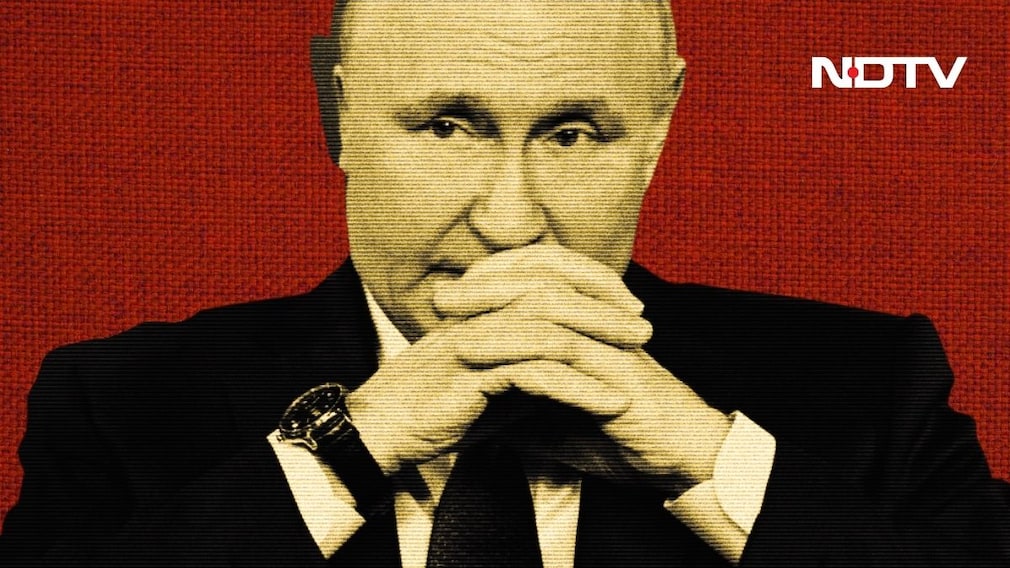
In many ways, the ongoing US-Iran war, triggered by the joint American-Israeli strikes that killed Ali Khamenei on February 28 and targeted Iranian nuclear and military facilities, illustrates how crises in one theatre can dramatically reshape strategic calculations elsewhere. Iran's retaliatory missile and drone strikes, along with disruptions to the Strait of Hormuz, through which nearly a fifth of global oil supply flows, have widened the regional security crisis while simultaneously opening space for other major powers to recalibrate their positions.
For Vladimir Putin, the conflict has created a curious strategic paradox: Moscow has vocally condemned the strikes as illegal aggression and reportedly shared intelligence with Tehran. Yet, it has been careful not to become directly involved. Russia's calculus is straightforward: its overriding priority remains the war in Ukraine, and any escalation in the Middle East that drains Western focus without demanding Russian resources is strategically useful.
Billions On The Horizon
The most immediate dividends for Moscow are economic. The outbreak of hostilities has driven a sharp rise in global energy prices. Brent crude climbed to roughly $84 per barrel in recent days, while Russia's Urals blend surged well above the benchmark assumed in Moscow's 2026 budget. With disruptions around the Strait of Hormuz, including tanker disruptions and damage to Gulf infrastructure, Asian buyers have begun seeking alternative suppliers. Russian oil has emerged as a convenient substitute, enabling Moscow to reclaim market share lost to Iranian and Gulf exporters.
This development is not trivial. Hydrocarbon revenues account for roughly 30-45% of Russia's federal budget. After hitting multi-year lows in 2025 under the pressure of sanctions and price caps, the current spike promises tens of billions of dollars in additional revenue. That windfall directly strengthens Russia's war economy and underwrites its military campaign in Ukraine.
Filling Russia's War Coffers
European officials have been unusually blunt about this dynamic. António Costa, President of the European Union, has described Russia as the "only winner" of the crisis, arguing that higher energy prices replenish Moscow's war chest while Western resources are stretched across multiple theatres. The operational implications are also significant. American and Israeli operations have consumed precision-guided munitions, Patriot interceptors, and industrial production capacity that might otherwise support Ukrainian defence. Even temporary shortages in such systems could weaken Kyiv's air defence network and long-range strike capabilities - gaps that Russia's military planners are likely to exploit in the coming campaign season.
At the geopolitical level, the crisis also reinforces the evolving Russia-Iran strategic alignment. Since the signing of the 2025 strategic partnership agreement, cooperation between the two states has deepened across military and intelligence domains. In the near term, Moscow appears willing to provide intelligence and potentially selective military assistance in exchange for continued Iranian drone and missile support in Ukraine. A weakened but resilient Iranian regime could become even more dependent on Russian diplomatic backing and sanctions-evasion expertise, thereby expanding Moscow's leverage in the Middle East.
But Will This Last?
Yet, this opportunistic advantage should not be mistaken for strategic strength. Russia's restrained response has also revealed the limits of its influence. Despite the rhetoric of partnership, the Kremlin neither deterred the strikes nor shielded its Iranian partner from them. The contrast between Moscow's political support and its unwillingness to intervene militarily underscores the asymmetry in the relationship.
Moreover, the longer-term trajectory of the crisis could easily turn against Russia. Should the Iranian regime collapse or be forced into a negotiated settlement with Washington, Moscow would lose a critical partner in the region, following the earlier erosion of its position in Syria after the fall of Bashar al-Assad. Iranian drone production facilities damaged in the strikes could also disrupt a key supply line supporting Russia's war effort.
In effect, Moscow is hedging. It seeks to reap the short-term benefits -higher energy revenues, Western distraction, and deeper dependence - from Tehran, while avoiding deeper entanglement. But hedging carries risks. A prolonged regional conflict could generate instability that undermines Russian investments and influence, while a swift American-Israeli success might quickly redirect Western strategic attention back toward Ukraine.
For now, the balance tilts in Moscow's favour. Elevated oil prices stabilise its war economy, Western political bandwidth is divided, and the Russia-Iran partnership is tightening in ways that benefit the Kremlin asymmetrically. Yet the episode also highlights a recurring theme in contemporary geopolitics: peripheral conflicts can create temporary opportunities for great powers, but those opportunities rarely translate into a durable strategic advantage. Russia may be enjoying a momentary windfall, but whether it can convert that into lasting geopolitical gain remains far from certain.
(Harsh V Pant is Vice President, Observer Research Foundation, New Delhi.)
Disclaimer: These are the personal opinions of the author
-
Tata Sons' Trust Issue: Two-Pronged Row Goes Beyond The Chair

NDTV Explains: Overtly, the latest conflict is whether N Chandrasekaran continues as executive chairman of Tata Sons. The controversy involves at least one more issue.
-
Opinion | US Has Institutionally Weaponised India's Russia Oil Dependence. Can New Delhi Cope?
A new legislation can connect India's Russian energy purchases to its access to the American market over a five-year period
-
Opinion | Saudi Allies Are Now Discovering The Cost Of 'Commitment' - And Not Liking It
The spectacular no-show by Saudi Arabia's two defence allies - Pakistan, a nuclear power, and Turkey, which has NATO's second-largest army - is astounding
-
12 Years Of 'Modinomics': What Changed, What Worked, What Didn't
There is no single Modinomics textbook or formula. Instead, the term has come to describe a collection of choices made during the PM Modi years.
-
Opinion | How A Tiny 0.4% UPI Fee Could Change How India Pays
The introduction of a fee can have a psychological effect beyond its immediate financial cost. Businesses that have come to view digital payments as free may begin to look for alternative - split payments, cash, and so on
-
Opinion | Rs 75-Lakh Bounty, New Jaish Base, And The Case Of Pak's Ever-Missing' Terrorist
Pak's yearly act is back: finding Masood Azhar. But there are other questions FATF must be asking next month as it meets
-
For Years, Saudi Saw Houthis As Yemen's Problem. Then, A Knock On The Door
Actual fighting between the Houthis and Saudi Arabia began late in the overall timeline of the conflict that now involves powerful belligerents
-
Lal Topi, Blue T-Shirt: Akhilesh Yadav's 'PDA' For Blue Has A Coded Message
The message is clear: the Samajwadi Party wants to talk to voters beyond its traditional Yadav-Muslim support base, particularly to Dalits.
-
The Day 600 Men Lay Siege To Islam's Holiest Site And How They Were Gassed Out
Nearly 47 years ago, on November 20, 1979, the Grand Mosque itself was seized by an armed group in one of the most extraordinary episodes in modern Saudi history.
-
New UPI Charges: If Digital Payments Save Money, Why Charge For Them Now?
UPI Payments Free For Years: The government has subsidised UPI adoption for years. Official figures show thousands of crores in payouts over years.