
The highly transmissible Delta variant of coronavirus has rendered the prospect of herd immunity, where the majority of a country's population becomes immune to a virus, difficult, the head of the UK's Oxford Vaccine Group has warned.
Professor Andrew Pollard, who led the team that was behind the Oxford University's COVID-19 vaccine, told the All-Party Parliamentary Group (APPG) on Coronavirus Tuesday that the fear of another even more transmissible variant remains a possibility and, therefore, there is nothing that can completely stop the deadly virus from spreading.
-

-
 Who Is Rajiv Mehta? Lilavati Hospital Trustee To Speak At NDTV World Summit 2026
-
 Ex-CIA Director To Decode 'War In Times Of AI' At NDTV World Summit
-
 From Call Centre To Billion-Dollar Disruptor: Nikhil Kamath At NDTV World Summit
-
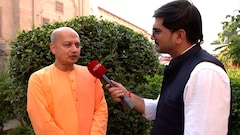 'Every 5 Years, You'll See A New India': Swami Sarvapriyananda Ahead Of NDTV World Summit
-
 AI Can Think, But Can It Be Conscious? Swami Sarvapriyananda Weighs In
-
 Alain Ebobisse, Africa50 CEO, To Attend NDTV World Summit 2026. All About Him
-
 Kriti Sanon At NDTV World Summit: A Look At Her Career And Business Ventures
-
 Ex-CIA Director To Decode 'War In Times Of AI' At NDTV World Summit
-
 Who Is Vikram Rai, CEO, South Asia GE Aerospace, Set To Attend The NDTV World Summit 2026
-
 Rahul Kanwal: The World Is Changing. What Comes Next? | NDTV World Summit 2026
However, he also said there was no cause for "panic" as he expressed his doubts over the UK government's proposed third booster dose of vaccines.
"The problem with this virus is (it is) not measles. If 95% of people were vaccinated against measles, the virus cannot transmit in the population," Professor Pollard explained during the online evidence session.
"The Delta variant will still infect people who have been vaccinated. And that does mean that anyone who's still unvaccinated at some point will meet the virus. We don't have anything that will stop transmission, so I think we are in a situation where herd immunity is not a possibility and I suspect the virus will throw up a new variant that is even better at infecting vaccinated individuals," he said.
This was echoed by Paul Hunter, professor in medicine at the University of East Anglia and an expert in infectious diseases, who also highlighted that the current vaccines being administered are very effective in preventing severe Covid infection and death but they cannot prevent infections entirely.
"The concept of herd immunity is unachievable because we know the infection will spread in unvaccinated populations and the latest data is suggesting that two doses is probably only 50 per cent protective against infection," said Mr Hunter.
Meanwhile, the experts also weighed in on UK Health Secretary Sajid Javid's plans to start offering the most at-risk groups a third booster shot of a Covid vaccine along with a flu vaccine from next month.
"The time we would need to boost is if we see evidence that there was an increase in hospitalisation - or the next stage after that, which would be people dying - amongst those who are vaccinated. And that is not something we are seeing at the moment," said Professor Pollard.
"Even as the levels of immunity start to drop, our immune system still remembers that we were vaccinated and we'll be remembered decades from now that we have those two doses of vaccine. So there isn't any reason at this moment to panic," he said, adding that doses needed to "go where they can have the greatest impact" in unvaccinated parts of the world.
On Tuesday, the UK recorded its highest daily death count from coronavirus since March, with 146 new deaths, but the number of new cases fell to 23,510 from 25,161 on Monday.
(This story has not been edited by NDTV staff and is auto-generated from a syndicated feed.)
Track Latest News Live on NDTV.com and get news updates from India and around the world


