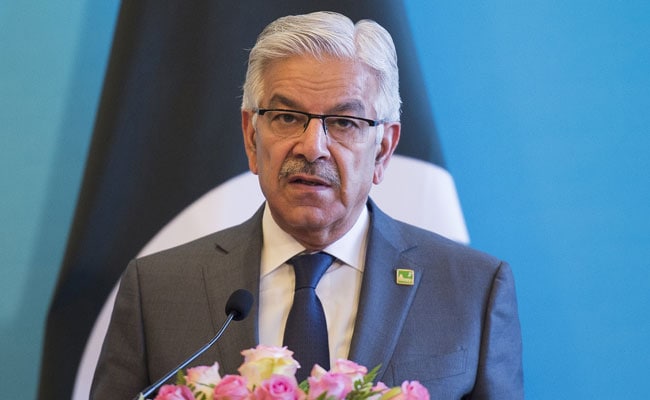
In a sharp and unprecedented escalation, Gideon Sa'ar, Israel's Foreign Minister, has publicly rebuked Pakistan's leadership, marking a rare direct diplomatic confrontation between two nations that do not maintain formal ties. The statement, issued on social media, was aimed at comments made by Pakistan's Defence Minister Khawaja Asif and comes just hours before anticipated US-Iran negotiations linked to regional tensions.
Sa'ar condemned what he described as "blatant antisemitic blood libels" and warned that labelling Israel as "cancerous" effectively calls for its destruction. He added that Israel would "defend itself against terrorists who vow its destruction", underscoring the seriousness with which Jerusalem views the rhetoric emanating from Islamabad.
Israel views very gravely these blatant antisemitic blood libels from a government claiming to “mediate peace”.
— Gideon Sa'ar | גדעון סער (@gidonsaar) April 9, 2026
Calling the Jewish state “cancerous” is effectively calling for its annihilation.
Israel will defend itself against terrorists who vow its destruction. https://t.co/CCMveNi9Qu
Israeli Prime Minister Benjamin Netanyahu's office slammed Munir's statement. "Pakistan defence minister's call for Israel's annihilation is outrageous. This is not a statement that can be tolerated from any government, especially not from one that claims to be a neutral arbiter for peace," it said in a statement.
The Israeli response follows a chain of developments beginning with Pakistan's Foreign Ministry issuing a strong condemnation of Israeli military actions in Lebanon. This was followed by Khawaja Asif's inflammatory remarks on social media, where he sharply criticised Israel and invoked highly charged language. The Israeli Foreign Ministry's decision to respond publicly represents a notable departure from past practice, as Israel has historically avoided direct engagement with Pakistan in the absence of diplomatic relations.
Analysts view the move as a significant foreign policy shift. While backchannel contacts and indirect messaging have occurred over the years, public criticism at this level is unprecedented. The timing is also critical, coinciding with a larger geopolitical manoeuvre involving Iran, the United States, and regional actors.
Adding another layer to the unfolding situation, Iran's state-affiliated Tasnim News Agency reported that Tehran may suspend dialogue in Islamabad with the United States unless Israel halts its military operations in Lebanon. This development raises concerns about the potential derailment of diplomatic efforts aimed at de-escalating tensions in the Middle East.
Israel-Pakistan Ties
Israel's distrust of Pakistan's role in any mediation effort has been articulated previously. Reuven Azar, Israel's envoy to India, had recently told NDTV that Israel does not consider Pakistan a credible intermediary in peace talks. Sa'ar's latest remarks appear to reinforce that position, suggesting a hardening of Israel's stance toward Islamabad.
India-Israel Ties
The episode also highlights the broader strategic alignments in the region. India, a close partner of Israel, has long accused Pakistan of sponsoring terrorism, particularly in the Indian state of Jammu and Kashmir. New Delhi has held Islamabad responsible for multiple attacks, including the deadly Pahalgam terror attack last year that claimed 26 civilian lives.
Israel has consistently supported India's counterterrorism efforts. Israeli Prime Minister Benjamin Netanyahu previously told NDTV that Israeli defence technologies played a role in enhancing India's operational capabilities during Operation Sindoor against Pakistan. The growing India-Israel strategic partnership has further complicated Pakistan's position in regional geopolitics.
Meanwhile, Indian Prime Minister Narendra Modi's recent visit to Israel, shortly before joint US-Israeli operations targeting Iran-linked groups in Lebanon, underscores the deepening cooperation between New Delhi and Jerusalem. These overlapping developments point to an increasingly interconnected strategic landscape where regional conflicts, alliances, and rivalries intersect.
Israel's direct criticism of Pakistan may signal a willingness to more openly challenge narratives it views as hostile, even from countries with which it lacks formal diplomatic engagement. For Pakistan, the episode raises questions about its diplomatic balancing act amid tensions involving Iran, the United States, and key regional players.
As the situation evolves, the convergence of rhetoric, military actions, and high-stakes diplomacy suggests that the fallout from this exchange could extend well beyond a war of words, potentially influencing the trajectory of regional negotiations and alliances.
Track Latest News Live on NDTV.com and get news updates from India and around the world


