





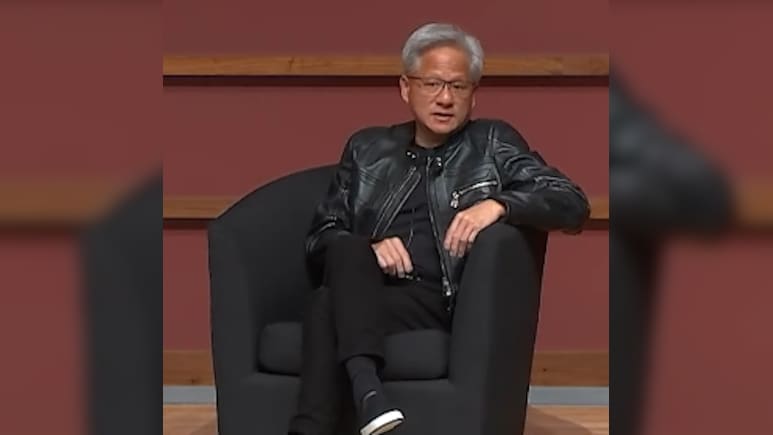
Taiwan semiconductor stocks rose on Wednesday after Nvidia unveiled its plan to spend about $150 billion in Taiwan's artificial intelligence (AI) field. This is a jump from $10 billion to $15 billion annually a few years ago.
"Now we're spending $100 [billion], going to $150 billion in Taiwan each year, that's up from $10 billion to $15 billion annually just four or five years ago," said CEO Jensen Huang in Taipei.
The company will also build a new office campus called “Constellation” in northern Taipei, which will open around 2030 and can house about 4,000 employees, nearly four times Nvidia's current workforce in Taiwan.
-

-
 Andrew Ng On AI At Scale: Building The Intelligence Economy | NDTV World Summit 2026
 -
 NDTV World Summit 2026: Behind The Scenes As Ayush And Vedika Preview Two-Day Mega Event
 -
 Who Is Rajiv Mehta? Lilavati Hospital Trustee To Speak At NDTV World Summit 2026
 -
 Ex-CIA Director To Decode 'War In Times Of AI' At NDTV World Summit
 -
 From Call Centre To Billion-Dollar Disruptor: Nikhil Kamath At NDTV World Summit
 -
 'Every 5 Years, You'll See A New India': Swami Sarvapriyananda Ahead Of NDTV World Summit
 -
 Alain Ebobisse, Africa50 CEO, To Attend NDTV World Summit 2026. All About Him
 -
 Kriti Sanon At NDTV World Summit: A Look At Her Career And Business Ventures
 -
 Ex-CIA Director To Decode 'War In Times Of AI' At NDTV World Summit
 -
 Who Is Vikram Rai, CEO, South Asia GE Aerospace, Set To Attend The NDTV World Summit 2026
Soon after, Taiwan's stock market surged, with the TAIEX index hitting a record high and rising 1.7 percent. Major chip stocks also gained, with TSMC rising 1.3 per cent, MediaTek jumping 8.8 per cent, and Delta Electronics up 7.2 per cent.
TSMC (Taiwan Semiconductor Manufacturing Company) makes up around 42-44 per cent of the TAIEX index. In 2025, the TAIEX index rose by about 5,928 points. Of this, TSMC alone contributed around 3,818 points. In 2026 so far, TSMC's stock has gone up more than 50 percent.
"Taiwan is the epicenter of the AI revolution," Huang said, adding, "In Taiwan, our partners will benefit from all our technologies that will transform manufacturing."
TSMC, which manufactures Nvidia's chips, is expected to become Nvidia's largest customer, even bigger than Apple. In addition to this, South Korea's SK Hynix and US company Micron joined the $1 trillion market value club.
Huang also planned to invest $500 billion in AI infrastructure in the US over four years, which averages about $125 billion per year.
Nvidia's revenue from Taiwan surged over 50 percent year-on-year, while revenue from mainland China and Hong Kong was cut in half due to regulatory restrictions.
China-related chip stocks reacted negatively, with Cambricon dropping about 5 percent and Hygon declining about 7 percent.
Track Latest News Live on NDTV.com and get news updates from India and around the world

