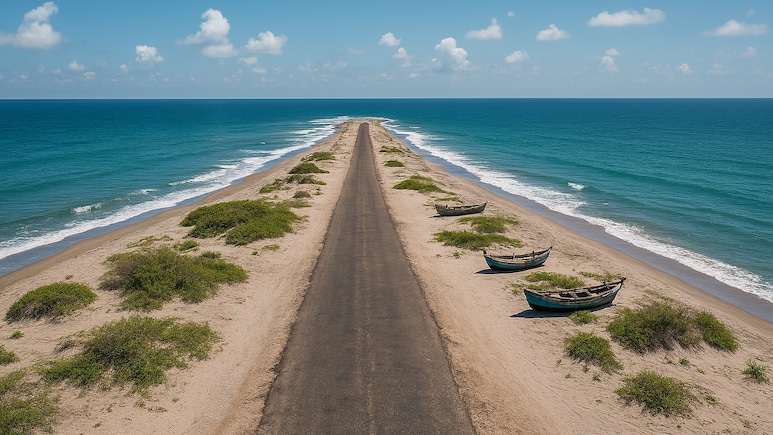
South India holds many secrets, but few places spark as much curiosity as the final stretch of road that leads to the very edge of the Indian mainland. Travellers arrive expecting a simple viewpoint, but the moment they step onto this narrow strip of land, they realise it is far more than that. The ocean roars on both sides, the wind carries stories older than memory and the landscape feels suspended between myth and reality. The drive itself feels like a journey to a place where history, geography and legend intersect. By the time you reach the end, you understand why this spot has fascinated explorers, pilgrims and storytellers for generations.
Also Read: Chennai Travel Guide: Where To Eat, Stay, And Play In Tamil Nadu's Coastal Capital
So, Which Is The Last Road Of India?
The last road of India is the stretch of National Highway 87 that leads from Rameswaram to Dhanushkodi in Tamil Nadu and finally ends at Arichal Munai, the last accessible point of the Indian mainland before the sea begins. This coast-hugging road lies in the Ramanathapuram district, positioned between the Bay of Bengal and the Indian Ocean, making it one of the most unique drives in the country. On clear days, travellers say you can even glimpse the distant outline of Sri Lanka across the water.
Where Exactly Is It Located?
The journey begins in Rameswaram and continues for roughly 20 kilometres towards Dhanushkodi, a once-thriving coastal settlement that now stands abandoned. From Dhanushkodi, the last few kilometres of NH 87 take you to Arichal Munai, the sandy tip where the land finally gives way to the endless sea. This spectacular stretch is the southern edge of Pamban Island and the closest point on Indian soil to Sri Lanka.
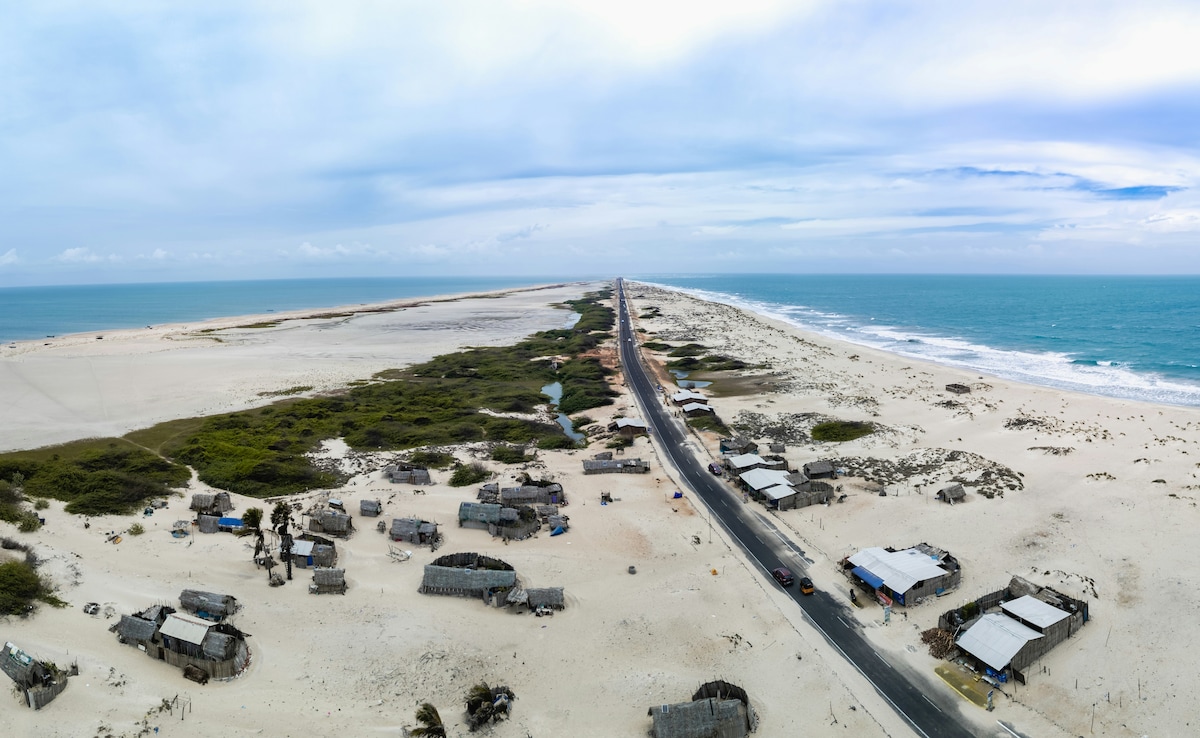
Photo Credit: Unsplash
The History Behind India's Last Road
Dhanushkodi's past is a mixture of myth and tragedy. According to the Ramayana, this is the sacred spot where Lord Rama and his army began constructing Rama Setu, the legendary bridge to Lanka, giving the place deep cultural and spiritual significance. The name "Dhanushkodi" translates to "end of the bow", referring to the point where Rama is believed to have marked the beginning of the bridge.
In more recent history, Dhanushkodi was a bustling port town with a railway station, post office and thriving community. All of this changed in December 1964, when a devastating cyclone struck and wiped out the entire town. The storm destroyed buildings, submerged land and washed away the railway line, forcing the government to declare the place uninhabitable. The ruins still stand today, silently telling the story of a lost town.
Why Is This Road So Special?
Travelling on India's last road is unlike most road journeys for several reasons:
- Ocean on both sides: The road sits between two seas, creating a surreal view throughout the drive.
- Mythological significance: It is tied to one of the most powerful stories in Indian tradition.
- A "ghost town" at the end: The abandoned remains of Dhanushkodi make the location hauntingly beautiful
- Close to Sri Lanka: The maritime boundary is only about 18 to 20 kilometres away.
- A breathtaking coastal drive: Visitors often describe this road as one of the most scenic coastal routes in India.
Also Read: Kerala vs Tamil Nadu: Which State Should Be Your First South India Stop
Accessibility Today
Thanks to the NH 87 extension, the road is now fully motorable and open to private vehicles and local transport. The drive ends at Arichal Munai, beyond which vehicles are not permitted, ensuring the area remains pristine.
Dhanushkodi continues to attract travellers not just for its views, but for the sense of standing at the very edge of the country.
Track Latest News Live on NDTV.com and get news updates from India and around the world


