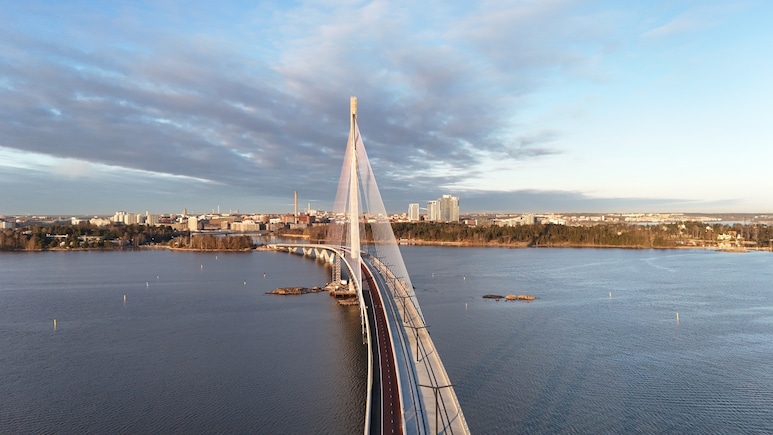
For travellers, some of the most memorable moments in a city don't come from landmarks alone, but from how a place is experienced on foot - walking along the water, pausing to take in views, or cycling between neighbourhoods without needing a car. Helsinki in Finland, already known for its thoughtful design and easy pace, has just added a new experience to its travel map. The Finnish capital has opened one of the world's longest pedestrian bridges, offering visitors a scenic, car‑free way to explore parts of the city that were earlier harder to reach. The newly inaugurated Kruunuvuorensilta Bridge is now being seen as both a transport link and a destination in itself.
According to reports, the bridge stretches 1,191 metres, making it one of the longest bridges in the world dedicated entirely to walkers, cyclists and public transport.
Also Read: Anand Mahindra Shares Rare Photo Of What Kedarnath Looked Like 144 Years Ago
Why The Bridge Is A Big Deal For Travellers
What makes the Kruunuvuorensilta especially relevant for visitors is where it takes you and how it changes the way you move around Helsinki. The bridge connects the emerging waterfront neighbourhood of Kruunuvuorenranta to Korkeasaari island and onward to the city centre, opening up a new, scenic route across the water.
For tourists, this means:
- Shorter travel times between the eastern islands and central Helsinki
- A direct link between residential waterfronts, green spaces and cultural areas
- A completely car‑free route ideal for walking, photography and cycling
As per Time Out, the bridge reduces what was once an 11‑kilometre trip to just 5.5 kilometres, making exploring these areas far more accessible without relying on taxis or buses.

Photo: X/@r_ventosa
The bridge's height and gentle curve offer uninterrupted views of the Baltic Sea, the Helsinki skyline and nearby islands, making it especially appealing for sunrise and sunset walks. Reportedly, during its opening weekend, tens of thousands of locals and visitors turned up.
Also Read: From China To Japan, Why These 12 New UNESCO Global Geoparks Got The Tag
No Cars Allowed
While the bridge does feature tram tracks - with a new tram line expected to open by 2027 - private cars are completely excluded. This aligns with Helsinki's broader travel appeal as a city that prioritises slow, sustainable exploration.
Designed by Knight Architects, the structure's slim cable‑stayed form, colour‑changing lighting and wind‑protected railings make it comfortable even in cooler weather. According to New Atlas, the bridge is also built to withstand harsh marine conditions and is expected to last nearly 200 years, reinforcing its role as a long‑term part of Helsinki's landscape.
For travellers, this makes the Kruunuvuorensilta more than just a shortcut. It functions as:
- A new walking and cycling route
- A vantage point for sightseeing
- A way to experience how Helsinki blends nature, design and everyday life
As cities worldwide look for traveller‑friendly, low‑impact infrastructure, Helsinki's pedestrian bridge stands out as an example of how getting from one place to another can become part of the journey.
Track Latest News Live on NDTV.com and get news updates from India and around the world


