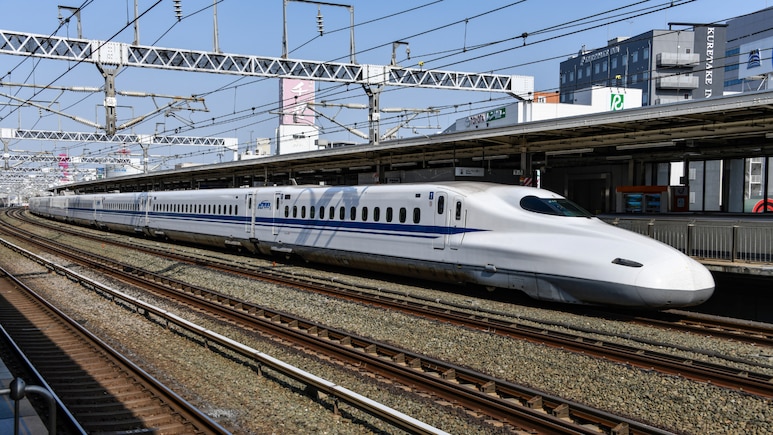
Japan and China are racing to build the world's fastest trains. The two nations are working on maglev technology that can reach speeds of around 600 km/h (373 mph). Unlike normal trains, maglev trains use magnetic forces to lift the train above the track, letting them to travel at very high speeds.
China has been developing a 600 km/h maglev train through manufacturer CRRC. Japan is also pushing ahead with its Chuo Shinkansen. It uses Superconducting Magnetic Levitation, or SCMAGLEV, technology. During testing, a Japanese train reached an impressive 603 km/h.
As per Japan Gov, Noriyuki Shirakuni, a senior corporate executive officer at Central Japan Railway Company (JR Central), the developer of SCMAGLEV, explained, “The maglev technology developed outside Japan uses larger, non-superconducting coils, so it can only levitate the train 1 cm [0.4 inch] and reach speeds of 430 km/h [267 mph]. Japan's technology is fundamentally different.”
“The safety and comfort of SCMAGLEV are based on the philosophy behind the Shinkansen bullet train, one of Japan's proudest achievements. This major transportation system, including implementation of SCMAGLEV, could not be realized without Japan's advanced industrial capabilities,” Shirakuni added.
Also Read: China's Experimental Bullet Train Sets World Record, Hits 800 Kmph In Just 5.3 Seconds
The Chuo Shinkansen will make travel between Tokyo and Nagoya much faster. At present, the train journey takes around two hours, depending on the service. Once the maglev line becomes operational, the same trip will take only 40 minutes. The route will cover almost 286 km and it'll allow passengers to travel between the two major Japanese cities in less than an hour.
As per CNN, CRRC deputy chief engineer Ding Sansan, who leads the Chinese maglevs research and development team, explained that the new high speed maglev will make travel between Beijing and Shanghai much quicker.
According to his comparison, flying between the two cities takes around 4.5 hours when airport preparation and other time are included. A high speed train journey takes 5.5 hours. The new maglev system will bring the total travel time down to just 3.5 hours.
There is still no confirmed date for when China's new high speed maglev train will be ready for public use. The project is still being developed and tested, so passengers may have to wait a little longer.
Also Read: Viral Video: In Japan You Can Drive A Mini Train For Just Rs 360
Japan has a clearer timeline for its maglev project. The first phase of the Chuo Shinkansen, which will connect Tokyo and Nagoya, is originally planned for completion in 2027.


