
There are some stories from Indian history that refuse to stay in textbooks. The love story of Peshwa Bajirao I and Mastani is one of them. It has been told through novels, films, and songs, romanticised and debated across centuries, and yet the physical evidence of their story has largely been left to quietly fade. Mastani Mahal in Pune is what remains, and it is more moving than most visitors expect. Housed inside the remarkable Raja Dinkar Kelkar Museum in Shukrawar Peth, the surviving portions of the original palace are a rare opportunity to stand inside a story that most Indians know only at a distance. For history lovers, heritage enthusiasts, and anyone who has ever been moved by the idea of two people who refused to conform, this is a visit worth making.
Who Was Mastani?
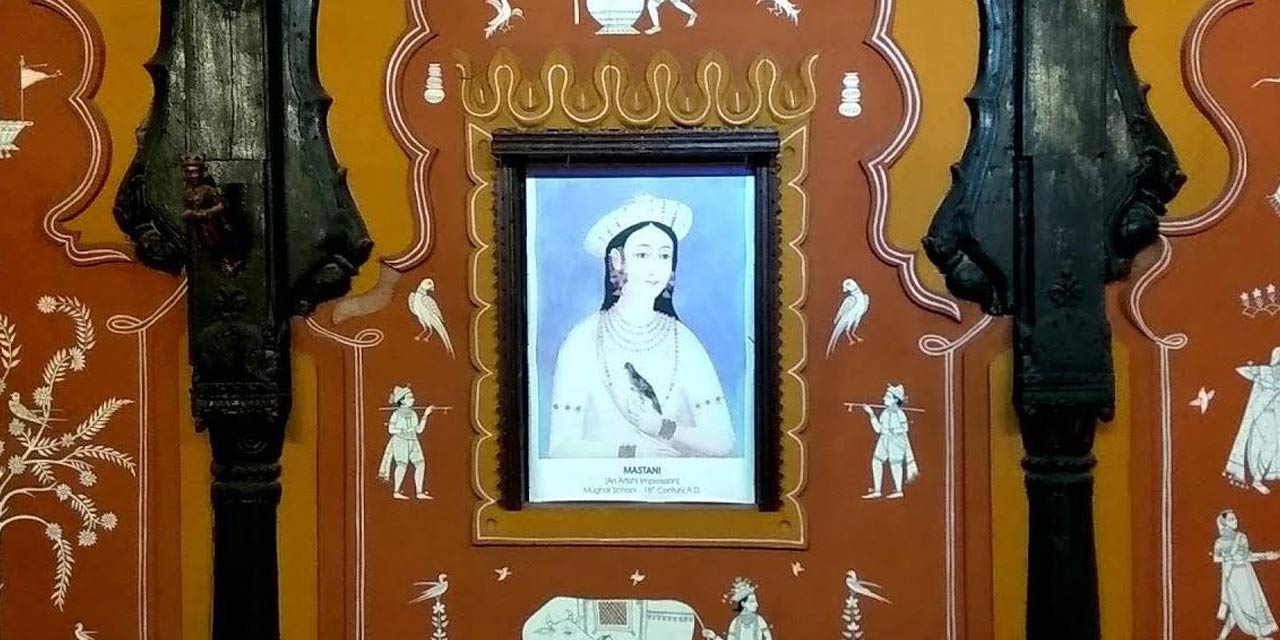
Before you walk into Mastani Mahal, it helps to know the story behind it, because the building makes considerably more sense when you understand what it meant for it to exist at all.
Mastani Bai was the daughter of Maharaja Chhatrasal Bundela, the Rajput king of Bundelkhand, and is said to have been born of a Persian courtesan mother. She was accomplished in music, dance, and the arts, and by most accounts a woman of exceptional skill and bearing. When Bajirao I, the greatest Peshwa of the Maratha Empire, came to the aid of Chhatrasal against a Mughal assault around 1728, the grateful king offered Mastani as a gesture of alliance and affection. What followed was one of the most consequential and controversial relationships in Maratha history.
Bajirao I was already married to Kashibai, who belonged to the Brahmin aristocracy of the Maratha court. Mastani, by contrast, was of mixed Hindu-Muslim heritage and not from the Peshwa's community. The relationship was never accepted by the Peshwa's family, by the court, or by the orthodox Brahmin establishment of Pune. Mastani was forbidden from entering the main Peshwa residence at Shaniwar Wada. She was seen as an outsider, a dancer, and to many in the Maratha establishment, a scandal.
Bajirao I's response was to build her a palace of her own.
The Original Mastani Mahal
The original Mastani Mahal was built by Bajirao I in the Kothrud area of Pune, at some distance from Shaniwar Wada. The architecture followed the Wada style of the Peshwa era, which is the courtyard-based design that was the dominant residential form of the Maratha aristocracy, shaped by influences from Mughal, Gujarati, and Rajasthani architecture. It was, by all accounts, a residence befitting the woman who lived in it: dignified, intricately detailed, and separate.
After Bajirao I died suddenly in 1740, at the age of just 39, while on campaign near Khargone in Madhya Pradesh, the circumstances for Mastani deteriorated rapidly. She died that same year, and accounts of how and why vary significantly between historians. Some say she was imprisoned at Shaniwar Wada; others suggest she died of a broken heart shortly after news of Bajirao's death reached her. The romantic version of events holds that she could not outlive him. The historical record is ambiguous.
What is less ambiguous is what happened to the Mastani Mahal after both were gone. For decades and then centuries, it was neglected, forgotten, and allowed to fall into disrepair. Parts of it were dismantled. The story it represented was inconvenient to the official Peshwa legacy. By the time anyone thought to preserve it, most of the palace was already lost.
Dr. Dinkar Kelkar And The Rescue
This is where the story takes a remarkable turn, and where a second figure enters the narrative.
Dr. Dinkar Govind Kelkar was a Pune-based collector who spent over fifty years assembling one of the most extraordinary private collections of Indian art, craft, and historical artefacts ever assembled. He began collecting in the 1920s as a personal tribute to his son Rajiv, who died young, and by the time he donated his collection to the Maharashtra government in 1975, it numbered over twenty thousand objects.
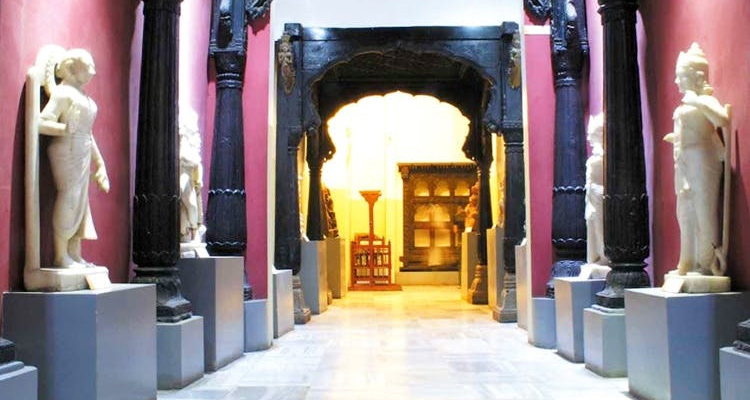
When Dr. Kelkar learned that what remained of Mastani Mahal in Kothrud was on the verge of being entirely lost, he intervened. With the help of skilled artisans, he carefully dismantled the surviving portions of the original structure and had them transported to the museum he was building in Shukrawar Peth. He then reconstructed a portion of the palace within the museum premises, integrating the original architectural elements into a recreated room and corridor that preserves what would otherwise have been lost entirely.
It is an act of cultural rescue that deserves far more recognition than it receives. Because of Dr. Kelkar, you can today stand in a room with woodwork, pillars, and carved panels that were carved in the Peshwa era and that once formed part of the home of one of the most remarkable women in 18th-century India.
What You See Inside The Museum
The Mastani Mahal section is one of the highlights of the Raja Dinkar Kelkar Museum, which is itself worth an entire afternoon. The museum is spread across a large heritage building and contains artefacts ranging from kitchen utensils and lamps to weaponry, musical instruments, miniature paintings, and architectural fragments. It is the kind of collection that takes you by surprise, more intimate and more diverse than you expect.
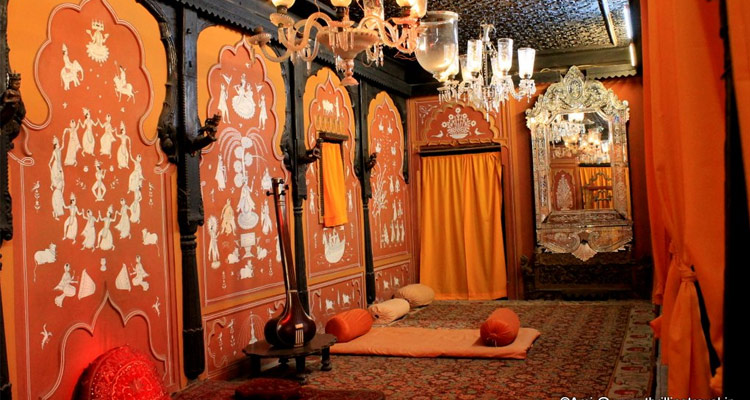
The Mastani Mahal reconstruction is housed in a dedicated room. The floor seating is arranged with cushions in the style of the period, and the ceiling is hung with chandeliers that recreate the atmosphere of a formal receiving room from the Peshwa court. But it is the woodwork that stops you in your tracks. The carved wooden panels behind the seating arrangement are original, brought from the Kothrud structure and installed here. The intricacy of the carving, the detail in the geometric patterns and floral motifs, and the sheer quality of the craftsmanship speak to the standard at which the palace was originally built. This was not an afterthought. Bajirao I built Mastani a home that reflected her importance to him.
Also on display is a silver mirror that belonged to Mastani herself, brought from the original mahal. There are musical instruments associated with her, as she was an accomplished vocalist and dancer, and the overall arrangement of the room is designed to give you a sense of the life lived within it.
The recreated corridors are equally striking. Intricately carved wooden panels run along the walls, and the carved wooden ceiling with its vintage chandeliers creates an atmosphere that is genuinely transporting. Walking through these passages, it is not difficult to imagine the original palace as it would have been: spacious, richly appointed, and in its time, beautiful.
The Architecture: A Story In Itself
The Wada architectural tradition of the Peshwa era is one of the most interesting regional styles in Indian architectural history, and Mastani Mahal is a fine example of it in miniature.
Wada architecture is essentially courtyard architecture, with buildings built around central open spaces that provide light, ventilation, and a social heart to the structure. The style emerged in the Deccan during the Maratha period and was significantly influenced by Mughal design principles, particularly in its use of carved wooden screens and decorative jharokhas, as well as by the traditions of Gujarat and Rajasthan, which brought their own repertoire of floral and geometric carvings to the Maharashtra context.
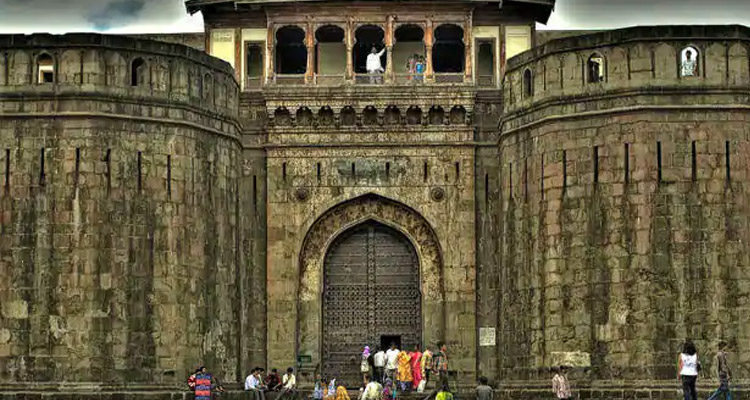
What makes the woodwork in Mastani Mahal particularly notable is the quality of the craftsmanship. Pune was, in the 18th century, a centre of skilled artisanal production, and the carvers who worked on Peshwa-era buildings (Shaniwar Wada being the most famous example, though most of it was destroyed by fire in 1828) were among the finest of their generation. The surviving fragments at the Raja Dinkar Kelkar Museum give you a tangible connection to that tradition.
Practical Information: Planning Your Visit
The Raja Dinkar Kelkar Museum is located on Bajirao Road in Shukrawar Peth, which puts it at the heart of old Pune, within easy reach of Shaniwar Wada (about a kilometre away) and the Kasba Peth area. A combined heritage walk that takes in both Shaniwar Wada and the Kelkar Museum makes for an excellent half-day or full-day itinerary.
The museum is open from 10 am to 5:30 pm. It is closed on Mondays. Entry fees are nominal, around Rs 100 for Indian adults, with lower rates for students and children. Photography is permitted in most areas of the museum.
Allow at least two hours for a proper visit, and ideally three if you want to spend time with the full collection. The museum provides audio guides in several languages, which add considerable context to what you are seeing. The Mastani Mahal section specifically benefits from having a guide or at least reading the display panels carefully. Without the historical context, the beauty of what you are looking at is still evident, but the weight of it is diminished.
The museum has a small gift shop with books, prints, and replicas. The surrounding neighbourhood of Shukrawar Peth has good Maharashtrian eateries for a meal before or after.
A Place You Go Looking For
The Raja Dinkar Kelkar Museum does not advertise itself aggressively, and Mastani Mahal does not have the monument status that Shaniwar Wada or the Aga Khan Palace enjoy. It is, in that sense, a place for those who go looking for it. But what it holds is irreplaceable: the carved wood and silver mirror of a woman whose story India has returned to again and again, housed in a museum built by a man who understood that some things are worth saving precisely because they are inconvenient and overlooked. Pune has many heritage sites. This one asks something slightly different of you. It asks you to look carefully and to remember.
Track Latest News Live on NDTV.com and get news updates from India and around the world


