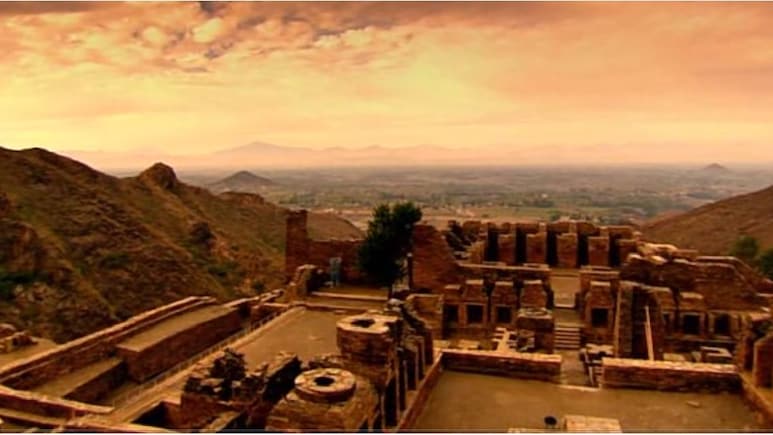
- Historian Nick Collins challenges the view that Mesopotamia was the cradle of civilization
- Indus-Sarasvati civilization had advanced cities predating Western recognition
- India received no comparable attention
What if ancient India was not a late chapter in the story of civilisation, but its opening page?
"Mesopotamia was never the cradle of civilisation. India was," maritime historian Nick Collins wrote on X, challenging a version of history taught across the world for generations.
Collins has expanded on that claim in a detailed Substack column, arguing that India's cities, mathematics, manufacturing and maritime networks flourished long before Western historians were prepared to recognise their scale.
After spending 40 years in international shipping, Collins began tracing the movement of ships, goods and commercial networks across the ancient world. "I had no orthodoxy to defend," he wrote. "I followed the evidence, and it kept arriving in the same place: the Indian subcontinent."
The conventional narrative places Mesopotamia at the beginning of civilisation, followed by Egypt, Greece and Rome. India appears much later, often as a recipient of languages, people and ideas arriving from elsewhere.
Collins believes the evidence points in the opposite direction.
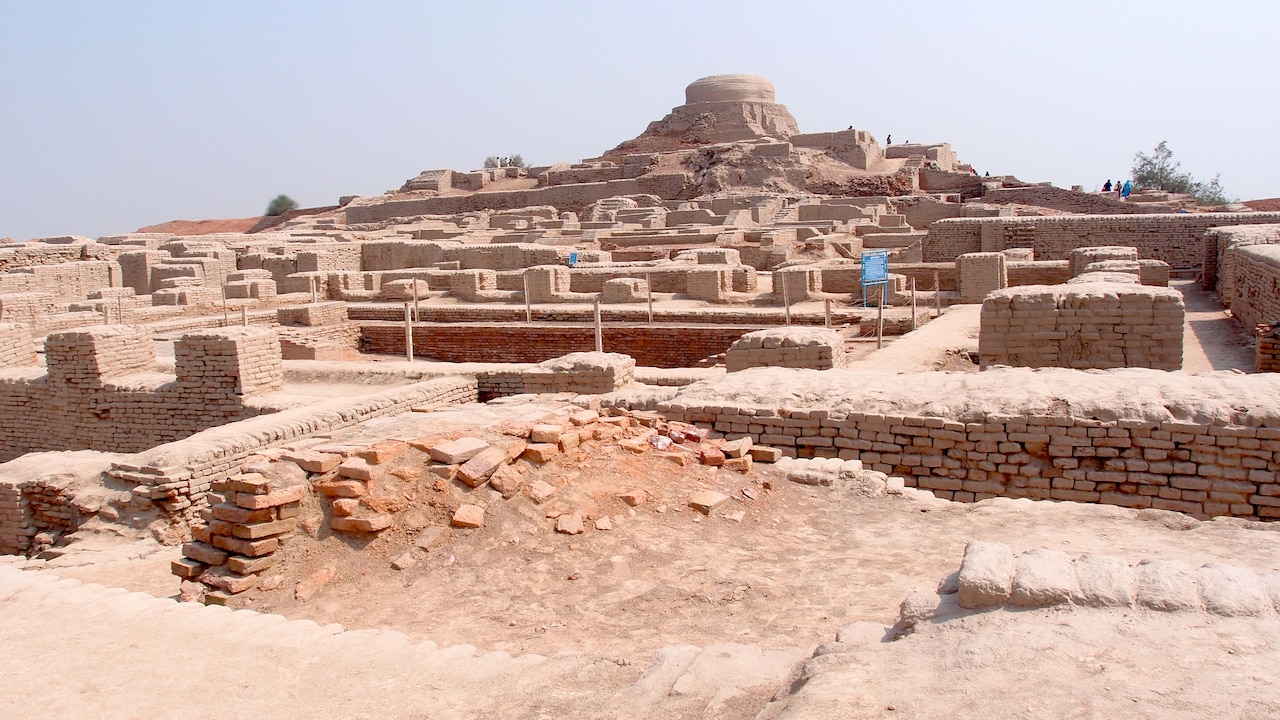
Mohenjo-daro was discovered in 1922.
Photo Credit: Wikipedia
He argues that Mesopotamia became the accepted cradle of civilisation partly because European archaeologists excavated it first. Its dry climate preserved clay tablets, bricks and bones, while biblical and classical texts directed scholars towards the region. The Ottoman authorities also permitted European excavations.
India received no comparable attention. Harappa was identified in the 19th century but explored seriously only decades later. Mohenjo-daro was discovered in 1922. By then, Collins argues, the Mesopotamia-first narrative had hardened into historical fact.
"What was actually there was the largest civilisation of the ancient world," he wrote.
Mesopotamia was never the cradle of civilisation. India was.
— Nick Collins (@nickcollins1953) July 21, 2026
I spent forty years in international shipping, not academia. When I began researching the history of maritime trade, I had no orthodoxy to defend. I followed the evidence, and it kept arriving in the same place: the… pic.twitter.com/qAhG3CTuXK
The Indus-Sarasvati civilisation had hundreds of settlements, standardised bricks and weights, grid-patterned streets, bathrooms, covered drains and extensive manufacturing and trading networks.
Lothal in Gujarat forms a crucial part of Collins's case. Its enormous brick basin, he argues, was an advanced dockyard capable of handling dozens of trading vessels. Some early interpretations classified it as a bathing pool or water tank.
For Collins, that error exposed a deeper prejudice: a maritime facility of such sophistication simply did not fit the West's accepted image of ancient India.
"Europe would not match anything like it for four thousand years," he wrote.
That brings him to one of the most contentious theories about India's past: the Aryan invasion.
Developed by European scholars in the 19th century, it claimed that light-skinned Indo-European groups entered India around 1500 BC and brought Sanskrit, the Vedas and the foundations of Vedic civilisation.
"The Aryan invasion theory was constructed because an Indian civilisation that owed nothing to Caucasians was a fact the late nineteenth century could not accommodate," Collins wrote.
Modern scholarship has largely replaced the idea of a violent invasion with more complex migration models. Genetic research has detected steppe ancestry entering South Asia, but Collins stresses that the builders of the Indus cities were indigenous and had created an advanced civilisation before that arrival.
He also points to the Rig Veda's repeated descriptions of the Sarasvati, a great river that had diminished or disappeared before the conventional dating of later migrations. "The Vedas describe no invasion," he argued.
Collins believes the deeper problem lies in the way history is studied. Mesopotamian scholars study Mesopotamia, Egyptologists study Egypt and Indologists study India. Trade, however, respected none of those academic boundaries.
Once those boxes are removed, he argues, the direction of travel begins to look very different. Carnelian beads, cotton and timber discovered in Mesopotamia had arrived aboard ships from Meluhha, the Sumerian name for the Indus civilisation.
One Akkadian seal even identifies its owner as an "interpreter of the Meluhhan language". For Collins, this suggests trade with India was regular and important enough for Mesopotamia to require professional interpreters.
Merchant seals, stone anchors and the remains of a warehouse at Lothal strengthen his maritime argument. Beads manufactured there travelled as far as the royal tombs of Ur. "The cultural flow was east to west, not the other way around," he wrote.
Some of Collins's wider conclusions remain contested. But the history he assembles challenges the neat westward march presented in traditional textbooks. Ancient India was not waiting to be civilised. Its cities were planned, its goods were manufactured, its ships were sailing and its merchants were crossing seas while much of the ancient world was still taking shape.
Track Latest News Live on NDTV.com and get news updates from India and around the world


