
Most people think glaciers are just frozen blocks of ice in faraway places. But standing in front of a real glacier is something else entirely. These aren't just ice formations. They're living, breathing giants that move, crack, and create sounds that'll make your hair stand up. Imagine walls of electric blue ice taller than buildings, massive chunks breaking off and crashing into lakes, ice caves glowing like they're lit from within. Now imagine yourself actually being there, walking on them with crampons, feeling the cold on your face, hearing the ice crack beneath your feet. That's what visiting glaciers is about. And honestly, there's never been a better time to see them because climate change is making many disappear fast. Scientists say some might not exist by the end of this century. So if you've ever thought "I should see a glacier someday," that someday needs to be soon. Here are five of the world's most famous glaciers that every adventure traveller should visit at least once. From Argentina's Patagonia to Iceland's ice caves, New Zealand's rainforest glaciers to Canada's accessible giants, these destinations will give you stories you'll tell for years.
Also Read: International Destinations That Feel Like Summer In February
1. Perito Moreno Glacier, Argentina: The Living Giant
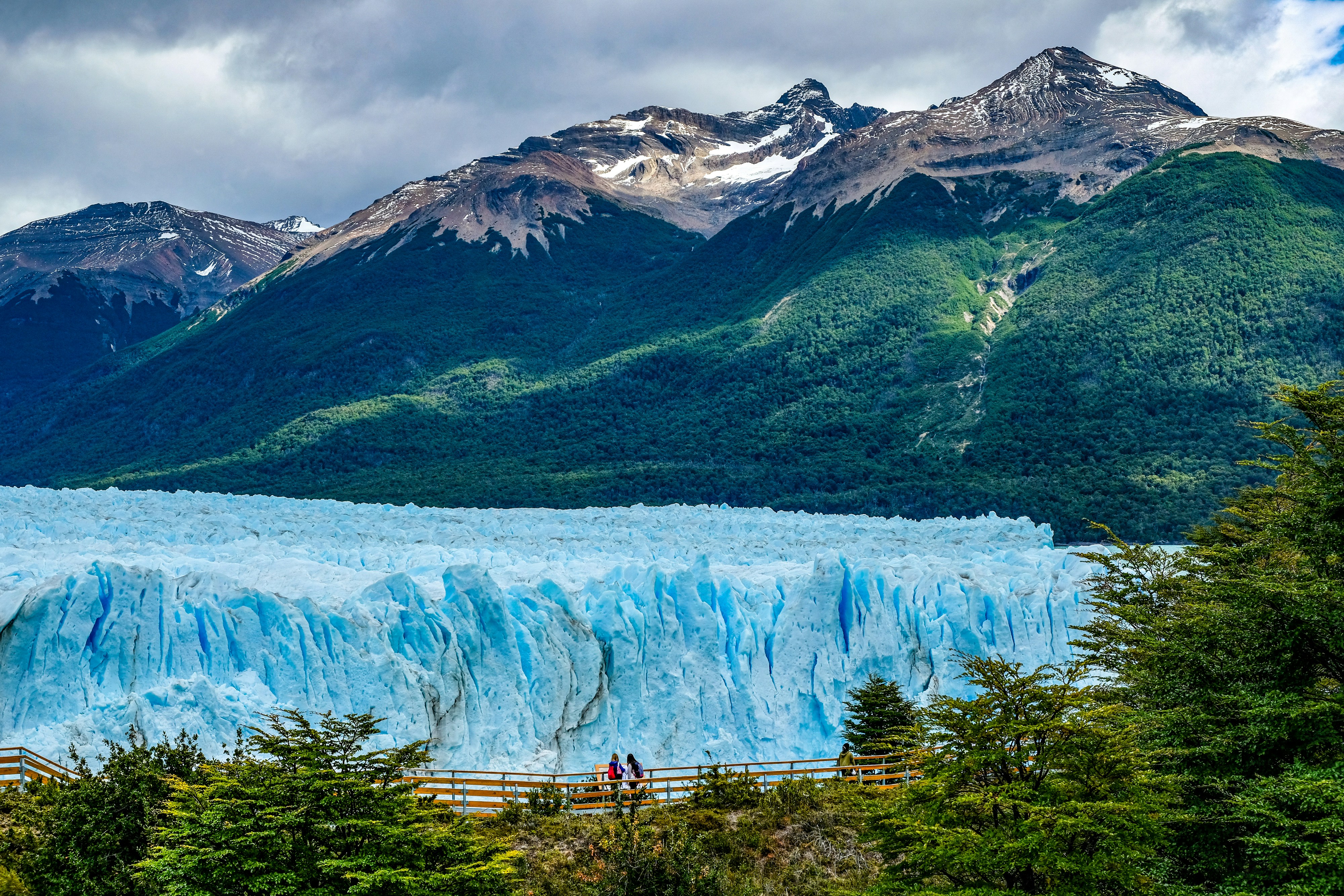
This is probably the most famous glacier in the world, and for good reason. Unlike most glaciers that are shrinking, Perito Moreno is still growing. That means it's constantly moving, cracking, and calving. Chunks of ice the size of buildings break off and crash into the lake below with a sound like thunder. It's one of the few glaciers where you can get super close without being an expert mountaineer. There are boardwalks that bring you within a few hundred metres of the glacier's face.
The glacier is 30 km long, covers 250 square kilometres, and the ice wall at the front is about 60 metres high. That's taller than a 20-storey building. The colour is this incredible electric blue that looks almost fake. And the best part? You can walk on it. Not just look at it from far away. Actually strap on crampons and trek on top of the glacier itself.
How to Get There:
Fly to Buenos Aires from Delhi or Mumbai (usually via Dubai or Doha, around 24-30 hours with layovers). From Buenos Aires, take a domestic flight to El Calafate (about 3 hours). El Calafate is a small town that's basically the base for visiting Perito Moreno. The glacier is 80 km from El Calafate, about a 90-minute drive.
Most people take organized tours from El Calafate that include transport, park entry, and guides. Tours cost around $50-70 USD (₹4,000-6,000). You can also rent a car and drive yourself if you want more flexibility.
Visa for Indians:
Argentina offers e-visa for Indian passport holders. Apply online at least 10-15 days before travel. Costs around $50 USD (₹4,000). You'll need your passport, return flight tickets, hotel bookings, and bank statements. Process usually takes 5-7 working days.
Must-Dos:
- Walk the Boardwalks: Spend at least 2-3 hours on the boardwalks surrounding the glacier.
- Do the Glacier Trek: This is the highlight. Mini-trekking (for ages 10-65) gets you 1.5 hours on the ice. Big Ice trek (for ages 18-50) gets you 3.5 hours deeper into the glacier.
- Take a Boat Tour: Sail right up to the glacier's face. You'll feel tiny next to those ice walls.
- Visit in Summer: Best time is November to March (their summer). Weather is warmer, days are longer, and roads are clear.
Pro Tips:
- Book glacier trekking tours in advance, especially for December-February peak season
- Wear layers. It's cold by the glacier even in summer
- Bring sunglasses. The ice reflects intense light
- Stay at least 2 days. One day for the glacier, one for exploring El Calafate
- Park entry fee is $31 USD (₹2,500) for foreigners, not included in tour prices
2. Vatnajökull Glacier, Iceland: The Ice Cave Wonder
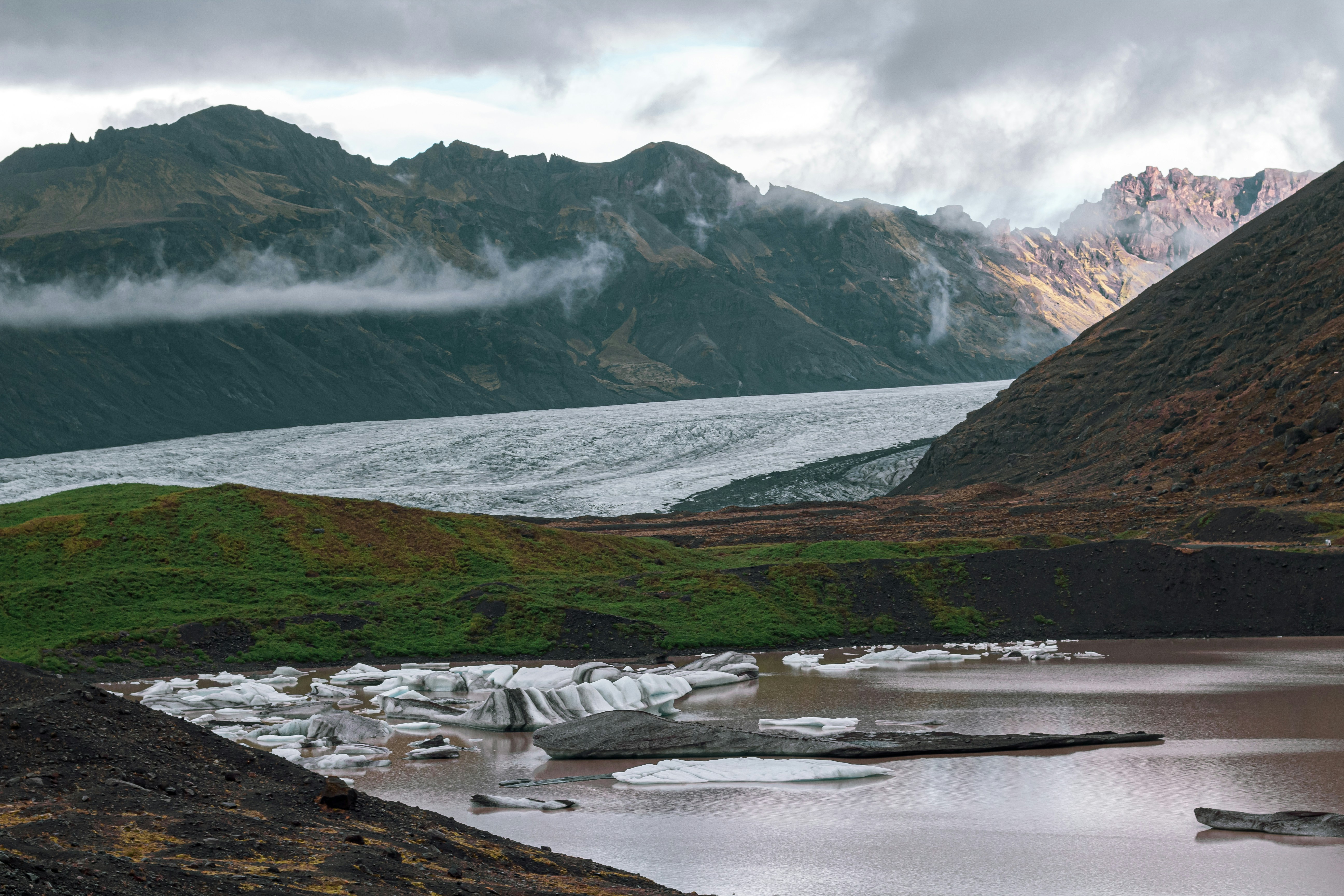
Vatnajökull is Europe's largest glacier by volume. It covers 8% of Iceland. But what makes it truly special are the ice caves underneath. These caves form every winter when glacial rivers carve tunnels through the ice. The result is caves with walls that glow electric blue, crystal clear ice above your head, and light filtering through in the most surreal ways. It's like walking inside a frozen cathedral.
The glacier also has volcano underneath it (yes, fire under ice), which makes the landscape even more dramatic. Black volcanic sand meets white ice. It's otherworldly.
How to Get There:
Fly to Reykjavik from Delhi or Mumbai (via Europe, usually London, Amsterdam, or Frankfurt). Journey time: 16-20 hours with layover. From Reykjavik, rent a car and drive to Jökulsárlón Glacial Lagoon or Skaftafell National Park (about 5-6 hours, 380 km). Both are near Vatnajökull.
Alternatively, join a multi-day guided tour from Reykjavik that covers Vatnajökull, ice caves, and other South Iceland attractions.
Visa for Indians:
Iceland is part of Schengen zone. Indians need Schengen visa. Apply through VFS Global in India. Visa fee: €80 (₹7,500). Takes 15 working days. You'll need travel insurance, hotel bookings, flight tickets, and financial proof.
Must-Dos:
- Explore Ice Caves: This is the main reason people visit. Crystal ice cave tours run from November to March (winter only, when caves are stable). Tours are 2-3 hours, cost $150-180 USD (₹12,000-15,000) per person.
- Glacier Hike: Walk on top of Vatnajökull with a guide. You'll see crevasses, ice formations, and stunning views. 3-5 hour tours, $100-140 USD (₹8,000-11,000).
- Visit Jökulsárlón Glacial Lagoon: This is where icebergs that break off Vatnajökull float in a lagoon before drifting to the sea. It's hauntingly beautiful.
- See the Northern Lights: If you visit in winter, you might catch Northern Lights over the glacier. Magical.
Pro Tips:
- Winter (November-March) is best for ice caves but cold (0 to -10°C)
- Summer (June-August) is best for glacier hiking with warmer weather and midnight sun
- Book ice cave tours at least 2-3 weeks ahead. They sell out fast
- Stay in Höfn or Vik as base towns
- Don't try to access ice caves without a guide. It's dangerous
Also Read: 8 Last-Minute Long Weekend Trips from Delhi Under ₹20,000
3. Franz Josef and Fox Glaciers, New Zealand: The Rainforest Ice
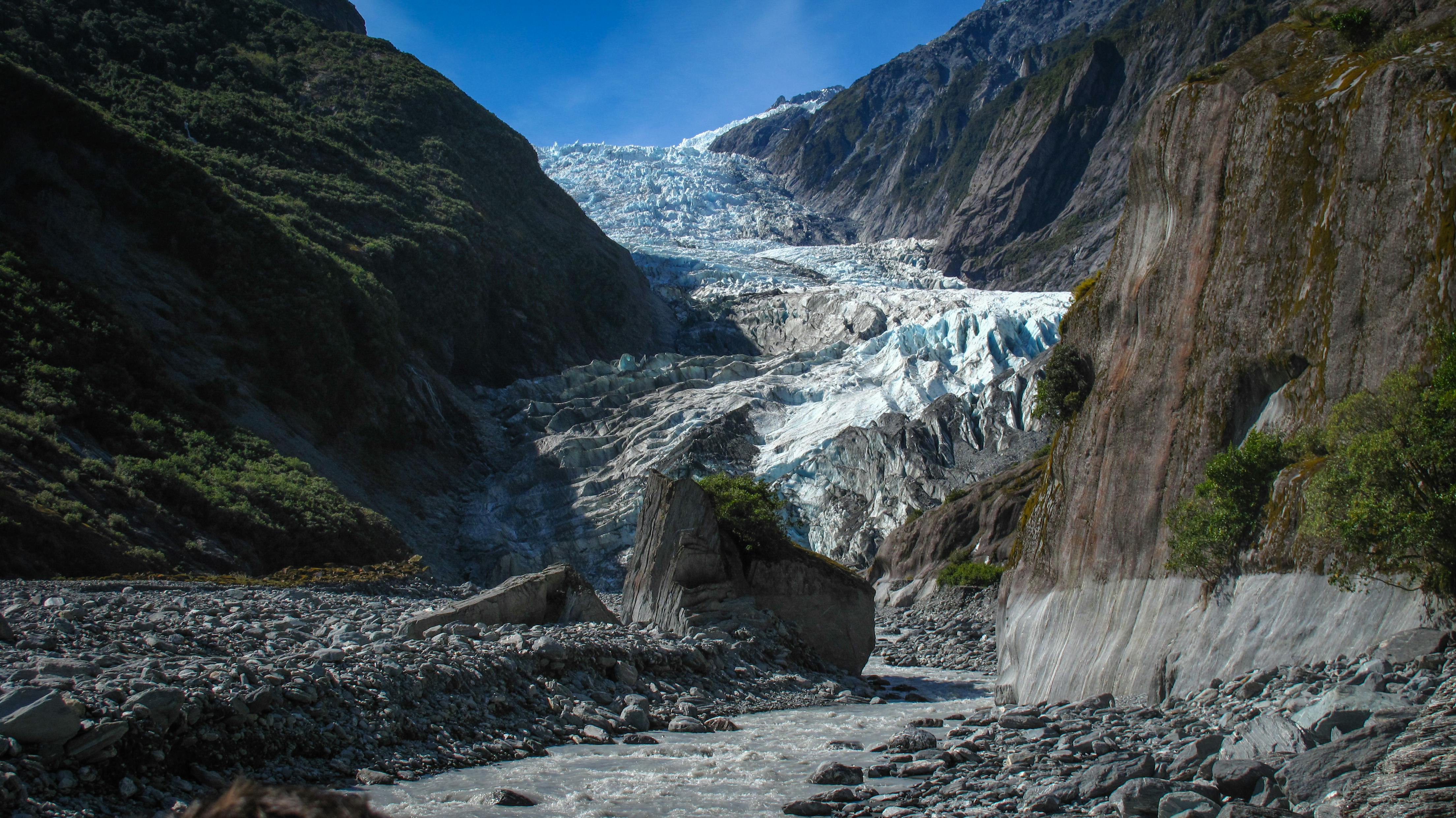
These twin glaciers on New Zealand's South Island are unique because they're in the middle of a temperate rainforest. So you've got tropical-looking greenery and ferns on one side, and massive glaciers on the other. It's the only place in the world where glaciers descend this close to sea level in a warm environment.
Both glaciers have been retreating fast in recent years, which makes seeing them now even more important. Franz Josef is more popular, Fox is slightly larger but quieter.
How to Get There:
Fly to Christchurch from Delhi/Mumbai (via Singapore or Australia, 20-24 hours). From Christchurch, either:
- Rent a car and drive to Franz Josef/Fox Glacier township (5-6 hours, 350 km along the scenic West Coast)
- Fly to Hokitika (1 hour flight) then drive 2 hours
- Join a guided tour from Christchurch
Visa for Indians:
New Zealand offers eTA (electronic travel authority) for Indian tourists. Apply online, costs NZ$23 (₹1,200). Instant approval in most cases. Valid for 2 years, multiple entries.
Must-Dos:
- Helicopter Heli-Hike: Because the glaciers have retreated, you can't walk to them from the valley anymore. Helicopters fly you to the upper parts, you land on the glacier, and then hike for 2-3 hours with crampons.
- Scenic Helicopter Flight: If heli-hike is too pricey, take a scenic helicopter flight over both glaciers and Mount Cook (NZ's highest peak).
- Valley Walks: Free walks through the rainforest to glacier viewpoints. You won't reach the ice anymore, but the walks are beautiful and show you how much the glaciers have retreated.
- Visit Both: Franz Josef and Fox Glacier are just 25 km apart. Visit both if you have time.
Pro Tips:
- Weather is unpredictable. Flights can cancel due to clouds/rain. Book 2-3 days buffer time
- Best time is December-February (summer) but still bring rain gear
- Franz Josef township has more hotels and restaurants
- Heli-hikes book out weeks in advance. Reserve early
- Don't bother with valley walks expecting to touch ice. They're just lookouts now
4. Aletsch Glacier, Switzerland: The Alpine Classic
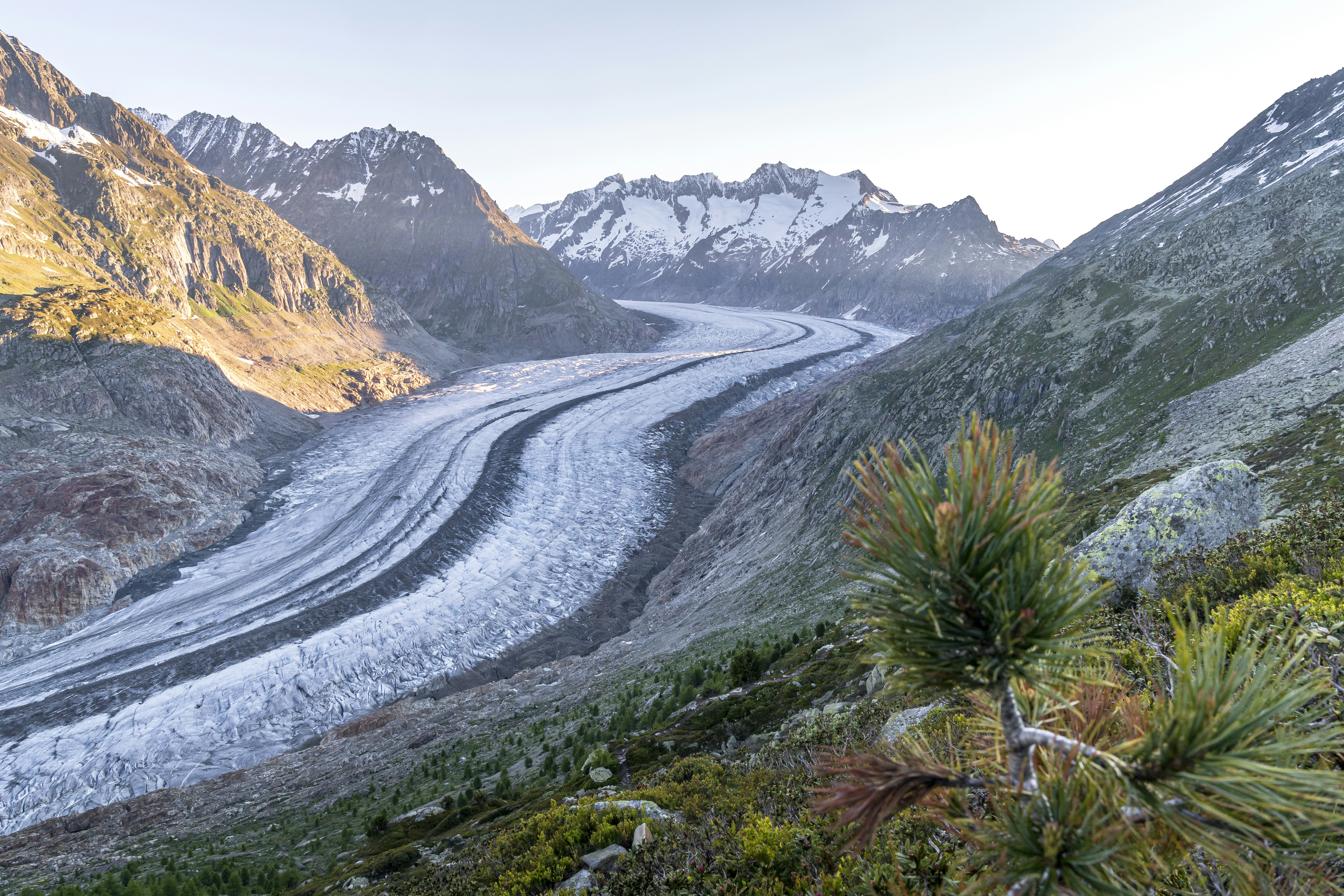
Aletsch is the largest glacier in the Alps (23 km long) and a UNESCO World Heritage Site. It's that classic postcard glacier view: pristine white ice flowing between mountain peaks. Unlike remote glaciers, Aletsch is easily accessible with cable cars and mountain railways. You can see it without hardcore trekking.
The glacier is slowly melting (losing about 12 metres of thickness per decade), but it's still massive and one of the most accessible glaciers in Europe.
How to Get There:
Fly to Zurich or Geneva from Delhi/Mumbai (via Middle East or direct on Air India/Swiss, 10-12 hours). From Zurich, take a train to Interlaken, then another train to Fiesch or Brig (total 3-4 hours by scenic Swiss trains). From Fiesch, take cable car to Eggishorn viewpoint for Aletsch views.
Visa for Indians:
Schengen visa required. Apply through Swiss VFS in India. Fee: €80 (₹7,500). Takes 15 working days. Same requirements as Iceland visa.
Must-Dos:
- Ride the Cable Car to Eggishorn: The viewpoint at 2,869 metres gives you panoramic views of the entire Aletsch Glacier snaking through the mountains.
- Do the Aletsch Panorama Trail: 3-hour hike along the glacier's edge with insane views. Moderate difficulty. Best June-September.
- Visit Jungfraujoch: Called "Top of Europe," it's a train journey to 3,454 metres with views of Aletsch from above. Expensive (CHF 200-230 / ₹18,000-21,000) but iconic.
- Stay in Traditional Villages: Bettmeralp, Riederalp, or Fiesch are car-free Alpine villages near the glacier. Charming and peaceful.
Pro Tips:
- Switzerland is expensive. Budget ₹15,000-20,000/day for accommodation, food, transport
- Swiss Travel Pass gives unlimited train/bus/boat travel. Good deal if visiting multiple places
- Summer (June-September) is best for hiking. Winter for skiing
- Book accommodation in advance. Alpine villages have limited hotels
- Carry Swiss Francs cash. Cards work everywhere but small places prefer cash
5. Athabasca Glacier, Canada: The Most Accessible
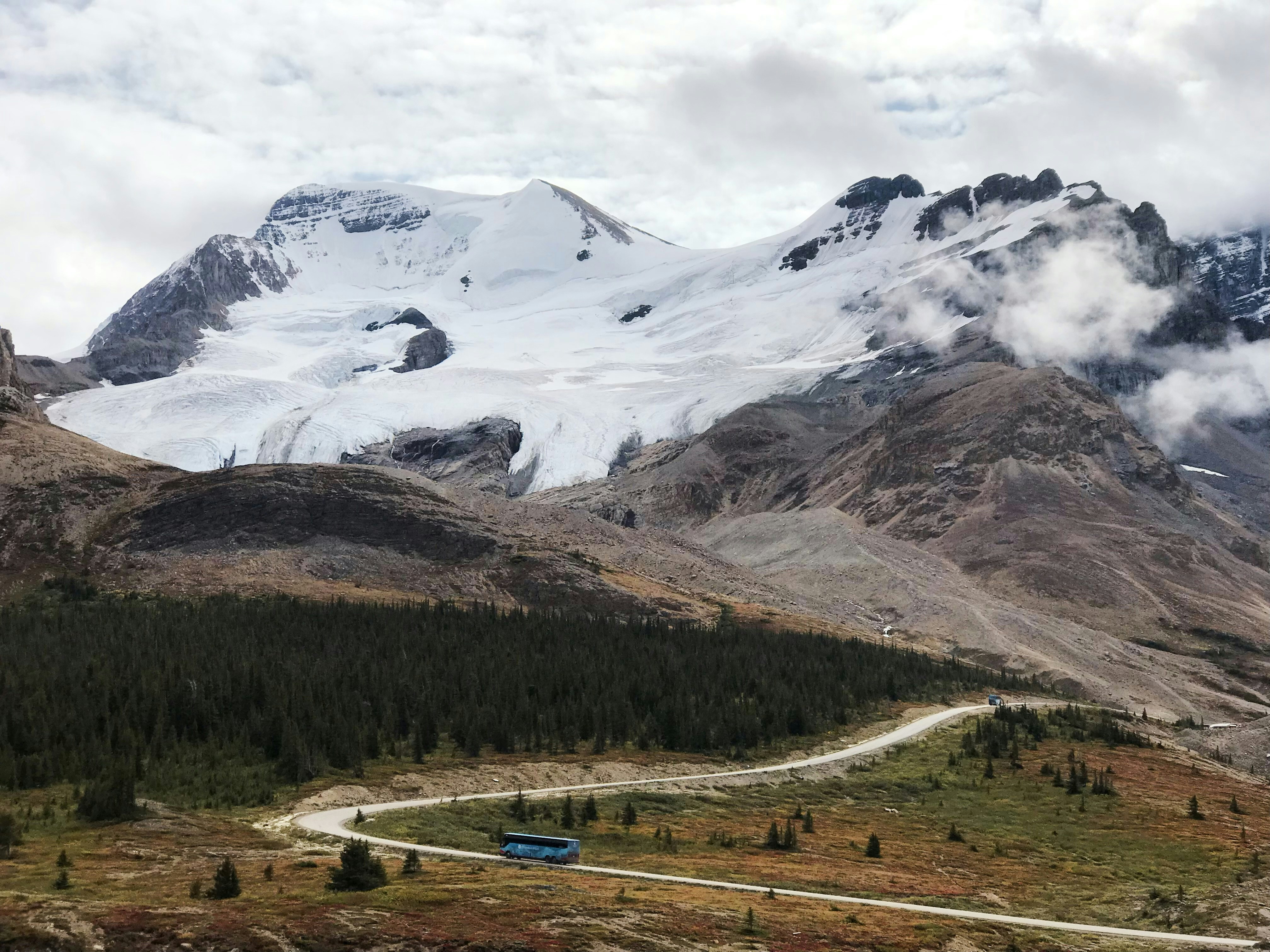
Athabasca is one of the most accessible glaciers in the world. You can literally drive right up to it, take a special vehicle onto the ice, and walk around without being a trained mountaineer. It's part of the massive Columbia Icefield in the Canadian Rockies, and it's one of North America's most visited glaciers. The glacier is 6 km long and sits between 2,100 to 3,500 metres elevation.
What makes it special is how easy it is to experience. You board a specially designed Ice Explorer (a giant bus with huge wheels) that drives directly onto the glacier. You can walk on ancient ice, drink glacial meltwater, and understand what glaciers actually are. There's also the Glacier Skywalk, a glass-floor platform 280 metres above a glacier valley. Not for those scared of heights, but the views are insane.
The sad part? Athabasca is retreating fast. It's losing about 5 metres of thickness every year and could disappear by 2100. Stone markers along the access road show how much it's shrunk in the past century. So see it soon.
How to Get There:
Fly to Calgary from Delhi or Mumbai (usually via Europe or Middle East, 18-22 hours with layovers). From Calgary, either rent a car and drive to Jasper National Park (about 4-5 hours, 400 km) or take a Brewster Express bus. The glacier is on the Icefields Parkway between Jasper and Banff, one of the most scenic drives in the world.
Most tourists stay in Jasper town (100 km north) or Lake Louise (125 km south) and do a day trip to the glacier. The Columbia Icefield Centre right at the glacier has a visitor centre, restaurant, and hotel.
Visa for Indians:
Canada requires visitor visa (TRV) for Indian tourists. Apply online through Canada visa application centre. Fee: CAD 100 (₹6,500). Requires passport, photos, financial proof, travel itinerary. Processing takes 3-4 weeks. Visa is usually valid for multiple entries for 10 years.
Must-Dos:
- Ice Explorer Tour: This is the main attraction. The massive snow coaches drive onto the glacier. You get off, walk around for 15-20 minutes, take photos, drink glacier water.
- Glacier Skywalk: Glass-floored platform extending over the Sunwapta Valley. You're standing on glass 280 metres above the valley floor.
- Drive the Icefields Parkway: The 230 km road between Jasper and Banff has 100+ glaciers, turquoise lakes, waterfalls, and mountains.
- Hike Nearby Trails: There are short hiking trails near the glacier centre. The toe of Athabasca Glacier trail is 1 km return and gets you close to the glacier's edge. Free.
- Visit in Summer: Best time is May to September. The Icefields Parkway can be closed or dangerous in winter due to snow. July-August has warmest weather.
Pro Tips:
- Book Ice Explorer tours online 1-2 weeks ahead. They sell out during July-August
- Wear warm clothes even in summer. It's cold on the glacier (around 5-10°C)
- Bring sunglasses. The ice reflects intense light
- Combine with Banff and Jasper exploration. 4-5 days minimum for the region
- Petrol stations are rare on Icefields Parkway. Fill up before starting
- Watch for wildlife. Bears, elk, mountain goats are common
- Columbia Icefield Centre has food and toilets. It's the only facility for 100+ km
Also Read: Planning A Tiger Safari In India? Here's How To Choose The Right Destination
The White Landscape
Glaciers are disappearing. Not in some distant future. Right now. Franz Josef retreated so much you can't walk to it anymore. Athabasca loses 5 metres every year. Scientists say many might not exist by 2100. So if you've ever wanted to see these frozen giants, now's the time. Not next year. Not someday. Now. Yes, these trips aren't cheap. Getting to Patagonia or Iceland takes planning. But standing in front of a glacier, hearing it crack and groan, watching ice crash into water, walking on ice that's thousands of years old, that's not something you can put a price on. These aren't just tourist spots. They're reminders of how powerful and fragile nature is. Start saving, start planning, and pick at least one of these glaciers to visit, your future self will thank you for seeing these wonders while they still exist.
Track Latest News Live on NDTV.com and get news updates from India and around the world


