





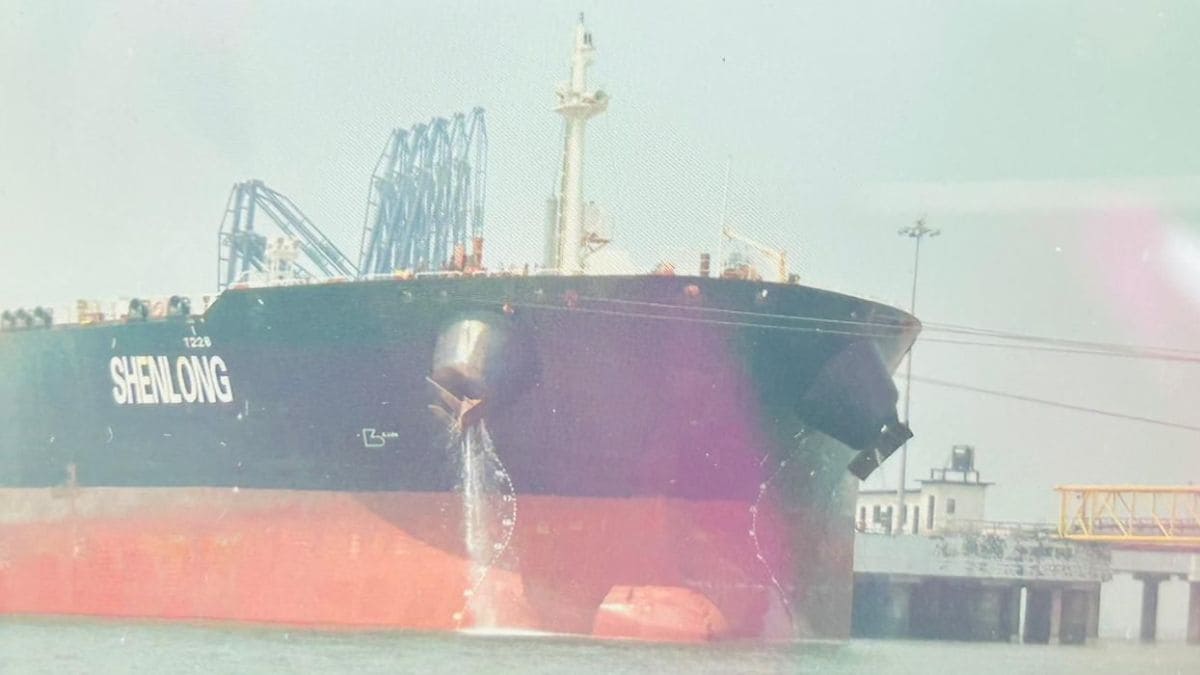
An LPG tanker sailing to India has crossed the Strait of Hormuz amid the US-Iran war in the Middle East, sources said. The vessel passed the strait this afternoon without any incident.
Another tanker will also sail for India soon, they said.
The confirmation coincided with a comment by Iran's Ambassador to India, Mohammad Fathali, today that Tehran will provide safe passage to vessels bound for India through the Strait of Hormuz, citing longstanding friendship and shared interests between the two countries.
"Yes. Because India and Iran are friends. You can see in the future and I think that after two or three hours. Because we believe that. We believe that Iran and India are friends. We have common interests; we have a common fate," Fathali said to a question on the tanker movement.
"Suffering of the people of India is our suffering and vice versa. And for this reason, the government of India helps us, and we should help the government of India because we have a common fate and common interest," he said.

India buys 50 per cent of its natural gas needs from the international market. Of this, it imports 20 per cent from Qatar. After Iran's missile attacks on Qatar's gas fields, the world's largest natural gas exporting company, QatarEnergy, stopped production. This has affected supply of natural gas to Asian regions.
To deal with this growing challenge, India has guidelines for regulating the supply and use of natural gas in different sectors across the country. According to the new guidelines issued by the Ministry of Petroleum, the central government divided key sectors into four priority areas.
Ever since the US-Iran war began over two weeks ago, large oil tankers have remained stranded as Iran announced it would enforce a blockade of the strait. Its narrowness, at around 50 km, and shallow waters, at no more than 60 metres deep, make it vulnerable to being sealed off militarily.
The Centre yesterday shared a stable picture of India's energy situation. More than 70 per cent of India's crude imports are now moving through routes outside the Strait of Hormuz. The crude situation is "normal," a top official said.
At an inter-ministerial briefing, Sujata Sharma, Joint Secretary (Marketing and Oil Refinery) at the Ministry of Petroleum and Natural Gas, offered what the government is calling a stable picture.
India is the world's fourth-largest refiner, Sharma said, and cited that fact as the government's primary cushion. "This is giving us comfort in making products available," she said.
LPG production has been ramped up by 28 per cent. LPG cylinder bookings had spiked due to panic-buying, officials said. They said there is no LPG crisis and asked the public not to panic-buy.
The war in the Middle East escalated following the killing of 86 Iran's Supreme Leader, Ayatollah Ali Khamenei, in joint military strikes by the US and Israel, after which Iran, in its retaliation, targeted Israeli and US assets in several Gulf countries and Israel, causing disruption in the waterway and affecting international energy markets and global economic stability.
Track Latest News Live on NDTV.com and get news updates from India and around the world

