



Young Scientists
- All
- News
- Videos
-

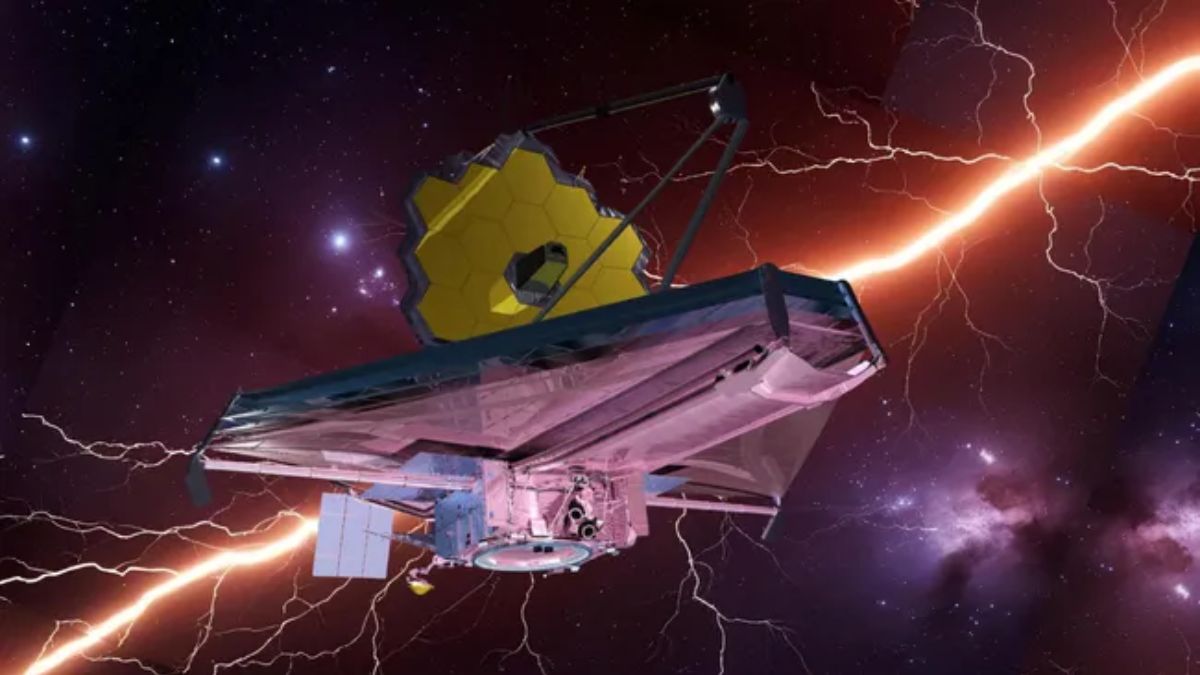
James Webb Space Telescope Could Help Reveal Dark Matter in a Way Scientists Did Not Anticipate
New research suggests the James Webb Space Telescope could help scientists understand dark matter by studying oddly shaped early galaxies. These elongated galaxies may form due to dark matter’s gravitational behaviour, offering indirect clues about whether ultralight or warm dark matter particles shaped the early universe.
-
DST Initiatives To Attract Young Talent And Boost India's Science Research Ecosystem
INSPIRE-SHE offers twelve thousand scholarships annually to top students in natural sciences, supporting higher education and research internships for youth aged seventeen to twenty-two.
-
PM Modi's Shoutout To Gen Z: "Creativity, Positive Attitude And Ability"
Prime Minister Narendra Modi underscored the critical role of India's Gen-Z in reshaping the country's space sector and said that whenever India opens new opportunities, its young generation, especially Gen-Z, step forward with enthusiasm
-
James Webb Telescope Finds Early Universe Galaxies Were More Chaotic Than We Thought
The James Webb Space Telescope has revealed that galaxies in the early universe were far more chaotic and unstable than once believed. A new study shows that gas turbulence and intense star formation disrupted young galaxies, reshaping scientists’ understanding of how galaxies evolved into the structured systems seen today.
-
Astronomers Detect Heavy Water in Planet-Forming Disk Around Young Star
Scientists have detected heavy water in the planet-forming disk around young star V883 Orionis, confirming the water existed long before the star formed. The discovery, made using ALMA, shows that water’s origins trace back to ancient interstellar clouds, linking molecular gas, comets, and planetary systems across billions of years.
-
Scientists Discover 63 Young Asteroid Families, Doubling Previous Record in Solar System
A new study published in Icarus has revealed 63 newly discovered young asteroid families, more than doubling the previously known count. Formed less than 10 million years ago, these groups provide fresh insights into asteroid evolution. Researchers say many more remain hidden, offering crucial clues about meteorite origins and potential Earth-impac...
-
Chandra Spots Distant Baby Planet Losing Its Atmosphere Under Intense X-ray Assault
NASA’s Chandra X-ray Observatory has captured a rare glimpse of TOI 1227 b, a young, Jupiter-sized exoplanet losing its atmosphere under intense stellar radiation. Just 8 million years old, the planet is shrinking rapidly as X-rays strip away its mass. Scientists warn it may become a barren rocky core in about a billion years.
-
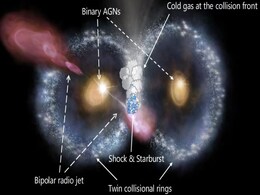
James Webb Telescope Spots Rare ‘Cosmic Owl’ Formed by Colliding Galaxies
NASA’s James Webb Space Telescope has unveiled the “Cosmic Owl,” a jaw-dropping image of two colliding ring galaxies forming a structure that resembles an owl’s face. This double-ring formation is extraordinarily rare, and the event is shedding light on galaxy evolution, black hole dynamics, and rapid star formation. Led by Ph.D. student Mi...
-
Strange Fast Radio Bursts Emerge from an Ancient Dead Galaxy, Baffling Scientists
Scientists have detected mysterious fast radio bursts (FRBs) from the outskirts of an 11 billion-year-old dead galaxy. This discovery challenges the belief that FRBs primarily originate from young, star-forming galaxies. Researchers suspect the bursts may result from colliding stars or a collapsing white dwarf. The Canadian Hydrogen Intensity Mappi...
-
New Study Finds Active Lunar Tectonics, Challenges Moon’s Dormancy
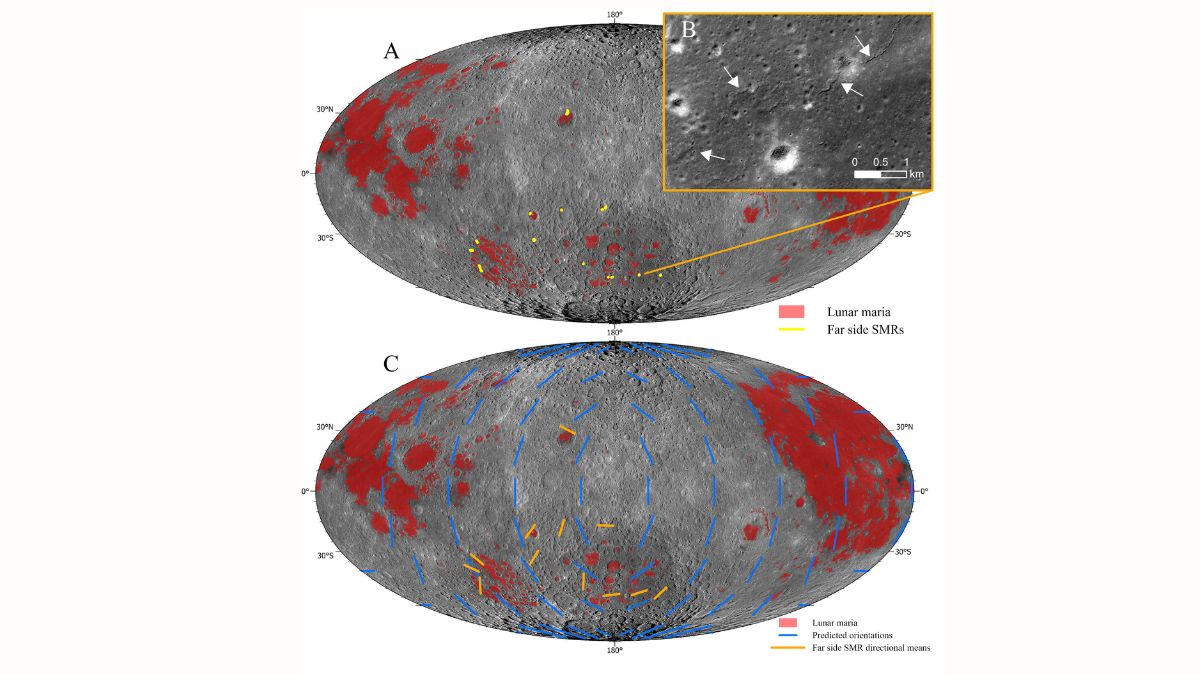
A recent study published in The Planetary Science Journal reveals that the moon is still experiencing tectonic activity. Scientists identified 266 small ridges on the far side of the moon, formed within the last 160 to 200 million years. The study suggests these ridges result from geological forces like lunar shrinking and orbital shifts. The findi...
-
T Tauri's Great Dimming: Astronomers Study Young Star's Potential Disappearance
The young star T Tauri, located 471 light-years from Earth, is experiencing a significant dimming event. The cause is a thick dust and gas disk blocking its light, with astronomers predicting it may disappear from view for up to a century. This event presents an opportunity for scientists to explore the chemical makeup of planet-forming regions wit...
-
Hubble Telescope Observes Young Stars HOPS 150 and HOPS 153 in Orion Nebula
The Hubble Space Telescope has captured images of two young stars, HOPS 150 and HOPS 153, in the Orion Nebula, which is located about 1,300 light-years from Earth. The binary system HOPS 150 glows in bright golden red, while HOPS 153 emits a colorful jet. These stars are still in their early stages of development, feeding from their surrounding dus...
-
"Mother Wanted Me To Study Sun...": Scientist Who's 'Inspired By Stars'
As a young girl, Subramaniam's awe for the night sky sparked dreams of exploring the cosmos. However, her parents were initially concerned about the solitary nature of her chosen path
-
New Lunar Map Attempts to Identify the Origin Impact Craters of Rock Samples
A new map of the moon’s Mare Orientale basin highlights areas containing original impact melt. These findings could help date the basin’s formation, which is estimated to be 3.8 billion years old. Scientists believe this research may reveal Earth’s early impact history while guiding future lunar sample-return missions. The map also distinguis...
-
Research Reveals Three Young Asteroid Families as Main Sources of Earth’s Meteorites
A recent study reveals that three asteroid families—the Karin, Koronis, and Massalia—are responsible for around 70% of the meteorites that land on Earth. These families, formed from past collisions in the main asteroid belt, have a higher number of fragments due to their relatively young age. The findings shed light on the origins of meteorites...


















-
James Webb Space Telescope Could Help Reveal Dark Matter in a Way Scientists Did Not Anticipate
New research suggests the James Webb Space Telescope could help scientists understand dark matter by studying oddly shaped early galaxies. These elongated galaxies may form due to dark matter’s gravitational behaviour, offering indirect clues about whether ultralight or warm dark matter particles shaped the early universe.
-
DST Initiatives To Attract Young Talent And Boost India's Science Research Ecosystem
INSPIRE-SHE offers twelve thousand scholarships annually to top students in natural sciences, supporting higher education and research internships for youth aged seventeen to twenty-two.
-
PM Modi's Shoutout To Gen Z: "Creativity, Positive Attitude And Ability"
Prime Minister Narendra Modi underscored the critical role of India's Gen-Z in reshaping the country's space sector and said that whenever India opens new opportunities, its young generation, especially Gen-Z, step forward with enthusiasm
-
James Webb Telescope Finds Early Universe Galaxies Were More Chaotic Than We Thought
The James Webb Space Telescope has revealed that galaxies in the early universe were far more chaotic and unstable than once believed. A new study shows that gas turbulence and intense star formation disrupted young galaxies, reshaping scientists’ understanding of how galaxies evolved into the structured systems seen today.
-
Astronomers Detect Heavy Water in Planet-Forming Disk Around Young Star
Scientists have detected heavy water in the planet-forming disk around young star V883 Orionis, confirming the water existed long before the star formed. The discovery, made using ALMA, shows that water’s origins trace back to ancient interstellar clouds, linking molecular gas, comets, and planetary systems across billions of years.
-
Scientists Discover 63 Young Asteroid Families, Doubling Previous Record in Solar System
A new study published in Icarus has revealed 63 newly discovered young asteroid families, more than doubling the previously known count. Formed less than 10 million years ago, these groups provide fresh insights into asteroid evolution. Researchers say many more remain hidden, offering crucial clues about meteorite origins and potential Earth-impac...
-
Chandra Spots Distant Baby Planet Losing Its Atmosphere Under Intense X-ray Assault
NASA’s Chandra X-ray Observatory has captured a rare glimpse of TOI 1227 b, a young, Jupiter-sized exoplanet losing its atmosphere under intense stellar radiation. Just 8 million years old, the planet is shrinking rapidly as X-rays strip away its mass. Scientists warn it may become a barren rocky core in about a billion years.
-
James Webb Telescope Spots Rare ‘Cosmic Owl’ Formed by Colliding Galaxies
NASA’s James Webb Space Telescope has unveiled the “Cosmic Owl,” a jaw-dropping image of two colliding ring galaxies forming a structure that resembles an owl’s face. This double-ring formation is extraordinarily rare, and the event is shedding light on galaxy evolution, black hole dynamics, and rapid star formation. Led by Ph.D. student Mi...
-
Strange Fast Radio Bursts Emerge from an Ancient Dead Galaxy, Baffling Scientists
Scientists have detected mysterious fast radio bursts (FRBs) from the outskirts of an 11 billion-year-old dead galaxy. This discovery challenges the belief that FRBs primarily originate from young, star-forming galaxies. Researchers suspect the bursts may result from colliding stars or a collapsing white dwarf. The Canadian Hydrogen Intensity Mappi...
-
New Study Finds Active Lunar Tectonics, Challenges Moon’s Dormancy
A recent study published in The Planetary Science Journal reveals that the moon is still experiencing tectonic activity. Scientists identified 266 small ridges on the far side of the moon, formed within the last 160 to 200 million years. The study suggests these ridges result from geological forces like lunar shrinking and orbital shifts. The findi...
-
T Tauri's Great Dimming: Astronomers Study Young Star's Potential Disappearance
The young star T Tauri, located 471 light-years from Earth, is experiencing a significant dimming event. The cause is a thick dust and gas disk blocking its light, with astronomers predicting it may disappear from view for up to a century. This event presents an opportunity for scientists to explore the chemical makeup of planet-forming regions wit...
-
Hubble Telescope Observes Young Stars HOPS 150 and HOPS 153 in Orion Nebula
The Hubble Space Telescope has captured images of two young stars, HOPS 150 and HOPS 153, in the Orion Nebula, which is located about 1,300 light-years from Earth. The binary system HOPS 150 glows in bright golden red, while HOPS 153 emits a colorful jet. These stars are still in their early stages of development, feeding from their surrounding dus...
-
"Mother Wanted Me To Study Sun...": Scientist Who's 'Inspired By Stars'
As a young girl, Subramaniam's awe for the night sky sparked dreams of exploring the cosmos. However, her parents were initially concerned about the solitary nature of her chosen path
-
New Lunar Map Attempts to Identify the Origin Impact Craters of Rock Samples
A new map of the moon’s Mare Orientale basin highlights areas containing original impact melt. These findings could help date the basin’s formation, which is estimated to be 3.8 billion years old. Scientists believe this research may reveal Earth’s early impact history while guiding future lunar sample-return missions. The map also distinguis...
-
Research Reveals Three Young Asteroid Families as Main Sources of Earth’s Meteorites
A recent study reveals that three asteroid families—the Karin, Koronis, and Massalia—are responsible for around 70% of the meteorites that land on Earth. These families, formed from past collisions in the main asteroid belt, have a higher number of fragments due to their relatively young age. The findings shed light on the origins of meteorites...

