





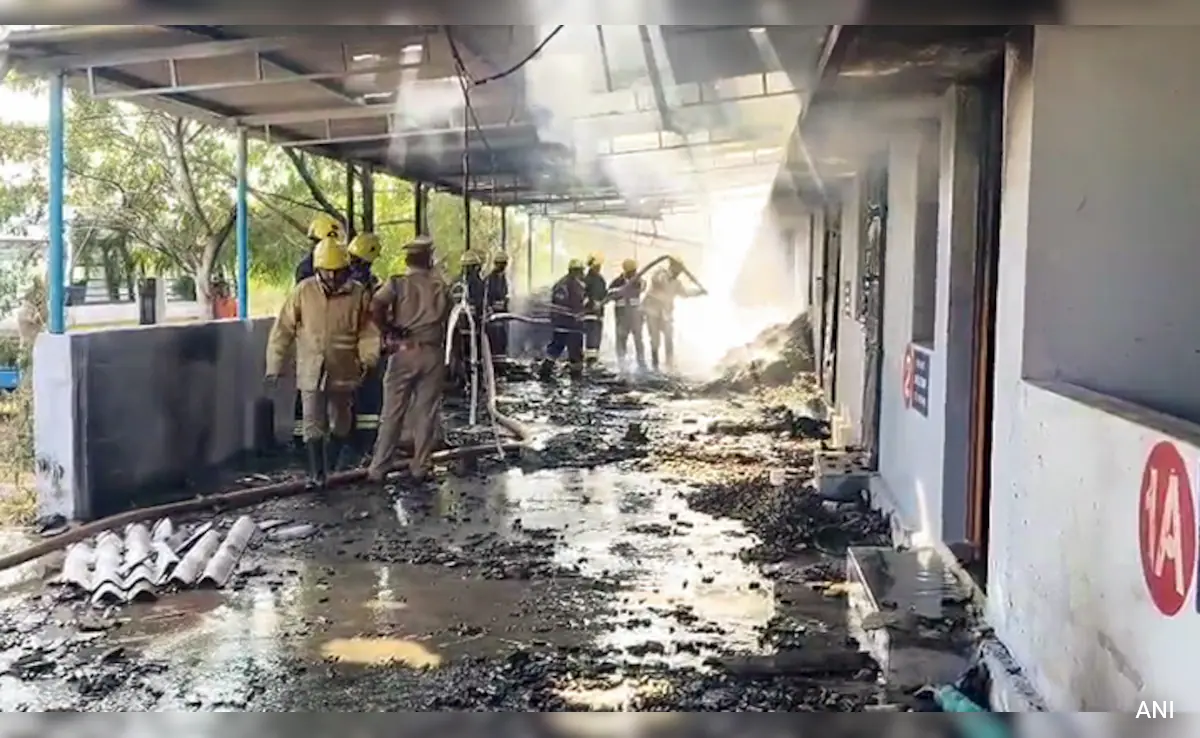
The death of 25 people in an explosion at a fireworks manufacturing factory in Virudhunagar has once again raised serious questions over safety norms, audits, and repeated lapses in Tamil Nadu's cracker industry.
Twenty-five workers were killed, 19 of them women, when the explosion ripped through multiple sheds in the facility, flattening structures and leaving several others critically injured. Authorities suspect that friction during the mixing of chemicals may have triggered the blast, a recurring cause in such accidents.
A senior police officer told NDTV, "We are investigating, friction during mixing of chemicals appears to be the reason. Six sheds have completely been blown away in the explosion." Officials also warned that the death count could rise further as some of the injured remain in critical condition.
Chief Minister MK Stalin has condoled the loss of lives and instructed two ministers to oversee rescue efforts and provide support to bereaved families. An investigation is currently underway to determine accountability.
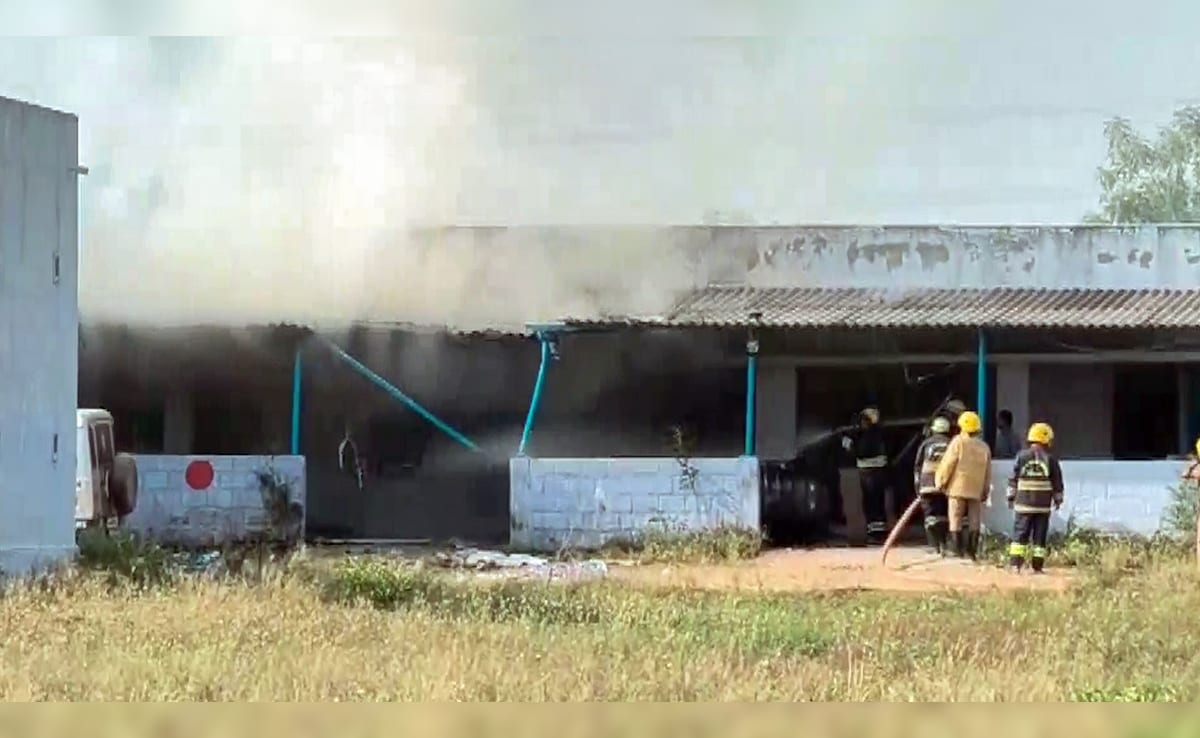
Preliminary inquiries found major violations of safety norms at the unit. Regulations permit only three to four workers inside a production room, but around 20 people were reportedly working together at the time of the accident. The rooms, which should have been built as separate structures with adequate gaps, were instead connected in a warehouse-like layout.
Authorities also found that the factory had only two exit doors, though safety rules require four emergency exits on all sides.
In another serious lapse, officials said the unit's licence had already been temporarily cancelled earlier. Despite this, the owner allegedly leased the factory and continued operations illegally.
Meanwhile, identification of several victims has proved difficult as bodies were badly charred in the explosion. Families continued to wait outside hospitals hoping for confirmation through DNA tests.
A relative of Muthu was among those left devastated. His wife sat outside the hospital in deep anguish, unable to speak. His nephew said officials showed the family what appeared to be a blackened lump of flesh and asked them to confirm whether it was Muthu.
"It was extremely painful for us. We are now waiting for DNA analysis to confirm whether the remains found are his," he said.
In one instance, a woman police officer was seen moving among waiting relatives with a photograph of a charred body believed to be of a woman aged between 30 and 40. She urged those gathered to look closely at details such as the earrings and the colour and pattern of the saree and circulate the information among family members to help identify the victim. Relatives waiting outside were visibly shaken and in agony as they examined the images.
Relatives said many families are facing similar uncertainty, with fears that some bodies may still be trapped under the debris.
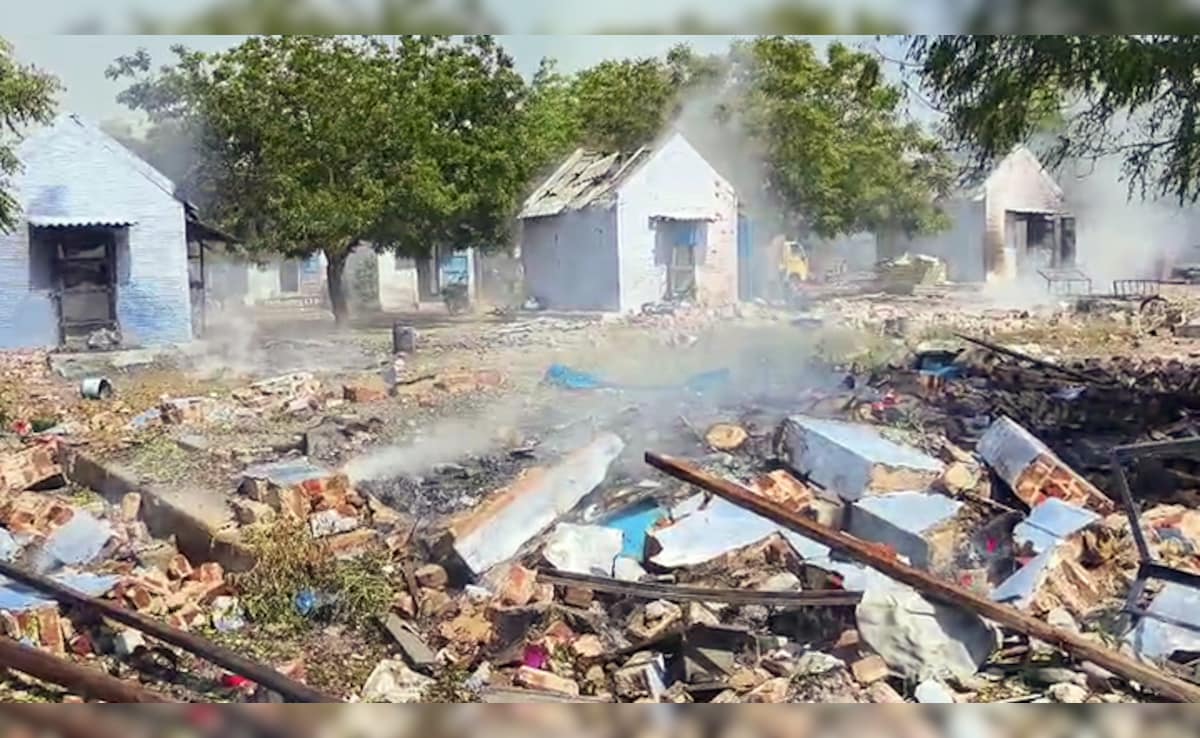
The incident has once again turned the spotlight on Sivakasi - often referred to as India's fireworks capital - where explosions at manufacturing units have become alarmingly frequent. Experts argue that while causes are known, enforcement remains weak.
Fire safety experts point to a pattern of systemic failures. Among the most critical issues are unsafe mixing of explosive chemicals and poor segregation of hazardous operations. Violations of maximum storage limits for explosive materials are also common, significantly increasing the risk of chain reactions during accidents.
Compounding the danger is the overloading of sheds beyond permitted worker and material limits. Many units operate without clearly defined Standard Operating Procedures (SOPs), and workers often lack adequate training to handle volatile substances. Non-compliance with provisions under the Explosives Act 1884 and the Explosives Rules 2008 further worsens the situation.
Experts also highlight weak supervision and the use of unauthorised or highly sensitive chemicals as contributing factors. Poor infrastructure - including lack of proper access roads and isolated factory locations - delays emergency response, often worsening casualties.
Dr Vedagiri Sriram of Sriram Safety and Quality Management Services Private Limited stresses that the issue is less about lack of knowledge and more about lack of implementation and accountability.
"Strict enforcement with zero tolerance for violations is non-negotiable," he says, calling for immediate corrective measures across the industry.
Dr Sriram recommends physically segregating key operations such as mixing, filling, drying, and packing to minimise risk. He also advocates for mechanisation of high-risk processes using anti-spark equipment to prevent accidental ignition.
"Safety instructions must be clearly displayed in Tamil, and workers should undergo mandatory training with regular mock drills," he adds. Real-time monitoring through CCTV and surprise inspections, he says, can significantly
improve compliance.
Calling for stronger accountability, Dr Sriram insists that both legal and financial consequences must be enforced for safety violations. "Safety is a shared responsibility among factory owners, regulators, and local administration - but without operational discipline, no regulation will work," he notes.
Among his key recommendations is the introduction of a cluster system to regulate the movement and storage of explosive materials. "The cluster system is the only solution that would work. It can bring incidents down significantly," he says.
He also suggests appointing dedicated officers to inspect manufacturing processes and SOP compliance. A gated community-style industrial layout, he argues, could streamline monitoring, reduce complaints, and avoid the need for frequent inspections.
Further, he calls for stricter norms in transportation and workforce management. "Drivers transporting LPG and petrol must be licensed and trained. Similarly, workers in Sivakasi must undergo certified training before employment. Licensing for workers should be introduced," he emphasises.
As yet another tragedy unfolds, experts warn that unless systemic changes are implemented, fireworks units will continue to turn into what many now describe as "killer landmines" - with each explosion repeating a cycle of loss, outrage, and inaction.
(With inputs from Niyati Trivedi)
Track Latest News Live on NDTV.com and get news updates from India and around the world

