





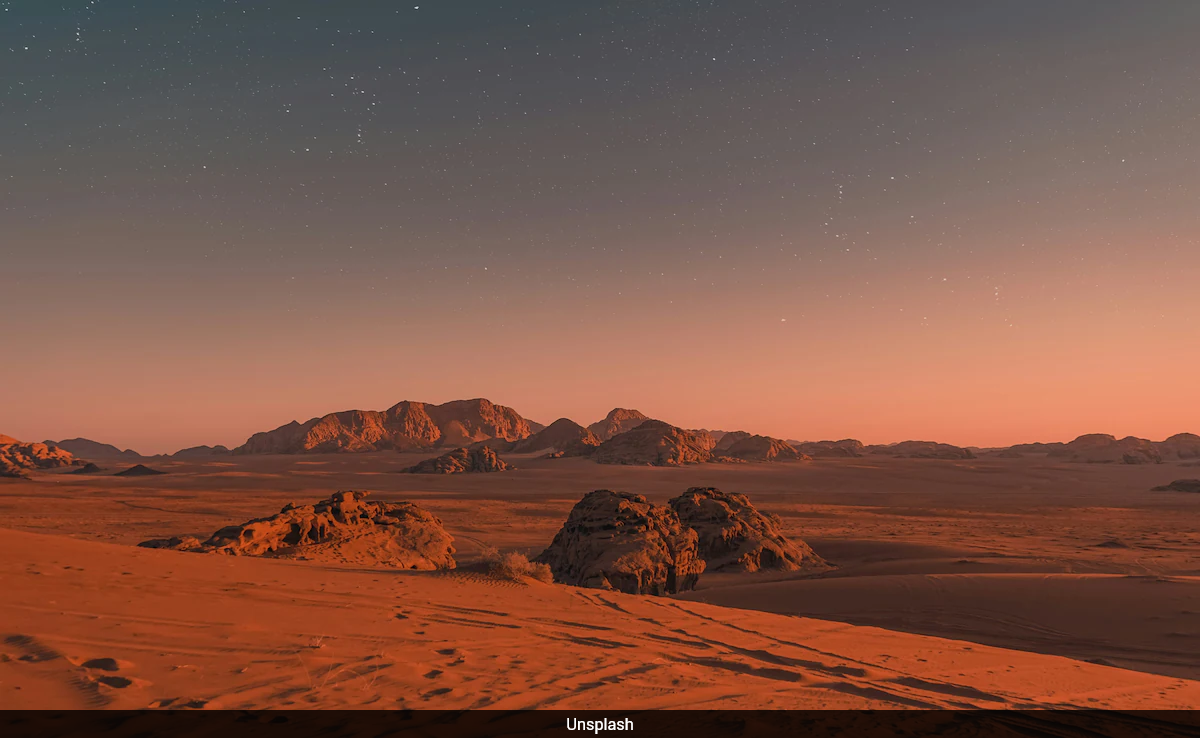
Scientists may have found an important new clue to one of space science's biggest questions, how did Mars lose its water? Today, Mars is a cold and dry desert, but its surface shows signs that rivers once flowed and lakes may have existed. For years, researchers have tried to understand how the planet changed so dramatically. A regional dust storm on Mars may have played a significant role in the planet's water loss, pushing water vapor high into the atmosphere and increasing hydrogen escape into space. This discovery provides a new clue to the Red Planet's transformation into a dry desert, with researchers noting that even short and regional dust storms can speed up water loss. The finding adds a new piece to the puzzle of how Mars slowly became the dry world we see today.
Now, a new international study published in Communications Earth & Environment suggests that powerful regional dust storms may have played a bigger role than previously believed.
The research team, including scientists from the Instituto de Astrofisica de Andalucia, University of Tokyo, and Tohoku University, found that an intense but localized dust storm pushed large amounts of water vapor high into the Martian atmosphere during the Northern Hemisphere summer of 2022 to 2023.
Earlier, scientists thought this season had only a small effect on water loss. Most studies focused on giant planet-wide storms or the warmer Southern Hemisphere summer.
However, during this event, water vapor levels in the middle atmosphere rose to nearly ten times the usual amount. Soon after, hydrogen levels near the edge of space increased to about 2.5 times normal levels.
Hydrogen is important because when water molecules break apart, hydrogen can escape into space. Once it escapes, the water is gone forever.
Researchers say this discovery shows that even short and regional dust storms can speed up water loss. The finding adds a new piece to the puzzle of how Mars slowly became the dry world we see today.
Track Latest News Live on NDTV.com and get news updates from India and around the world

