





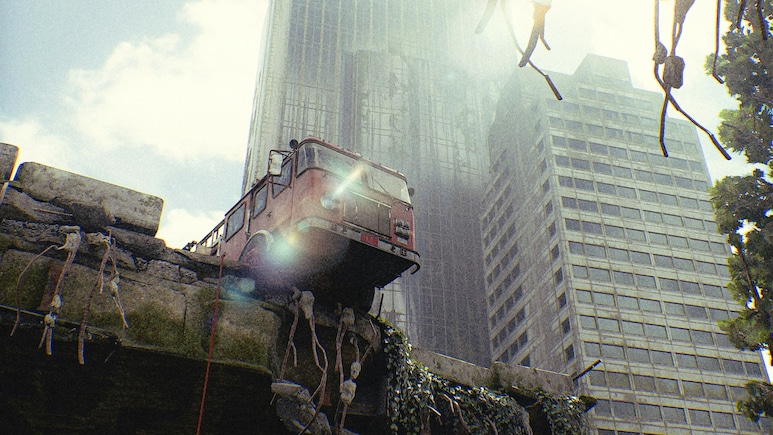
A new computer simulation spanning 1,000 years has explored how human civilisation could survive major crises, recover from collapse and remain technologically active for longer. The research was inspired partly by the Fermi paradox, which asks why humanity has not detected signs of other advanced civilisations despite the vast size and age of the Universe.
According to ScienceAlert, researchers led by Celia Blanco created a model that tested 10 possible futures for a technological civilisation. The scenarios differed in areas such as governance, access to resources and the ability to recover from disasters.
The researchers ran 200 simulations for each scenario. Civilisations were allowed to develop until they either exhausted their resources or faced a randomly generated catastrophic event, such as an environmental disaster or technological failure.
Some societies were able to recover after a collapse, depending on how much technology and resources remained and how quickly they could rebuild.
Two Factors Could Make the Biggest Difference
ScienceAlert reported that two factors had the strongest influence on whether a civilisation remained technologically active: how quickly it used its resources and how much of those resources it could recover after a collapse.
The simulations produced very different results. The proportion of time that a civilisation remained technologically active, known as its "duty cycle", ranged from about 38 per cent to 100 per cent.
Two scenarios, called "Golden Age" and "Out of Eden", did not collapse during the simulations. By contrast, seven of the 10 scenarios collapsed in every run.
The "Ouroboros" scenario repeatedly went through periods of collapse and recovery but maintained a duty cycle of about 87 per cent. Another scenario, "Living with the Land", remained technologically active for only about 38 per cent of the simulated period.
The findings suggest that technological civilisation may not always follow a simple path from development to extinction. Instead, societies could potentially experience periods of technological growth, collapse and rebuilding.
What Could Help Civilisation Recover?
The researchers suggest that reducing resource consumption could improve long-term resilience. Preserving knowledge, technology and infrastructure could also make it easier for future generations to rebuild after a major disaster.
One idea mentioned in the research is the creation of "recovery kits", containing essential information about areas such as agriculture, medicine, energy and communications.
ScienceAlert noted that the Svalbard Global Seed Vault, which preserves seeds from around the world, is an existing example of efforts to protect resources for the future.
The research also has implications for the search for extraterrestrial life. If advanced civilisations repeatedly collapse and rebuild, they may spend long periods without producing technology that can be detected from Earth.
The researchers introduced the idea of "effective detectability duration" to account for these inactive periods. A civilisation that is technologically detectable for only part of its existence would have a much smaller chance of being observed than one that remains continuously active.
However, the researchers caution that the model has significant limitations. The simulations use simplified assumptions about technological development, resource depletion and human organisation. The research is also a preprint and has not yet undergone peer review.
The study does not predict that humanity will inevitably collapse or that alien civilisations are hiding from us. Instead, it offers a model for understanding how technological societies might survive, recover and potentially remain detectable over very long periods.
Track Latest News Live on NDTV.com and get news updates from India and around the world

