





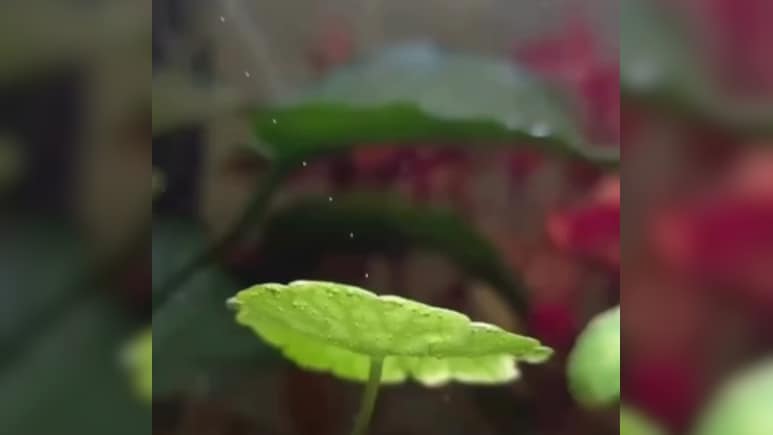
A quietly spectacular natural event is capturing the attention of scientists and nature enthusiasts alike: underwater aquatic plants visibly performing photosynthesis in real time, releasing a stream of tiny oxygen bubbles as they work.
The mesmerising sight of aquatic plants shimmering with tiny, rising bubbles is a beautiful indicator of a healthy and thriving underwater ecosystem. The process behind it is photosynthesis, by which aquatic plants use sunlight, carbon dioxide, and water to produce energy, releasing oxygen as a byproduct, according to The Environmental Literacy Council.
This visible release of oxygen is known among scientists and aquarists as "pearling." Under optimal conditions, aquatic plants can produce so much oxygen that it forms a continuous stream of tiny bubbles, a phenomenon that signifies a healthy and thriving ecosystem. Pearling occurs when the water is saturated with oxygen and the plants are photosynthesising at their maximum rate.
When observers see pearling, they are essentially witnessing the end product of successful photosynthesis in real time. The pearling effect occurs when the rate of photosynthesis is so efficient that the oxygen produced cannot be immediately dissolved into the water, and instead forms tiny, pearl-like bubbles on the leaves, which slowly rise to the surface, according to Aquatrition.
The process is also surprisingly noisy. On sunny days in weedy areas of standing water, the enormous number of oxygen bubbles creates a uniform sound that resembles meat being cooked in a frying pan, often drowning out other environmental sounds such as wind noise and signals from water insects and fish, according to National Library of Medicine.
Scientists have noted that different aquatic plant species have varying photosynthetic rates, with faster-growing species and those with larger leaf surfaces generally producing more oxygen and therefore bubbling more noticeably.
Beyond their visual appeal, these bubbles carry enormous ecological importance. The oxygen produced by aquatic plant bubbles is vital for aquatic life, including fish, invertebrates, and beneficial bacteria, contributing to the overall oxygenation of the water and supporting a healthy and balanced ecosystem.
In short, those tiny rising bubbles are not merely beautiful. They are a reminder that the natural processes sustaining life on Earth are working, quietly and continuously, just beneath the surface.
Track Latest News Live on NDTV.com and get news updates from India and around the world

