





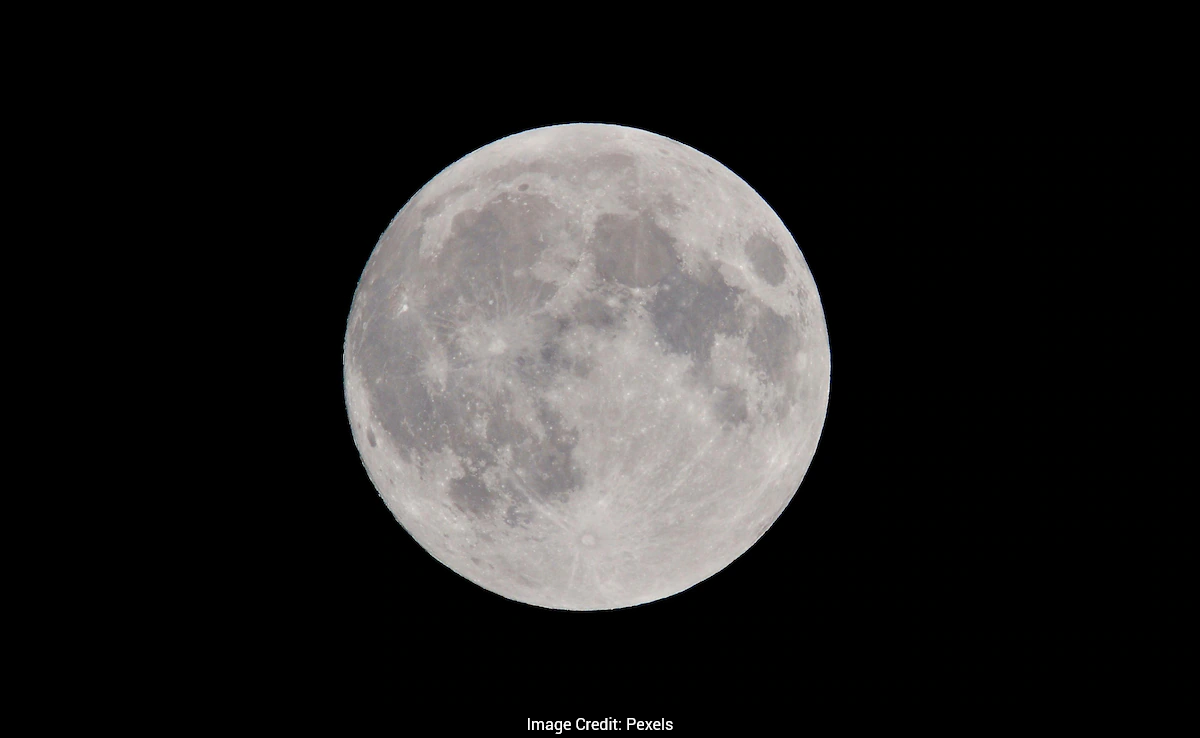
NASA wants to send humans back to the Moon and build a long-term base there. This plan is part of the Artemis programme, which aims to return astronauts to the Moon for the first time since Apollo 17 in 1972 and later use the Moon as a step toward missions to Mars and beyond. But scientists say there is one small and dangerous problem that must be taken seriously: micrometeoroids, reported BBC.
The Artemis mission isn't just about sending astronauts back to the Moon. Its primary goal is to establish a permanent base on the lunar surface. It's believed that a long-term presence on the Moon will serve as a vital stepping stone for future human missions to Mars and beyond.
This base will likely be built near the Moon's south pole. Scientists believe this region offers numerous advantages. Some locations receive near-constant sunlight for months, maintain direct contact with Earth, and there's even hope for water ice in the shadowed craters.
The constant rain of micrometeoroids poses a significant challenge to any future lunar base. These are high-speed dust particles and small rock fragments weighing up to 10 grams. While too small to create large craters on the Moon's surface, they are still powerful enough to penetrate the base's metal walls and dangerously lower the air pressure inside.
This risk was studied by a team led by Daniel Yahalomi of Columbia University's Department of Astronomy.
NASA typically uses the Meteoroid Engineering Model 3, or MEM 3, designed for satellites and spacecraft to assess the risk from micrometeoroids. Yahalomi and his team modified this model to allow it to be used for a lunar base. They imagined the base as a stationary spacecraft on the lunar surface, reported BBC.
The team assumed the Artemis base would be approximately the size of the International Space Station, approximately 100 x 100 x 10 meters. They then ran simulations on 1,000 virtual bases spaced equally apart on the lunar surface.
How The Shield Works
Spacecraft like the International Space Station have a special protective layer called the Whipple Shield. The shield's thin outer layer breaks up the colliding particles into smaller fragments. These fragments spread through the gap, reducing their strength, and then collide with the main inner wall.
The researchers also estimated how often micrometeoroids could hit lunar bases at different locations, and most importantly, how many of those impacts could successfully penetrate the Whipple Shield.
Where The Risk Is Greater And Where Less
According to the team, the highest number of impacts, approximately 23,000 per year, would occur at sites near the lunar equator and on the opposite side of Earth. At these locations, Earth's gravity deflects the paths of micrometeoroids and pulls more particles toward the Moon. This effect is even stronger than Earth's blocking effect.
In comparison, the situation is considered better for sites near the Moon's south pole. The number of impacts there is estimated to be approximately 1.6 times lower, at around 15,000 per year. This strengthens NASA's plan to build an Artemis base in the same area.
How Big Is The Actual Threat?
Scientists also calculated the weight of a micrometeoroid to penetrate a modern Whipple shield. They estimate this threshold to be approximately 0.07 grams. Reassuringly, 99.9997 percent of micrometeoroids are smaller than this threshold. This demonstrates that current security technologies are quite effective in protecting lunar bases.
Track Latest News Live on NDTV.com and get news updates from India and around the world

