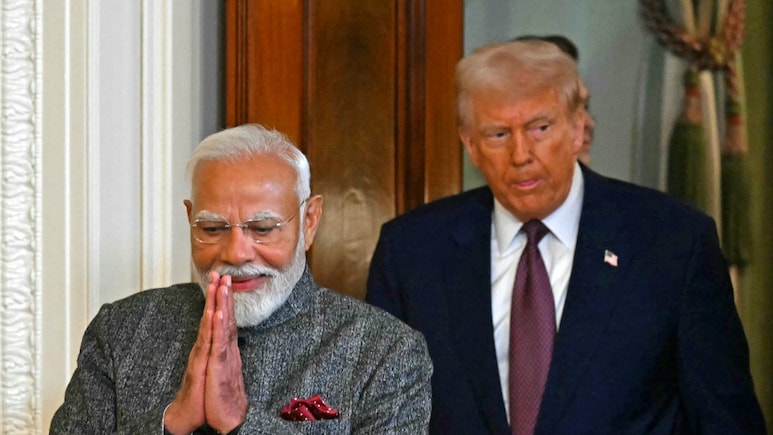
The Donald Trump administration has termed the new India-United States trade deal a "historic" step, which, according to the White House, will open the Indian market of over 1.4 billion people to American products. The White House has also released a statement defining the key terms of the deal, under which the US has agreed to lower the reciprocal tariff on India from 25 per cent to 18 per cent.
The statement brought clarity on several aspects of the deal, especially on President Trump's claim of India agreeing to cut “tariffs and non-tariff barriers against the United States to ZERO”. It also specified that Trump has agreed to remove the additional 25 per cent tariff on Indian imports in recognition of New Delhi's commitment to stop purchasing Russian oil.
Key Terms Of The Deal
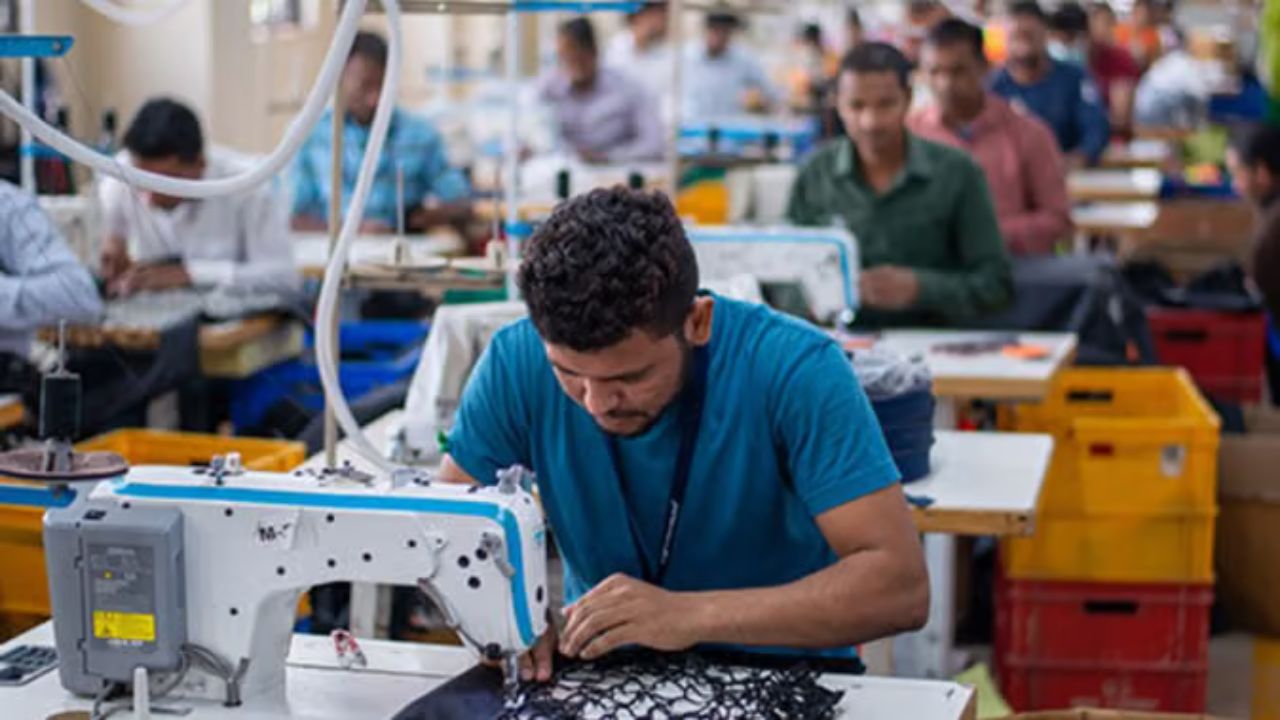
The White House said that India has agreed to "eliminate or reduce tariffs" on all US industrial goods and a wide range of US food and agricultural products, including "dried distillers' grains (DDGs), red sorghum, tree nuts, fresh and processed fruit, certain pulses, soybean oil, wine and spirits, and additional products."
It noted that India has committed to buying more American products and purchasing over $500 billion of US energy, information and communication technology, agricultural coal, and other products.
The statement stressed that New Delhi has also agreed to address non-tariff barriers that affect bilateral trade in priority areas.
Moreover, India will also remove its digital services taxes and has committed to negotiating a robust set of bilateral digital trade rules that address discriminatory or burdensome practices and other barriers to digital trade, including rules that prohibit the imposition of customs duties on electronic transmissions.
The statement added that the United States and India have also agreed to "negotiate rules of origin that ensure that the agreed benefits accrue predominantly to the United States and India."
Both nations were also committed to strengthening economic security alignment to enhance supply chain resilience and innovation through complementary actions to address non-market policies of third parties, as well as cooperating on inbound and outbound investment reviews and export controls," it said.
The United States and India will significantly increase bilateral trade in technology products and expand joint technology cooperation, the White House said.
Trump's Claims
Trump had claimed that India has agreed to “reduce Tariffs and Non-Tariff Barriers against the United States, to ZERO”. Largely, Trump's language signified an in-principle commitment to lower or phase out duties on selected US products rather than an immediate elimination of all import duties. However, the assertive phrasing of the claim brought anxiety among Indian traders.
The Path Forward
The statement followed a call between President Trump and Indian Prime Minister Narendra Modi last week, in which the leaders reached a framework for an interim agreement on reciprocal trade and reaffirmed their commitment to broader US-India Bilateral Trade Agreement (BTA) negotiations.
The statement said that in the coming weeks, Washington and New Delhi will promptly implement this framework and work toward finalising the interim agreement with a "view to concluding a mutually beneficial BTA to lock in benefits for American workers and businesses."
"In line with the roadmap set out in the Terms of Reference for the BTA, the United States and India will continue negotiations to address the remaining tariff barriers, additional non-tariff barriers, technical barriers to trade, customs and trade facilitation, good regulatory practices, trade remedies, services and investment, intellectual property, labour, environment, government procurement, and trade-distorting or unfair practices of state-owned enterprises," it added.
Track Latest News Live on NDTV.com and get news updates from India and around the world


