





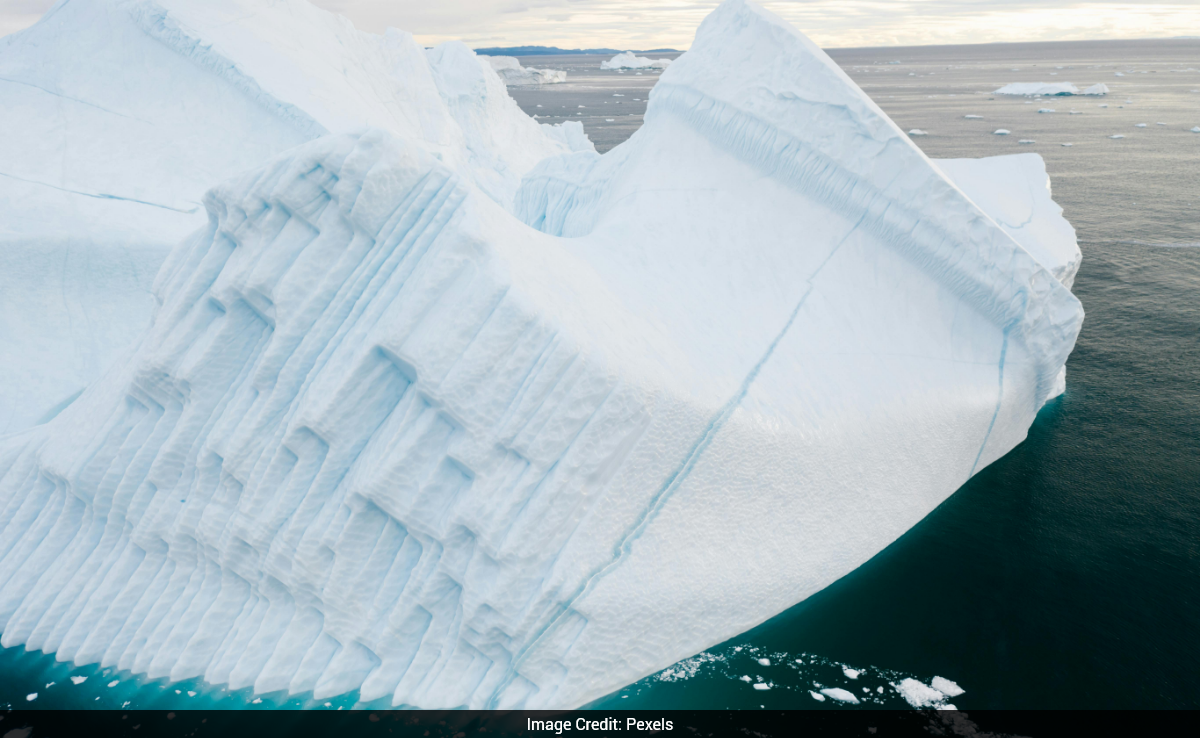
A new study is helping scientists understand how fragile Greenland's ice can be when the world gets warmer. By looking deep under the ice, researchers found clear signs that part of Greenland once lost all its ice during a warm time long ago, raising concerns about what could happen in the future as temperatures rise again, reported Forbes.com.
Recent scientific studies have revealed that a portion of Greenland's vast ice sheet completely disappeared during a naturally warm period about 7,000 years ago. The temperatures at that time were similar to what scientists believe could occur by the end of this century if greenhouse gas emissions continue to rise. Growing political interest in the Arctic region and new climate signals are making the region's future increasingly important.
As part of the GreenDrill project, scientists drilled through the ice at Greenland's Prudhoe Dome to a depth of more than 500 meters, reaching the bedrock beneath. Luminescence dating techniques revealed that the overlying ice had completely disappeared between 6,000 and 8,200 years ago. This period is known as the Holocene Warm Period, when temperatures were approximately 3 to 5 degrees Celsius warmer than before the Industrial Era, which is around the projections for 2100.
The ice formed at that location later showed no traces of the previous Ice Age, suggesting that the ice sheet had completely receded and then re-formed. A senior scientist on the project explained that this significant discovery was made possible after a highly risky drilling operation that nearly failed. These results clearly demonstrate that large ice sheets can be completely transformed by even a small increase in temperature.
Track Latest News Live on NDTV.com and get news updates from India and around the world

