Why US Sinking Iran Warship Is A Major Wake-Up Call For India's Submarine Arm
Project 75-India, the programme meant to field six next-generation submarines with submerged endurance-boosting air independent propulsion (AIP) tech and land-attack missile capability, was conceived in the late 1990s.
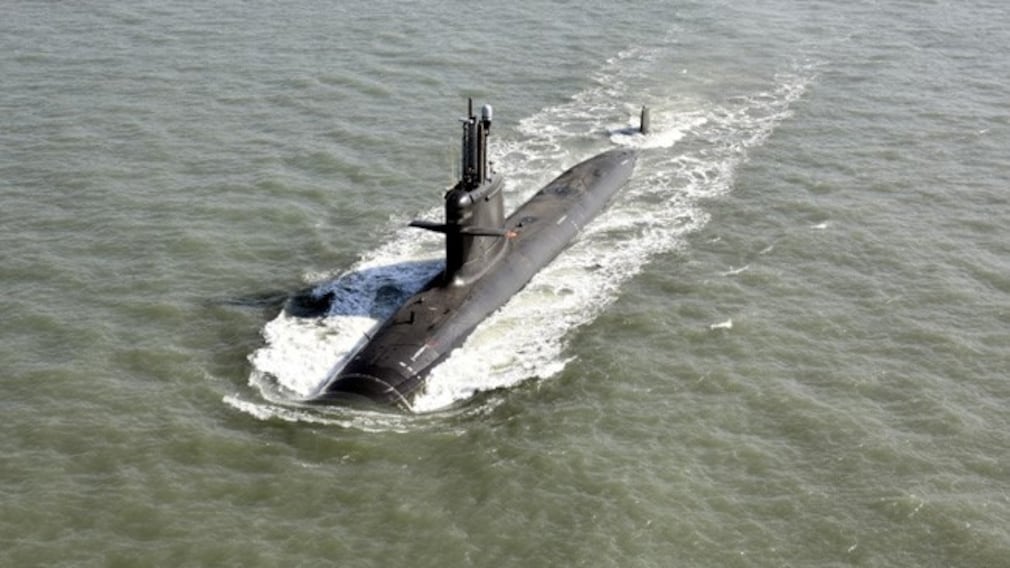
On March 4, 2026, a United States Navy fast-attack submarine fired a single Mark 48 ADCAPS torpedo in international waters off the southern coast of Sri Lanka and sent a clueless Iranian frigate IRIS Dena to the bottom of the sea.
It was the first time an American submarine had sunk an enemy vessel since the Second World War. It was also, for anyone paying attention to Indian naval strategy, an extraordinarily uncomfortable reminder of what India does not have and what it very badly needs.
The IRIS Dena had participated in the International Fleet Review and the MILAN 2026 multilateral exercise at Visakhapatnam just days earlier. Then she turned homeward, and in transit, was killed in India's oceanic backyard by an underwater hunter that simply materialised from the deep, delivered its verdict, and disappeared.
https://t.co/PiqQpVIrMu pic.twitter.com/Wc1e0B0um7
— Department of War 🇺🇸 (@DeptofWar) March 4, 2026
That is what a nuclear-powered attack submarine does. It spreads a particular kind of dread, a psychosis of the deep, among naval captains ordered to take their ships through waters where one may be lurking. The Chinese understand this. The Americans clearly do. India, the self-designated primary security provider in the Indian Ocean, is still, for all practical purposes here, watching from the shore.
The numbers tell a damning story. As of early 2026, the Indian Navy's conventional (diesel-electric) submarine arm comprises sixteen boats: six French-designed Kalvari-class Scorpenes inducted between 2017 and 2025, four ageing German-origin Shishumar-class vessels undergoing life-extension work, and six Russian-origin Sindhughosh-class Kilo submarines, of which INS Sindhughosh herself was decommissioned in December 2025 after 40 years of service. Three others in that class have already been retired or lost. The surviving Kilos, acquired between 1986 and 2000, are long past their prime. Their operational availability is constrained by chronic maintenance demands. The Indian Navy's stated ambition of operating 24 submarines by 2030 is no longer realistic.
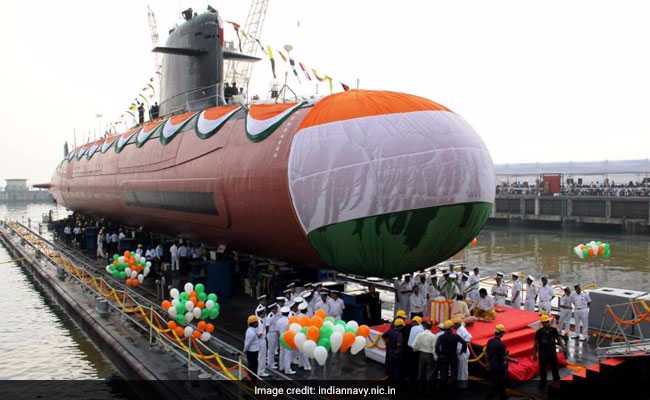
Project 75-India, the programme meant to field six next-generation submarines with submerged endurance-boosting air independent propulsion (AIP) tech and land-attack missile capability, was conceived in the late 1990s. Originally meant to deliver boats in the late 2020s, P75I has been delayed so many times that the phrase itself has become a kind of punchline in defence circles. As recently as January 2026, negotiations between Mazagon Dock and Germany's ThyssenKrupp Marine Systems were still ongoing, with contract signing expected by the end of the current financial year. If that deadline is met, the first submarine arrives in the mid-2030s at the earliest.
Read: India's 3rd Nuclear Ballistic Missile Submarine To Enter Service Soon
A stopgap programme to build three additional Scorpenes was supposed to be signed by March 2025, but was not. It remains in limbo. India's homegrown AIP module that was to be retrofitted onto INS Kalvari during her first refit was not ready in time.
And this is just the non-nuclear submarine scene.
The nuclear submarine situation is a parable of India doing things perfectly backwards. Since 1988, India has leased three nuclear-powered attack submarines (SSN) from Russia: INS Chakra I, a Charlie-class boat returned in 1991, INS Chakra II, an Akula-class vessel leased in 2012 and returned in 2021, and the still-awaited Chakra III, an Akula leased under a $3 billion deal signed in 2019 that has now been delayed to 2028 because of the war in Ukraine and its effects on Russian defence production.
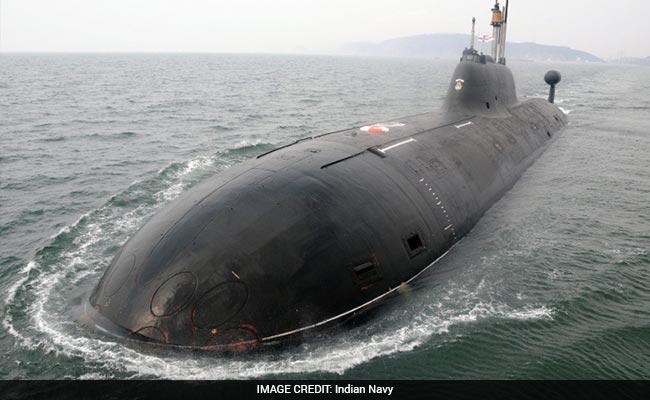
For nearly four decades, India has been renting someone else's nuclear-powered hunter-killers, using them largely for crew training, operating them under severe restrictions that prevent them from being loaded and used as actual weapons of war, then handing them back and waiting years before the next one arrives. The gap between Chakra II's departure in 2021 and Chakra III's expected arrival in 2028 means the Indian Navy will have gone seven years without a single SSN.
Read: Iran Warship Sunk By US Was In India For 2024 Exercise Too
Meanwhile, India will soon commission its third nuclear-powered ballistic missile submarine (SSBN), a vessel of incomparably greater political and technical complexity, because it carries nuclear weapons and sits at the apex of India's deterrence triad. The irony should be insufferable. India is building SSBNs before it has its own SSNs. It has the most strategically sensitive end of the nuclear submarine spectrum in service, but not the workhorse attack boat that makes a naval adversary think twice about entering a body of water.
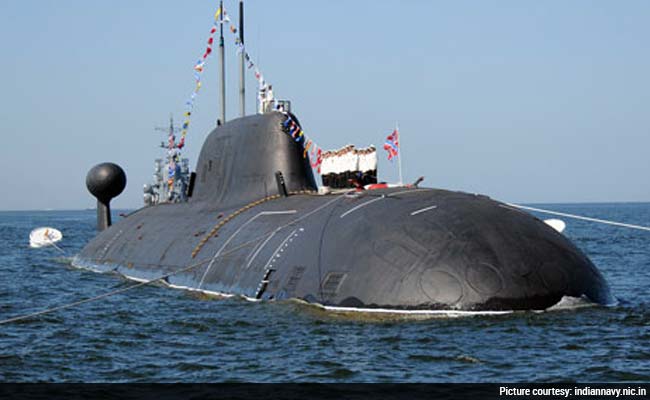
SSNs are built for the hunt. The one that killed IRIS Dena, either an older Los Angeles-class or a newer Virginia-class, was hunting, even though its prey wasn't exactly a challenge. China sends its own SSNs into the Indian Ocean periodically. Their presence is documented and understood by the Indian Navy. They are there to map, to probe, to monitor, and to remind. India has no equivalent presence in return. India's 7,500-kilometre coastline, its chokepoint adjacency, its stated role as the net security provider of the Indian Ocean Region, all of these rest on a submarine foundation that is crumbling at its base even as new floors are added to the top.
This is a recognisably Indian pathology. We build the capstone before the foundation. We commission an aircraft carrier while our submarine fleet withers. We induct SSBNs while leasing SSNs. We plan SSN programmes for the 2030s while the Americans fire torpedoes off Galle in 2026. The torpedo that sent IRIS Dena down was a reminder, unwanted and vivid, that the Indian Ocean is no one's ocean by right. It is owned by whoever can hold it in the dark.
-
Opinion | The 'AIPC' Was Once Congress' Boldest Idea. What Happened To It?

Tharoor, to Chakravarti, to Yaskhi now, the fate of a Congress 'experiment' that started in 2017 will tell you a lot
-
Woman Biker Hit, Air Force Veteran Attacked: The Lawlessness In Gurugram
What gives confidence to some elements in Gurugram to break the law again and again in full public view and on camera?
-
Opinion | When The Feed Braves The Flood
NDTV drops the 24x7 and stakes its next chapter on presence as it inaugurates a new identity
-
The Politics Of Blue: Why Akhilesh Yadav-vs-Mayawati Over A Colour Is Just One Shade Of History
A movie starring Rajinikanth tells us how colours can carry meaning beyond what meets the eye. The latest row over Akhilesh Yadav's party adopting blue, and Mayawati objecting, can be a starting point for understanding the many shades of history.
-
2 Indians Survived 9/11, Then American Justice System Became Their Nightmare
Pulled off a Texas train hours after 9/11, two Indian men were plunged into America's largest terror manhunt.
-
Opinion | Building BRICS In New Delhi
For India as the host nation, chairing the summit tests the core tenet of its modern foreign policy: strategic autonomy.
-
Can India 'Mediate' Between Iran And UAE At BRICS? Gulf Envoy Suggested It Once
At the very start of the Israel-US war on Iran, it was a UAE diplomat who had suggested as much.
-
I Went Looking For A PG In Delhi's Kamla Nagar. Here's What I Found
In every PG visited by NDTV in Delhi's Kamla Nagar, the conversation began with amenities. Nothing in the sales pitch was about how secure the building was.