





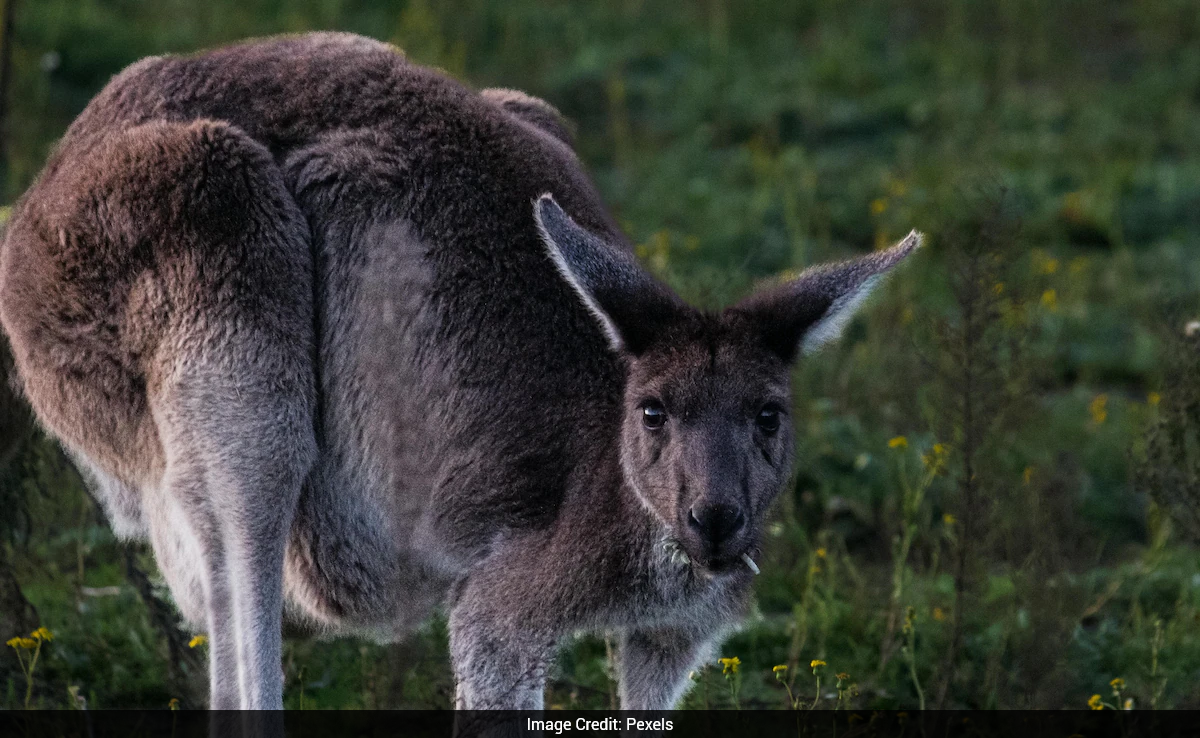
A new study shows that an ancient giant kangaroo that lived in Australia 50,000 years ago likely hopped, challenging previous ideas about the species. Scientists previously believed that Protemnodon goliah, the giant ancestor of modern kangaroos, could not jump because of its heavy weight. But the new study shows that this creature, which lived in the Pleistocene era, may have been capable of making short jumps. This research was published in Scientific Reports, reported the ABC News.
Previous research had indicated that giant kangaroos weighing more than about 350 pounds are too heavy to jump and that the motion could rupture their heels, Megan E. Jones, a University of Manchester researcher and lead author of the paper, told ABC News.
Jones said giant kangaroos and their jumping style have long been debated because they were much larger than modern kangaroos.
Jones also said that most jumping mammals, whether small rodents or marsupials, are lighter than 7 pounds. Modern kangaroos, which can weigh up to 200 pounds, are also noted for their exceptional jumping ability.
Jones reported that P. goliah could have weighed up to 550 pounds, more than twice the weight of modern kangaroos.
She also pointed out that it may not be correct to think that the body of giant kangaroos had the same proportions as modern kangaroos.
Researchers from the University of Manchester and the University of Bristol in the UK studied 94 modern kangaroos and 40 fossil specimens of 63 kangaroo and wallaby species, including P. goliah. They combined weight estimates and the length and diameter of the fourth metatarsal to see whether these animals could withstand the stress of jumping.
Jones said he specifically studied the calcaneum, or heel bone, which helps modern kangaroos walk long distances through energy stored and released in the heel vein.
The study concluded that the metatarsals of all giant kangaroo species were strong enough to withstand the stress of jumping. Their heel bones were large to support the width of the tendon needed for jumping, the researchers said.
Jones reported that P. goliah became extinct relatively recently, about 40,000 to 50,000 years ago.
The paper also said that giant kangaroos probably did not rely on jumping for every movement because that would have been inefficient for their large bodies. Short and fast jumps helped them avoid predators such as the extinct marsupial lion Thylacoleo or stay away from obstacles in the way.
Track Latest News Live on NDTV.com and get news updates from India and around the world

