





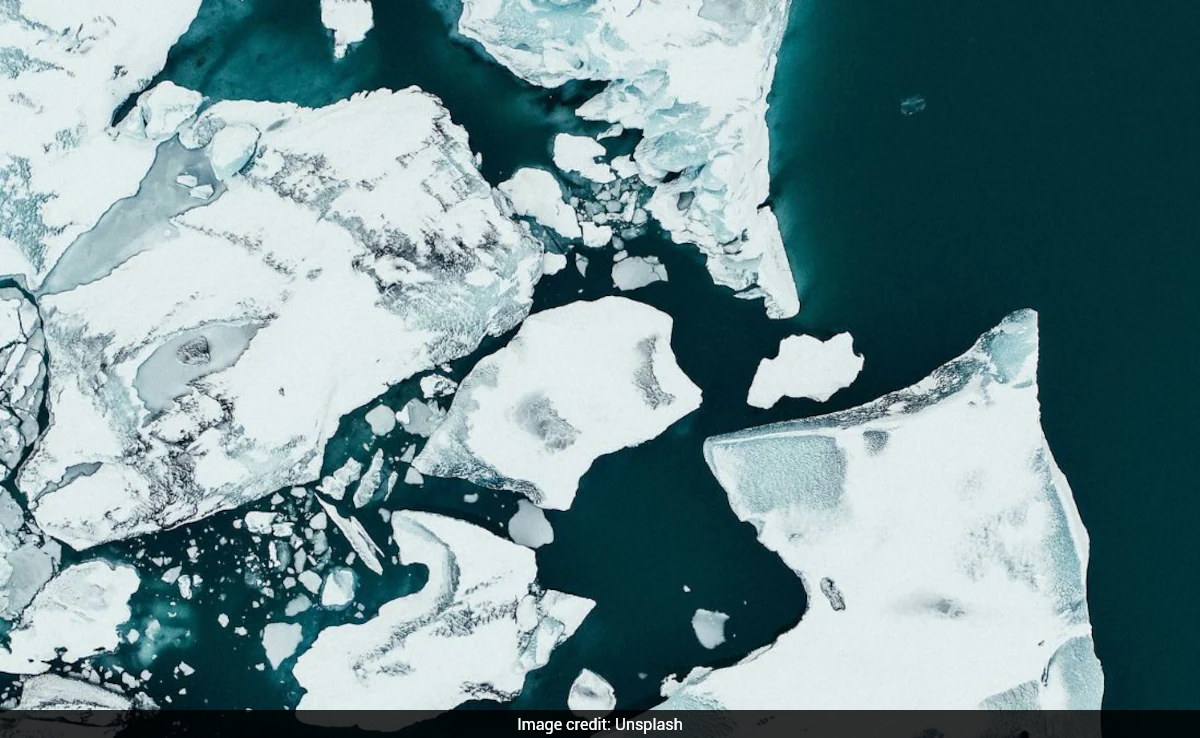
Concerns have been raised over hundreds of unusual earthquakes between 2010 and 2023 that shook the Thwaites Glacier in Antarctica, also known as the "Doomsday Glacier". These seismic events are caused by massive icebergs breaking off and capsizing in the ocean, generating low-frequency seismic waves. A new study, published in Geophysical Research Letters, mentions details about the glacial earthquakes, which could result in rising sea levels.
Also read | Earth Has Been Sending Particles From Atmosphere To Moon For Billions Of Years, Study Finds
Glacial earthquakes occur when tall, thin icebergs detach from glaciers and crash into the sea, causing powerful mechanical vibrations. They are different from earthquakes that we witness quite often. Glacial quakes lack high-frequency seismic waves, making them harder to detect, which is why they were discovered quite recently - first discovered in the northern hemisphere more than 20 years ago.
Also read | All About Deadly 'Superbug' That's Spreading Fast Across US, Raising Concerns
In a report published in The Conversation, Thanh-Son Pham, who is the author of the study and ARC DECRA Fellow in Geophysics, Australian National University, said that he used seismic stations in Antarctica and detected over 360 glacial earthquakes near Thwaites and Pine Island glaciers between 2010 and 2023.
He also said that around 245 events occurred near Thwaites Glacier's marine edge, likely due to capsizing icebergs. The study also points out that earthquakes coincide with accelerated glacier flow, possibly influenced by ocean conditions.
It is believed that if Thwaites Glacier were to collapse completely, it would raise global sea levels by three metres. Hence, an in-depth understanding of these glacial earthquakes can help scientists better predict sea-level rise and glacier instability.
Track Latest News Live on NDTV.com and get news updates from India and around the world

