





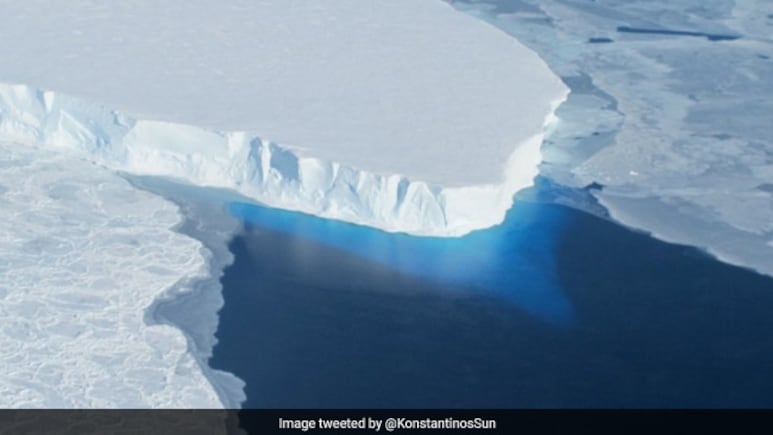
Scientists have raised concerns over the Thwaites Glacier, which is nicknamed the "Doomsday Glacier," as it is melting at an unprecedented rate because of climate change fueled by human activities. The rapid melting rate would result in a rise of global sea levels by 65cm, putting millions at risk of coastal flooding.
Notably, Thwaites Glacier contributes 4% to global annual sea-level rise, and its collapse could destabilise the West Antarctic Ice Sheet, which would cause catastrophic sea-level rise. The glacier's melting is a pressing concern, with researchers drilling into the ice to study the impact of warm ocean water.
In an effort to mitigate the impact, a team of scientists and engineers is proposing a radical solution: building a 150-meter-tall underwater wall to block warm ocean currents from melting the glacier, Euro News reported.
Also read | Study Reveals How "Lithospheric Drip" Shaped Utah's Green River Path
The proposed wall, which is a part of the Seabed Anchored Curtain Project, would stretch 80km across the seabed in front of the glacier, protecting it from warm ocean waters. The project involves a three-year research phase to design, test, and construct the curtain, with a budget of $10 million.
"We are proud to support the Seabed Curtain project, a groundbreaking initiative in climate research and ocean preservation in the Arctic," Thomas Wilhelmsen, Chair of Tom Wilhelmsen's Foundation, said as quoted on the official website.
"The project's innovative approach to reducing ice melting in the Arctic Ocean through technology and collaboration across disciplines strongly aligns with the foundation's values of sustainability, knowledge, and international cooperation."
"We believe this project has the potential to make a meaningful contribution to the global climate effort and help protect vulnerable ecosystems in the northern regions."
Also read | NASA Captures Stunning Nighttime Image Of Mars Using Curiosity Rover's LED Lights
While the idea is ambitious, experts acknowledge significant technical challenges, including the wall's survival in extreme Antarctic conditions and long-term ocean exposure. The project's success is far from guaranteed.
"Sea level rise is one of the most serious climate risks facing humanity this century. It is essential to accelerate research, like UArctic's seabed anchor curtains project, to evaluate how to safely manage this risk," Sasha Post, who is the Director of Outlier Projects, said as quoted.
Track Latest News Live on NDTV.com and get news updates from India and around the world

