





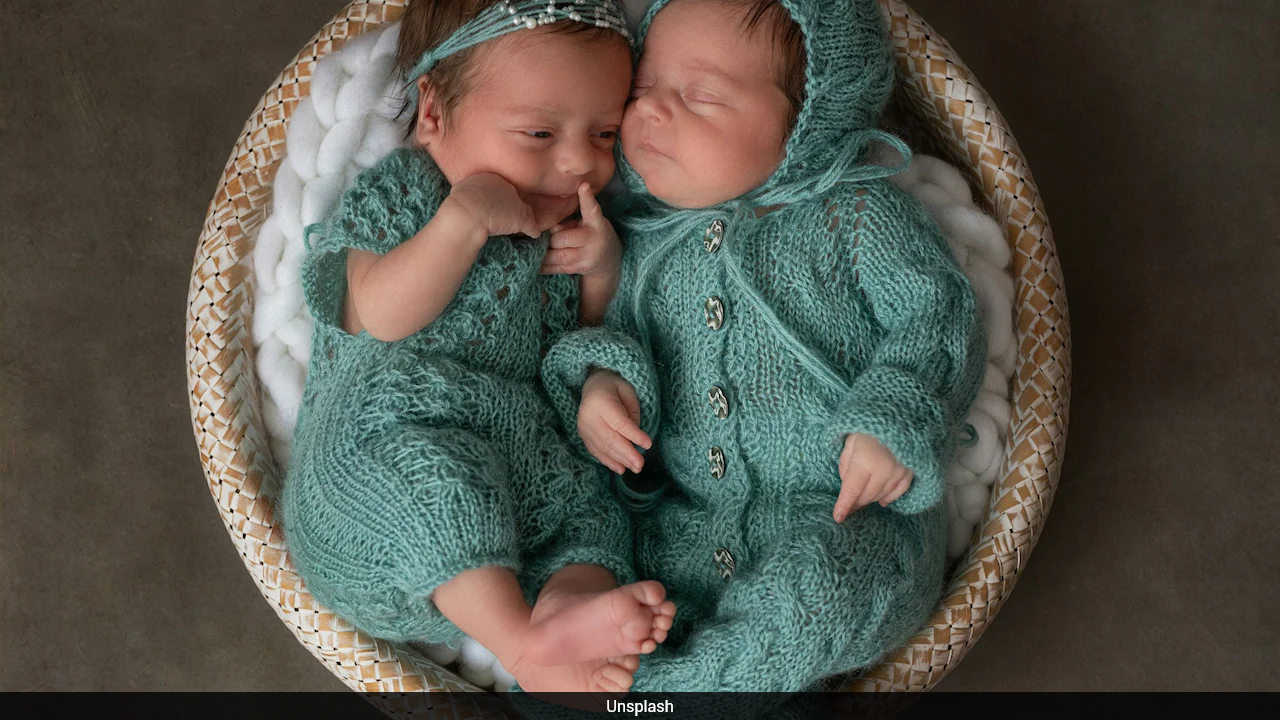
Scientists have reconstructed how a rare cancer passed from one identical twin to her sister before birth, using DNA changes to trace the disease's journey inside the womb. The research examined the case of twin sisters Amelia and Amaya, who were found to have the same type of cancer shortly after birth. The findings showed that the cancer began in one twin before cancer cells crossed the shared placenta and formed tumours in the other baby. twin before cancer cells crossed the shared placenta and formed tumours in the other baby.
The sisters died soon after birth. Their family agreed to post-mortem examinations to help researchers investigate how the disease had developed and spread. The research has been published in Nature Communications.
DNA Analysis Helped Scientists Trace Cancer's Origin
The researchers analysed DNA from tumour samples, healthy tissues and the placenta to understand how the cancer developed. They studied 10 tumour samples, 12 normal tissue samples and 23 placental samples, including samples examined using a method that enriched for cells involved in placenta formation.
Although the sisters were identical twins, their cells had acquired different genetic changes as they developed. These changes acted like biological markers, allowing scientists to trace the origins of particular cells.
The team found that the tumours in both babies carried the same fusion of two genes, MN1 and ZNF341. Further genetic analysis revealed that the cancer cells in the second twin carried markers belonging to her sister.
This provided evidence that the cancer had started in one baby before spreading to the other through their shared placenta. However, researchers did not directly observe the cancer cells crossing between the twins.
When Did the Cancer Spread?
Using the genetic changes that had accumulated in the cells, the researchers estimated when the cancer began and when it spread.
Their analysis suggested that the tumour first developed towards the end of the first trimester of pregnancy. The transfer to the other twin most likely happened late in the second trimester.
These timings are estimates based on assumptions about how quickly mutations accumulate. They were not directly observed.
The researchers also found evidence that normal cells had travelled between the twins. Analysis of a spleen sample from one baby suggested that around 75 per cent of the sampled cells originated in her sister, pointing to an exchange of blood cells during pregnancy.
A Rare Case That Could Help Future Research
The findings offer scientists a rare opportunity to study how cancer develops in early life and how cells can move between twins before birth.
The researchers said the case also provided clues about the twins' early development, suggesting that their embryos may have separated earlier than expected under the conventional model of identical twinning.
However, the study examined only one pair of twins. It does not establish how often cancer passes between twins before birth, and the researchers stressed that sharing a placenta does not mean that cancer will inevitably spread from one twin to the other.
The findings could help scientists better understand the origins of childhood cancers and the earliest stages of human development.
Track Latest News Live on NDTV.com and get news updates from India and around the world

