





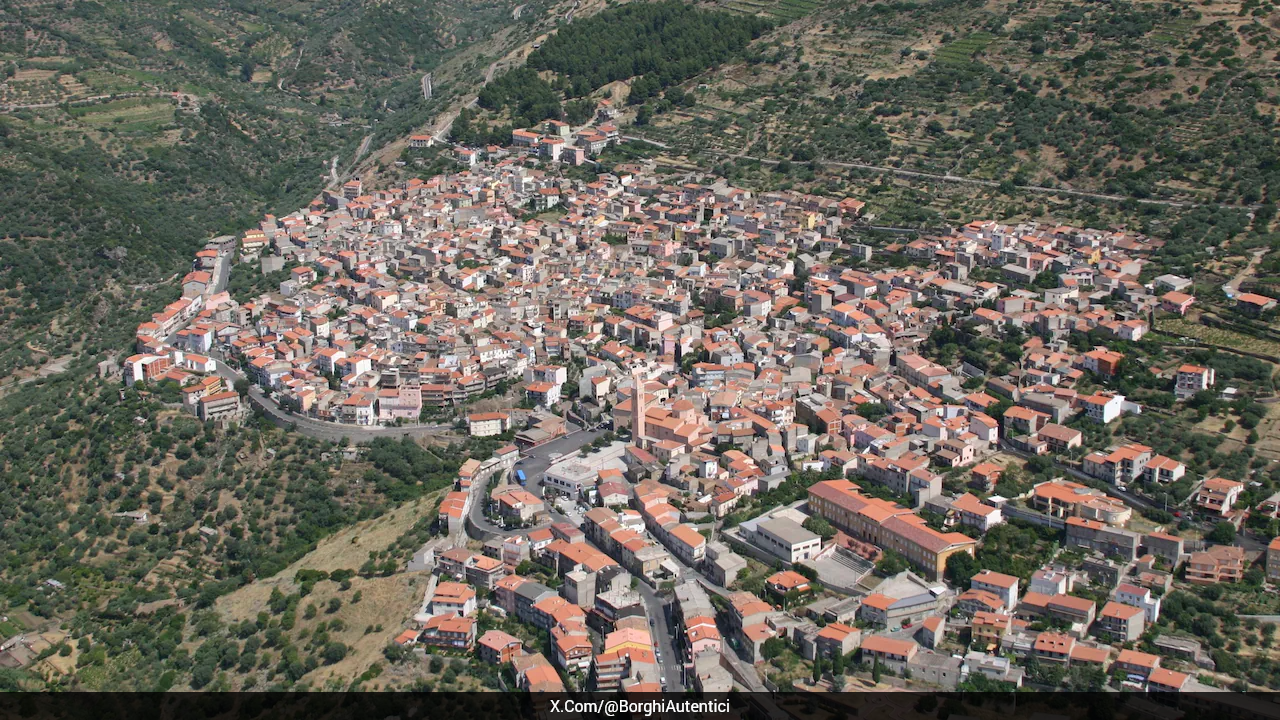
Women living in a small village in Italy are far more likely to reach the age of 100 than women in many other parts of the world. Scientists believe the secret could lie in a combination of diet, daily physical activity, close family ties and strong community relationships. The village of Bolotana, located in the mountains of Sardinia, Italy, has emerged as a possible new longevity hotspot, where people live unusually long lives. Researchers found that women who reach the age of 70 in the village have a much higher chance of celebrating their 100th birthday than women in Italy or the United States.
According to the study, around 13.8 per cent of women in Bolotana who reach 70 are expected to live to 100. The comparable figures are about 3.5 per cent for women in Italy and 3.6 per cent for women in the United States.
The findings suggest that Bolotana could become a new "Blue Zone", a term used for places where people experience exceptional longevity. However, scientists say more research is needed to establish what makes the village so unusual.
What Makes Bolotana a Longevity Hotspot?
Researchers analysed demographic records from the village, which has around 2,300 residents. They examined survival rates among older people between 2021 and 2025, paying particular attention to how long people lived after reaching the age of 70.
The study was co-authored by S. Jay Olshansky, professor emeritus of epidemiology at the University of Illinois Chicago School of Public Health.
"What makes Bolotana extraordinary is that it has an incredible historical record that allows us to definitively evaluate ages at birth and death," Olshansky said.
"The municipal and baptismal records date back centuries and allowed us to independently verify ages."
The team used local government records and church archives to check the ages of people who lived to 100 or beyond. The researchers documented 38 centenarians among 3,060 people born in Bolotana between 1900 and 1925.
Women in Bolotana Have a Remarkable Survival Rate
The study found that women in Bolotana had an estimated additional life expectancy of nearly 21 years after reaching 70.
Researchers also compared the village with other populations around the world. Bolotana's women ranked second only to women in Hong Kong for remaining life expectancy at 70 and the likelihood of reaching 100.
Olshansky highlighted the unusual pattern of longevity among women in the village.
"Females almost always live longer than males anywhere in the world, but in Sardinia that wasn't the case. It's one of the things that made it so unusual," he said.
"We think this is the longest-lived female population in the world, or close to it."
The findings are particularly interesting because Sardinia's original Blue Zone, identified more than two decades ago, was known for unusually high longevity among men. In Bolotana, women appear to be the main drivers of the exceptional survival pattern.
Diet, Walking and Strong Family Bonds Could Hold the Key
Although the study did not establish the exact reasons behind the villagers' long lives, researchers identified several factors that could help explain the pattern.
Bolotana has steep streets and hills, encouraging residents to walk as part of their daily routines. Much of the food is grown locally, including olives used to produce olive oil rich in healthy fats.
Family relationships and community support may also play an important role. Residents often live close to relatives, and social isolation appears to be uncommon.
Olshansky said: "You've got this close-knit community where people take care of each other."
"Movement is largely done by walking, not by driving."
Researchers believe that a combination of diet, physical activity, family support, social connections and genetics may contribute to the villagers' longevity. However, further research is needed to determine how much each factor matters.
Can Other Communities Learn From Bolotana?
Scientists hope that studying Bolotana could help explain why some populations remain healthy and live longer than others.
The findings could offer useful insights into how everyday habits, social relationships and local environments influence ageing. However, the results do not prove that adopting the same lifestyle will guarantee a longer life.
Olshansky said: "If we can identify the characteristics behind this longevity and help people adopt them, the rest of the world can benefit from understanding the values practised by these communities."
The research, published in Frontiers in Ageing on October 4 2026, identifies Bolotana as a possible new Blue Zone. The researchers noted that the strength of the longevity pattern varied across different periods, meaning longer observation and further validation are needed before the village can be confirmed as an established Blue Zone.
Track Latest News Live on NDTV.com and get news updates from India and around the world

