





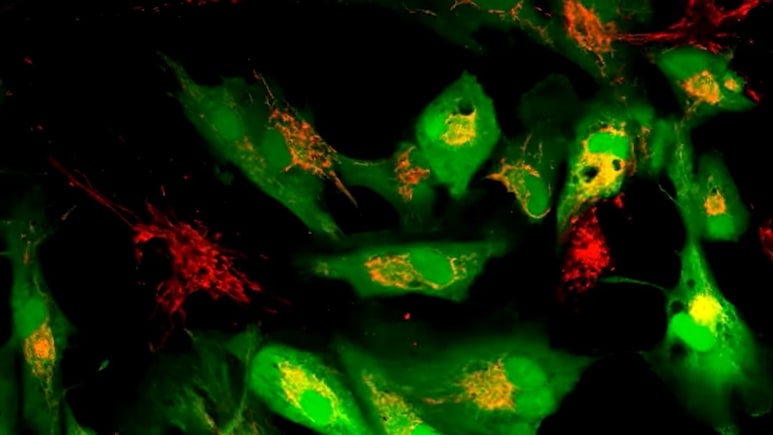
Researchers at Texas A&M University have developed a promising technique to rejuvenate ageing human cells by enhancing their energy production systems. The study focusses on mitochondria - tiny structures within cells that generate energy-which tend to decline in number and efficiency as we age. This deterioration is linked to various age-related diseases, including those affecting the heart and brain.
To counter this, scientists used specially designed "nanoflowers," which are microscopic particles shaped like flowers. These particles help reduce harmful oxygen molecules in cells and activate genes that stimulate the production of new mitochondria in human stem cells.
Importantly, these energized stem cells can transfer healthy mitochondria to nearby damaged cells, restoring their function. While it's more like a "battery replacement" than a recharge, this breakthrough could lead to innovative treatments for degenerative diseases and age-related health issues.
"We have trained healthy cells to share their spare batteries with weaker ones," says biomedical engineer Akhilesh Gaharwar.
"By increasing the number of mitochondria inside donor cells, we can help aging or damaged cells regain their vitality - without any genetic modification or drugs."
Scientists developed nanoflowers from molybdenum disulfide, designed with microscopic pores that act like sponges to absorb harmful reactive oxygen species in targeted tissues. This process triggered gene activity that boosted mitochondria production in stem cells during lab tests.
Stem cells naturally share mitochondria, but with increased numbers, they transfer nearly twice as many to neighbouring cells. This significantly enhanced energy restoration, especially in smooth muscle cells, which grew three to four times more.
In heart cells damaged by chemotherapy, the treated group showed a much higher survival rate.
Researchers believe this technique could potentially rejuvenate cells in various parts of the body-such as near the heart for cardiovascular treatment or directly into muscles for conditions like muscular dystrophy.
"It's pretty promising in terms of being able to be used for a whole wide variety of cases, and this is just kind of the start," says geneticist John Soukar. "We could work on this forever and find new things and new disease treatments every day."
Track Latest News Live on NDTV.com and get news updates from India and around the world

