





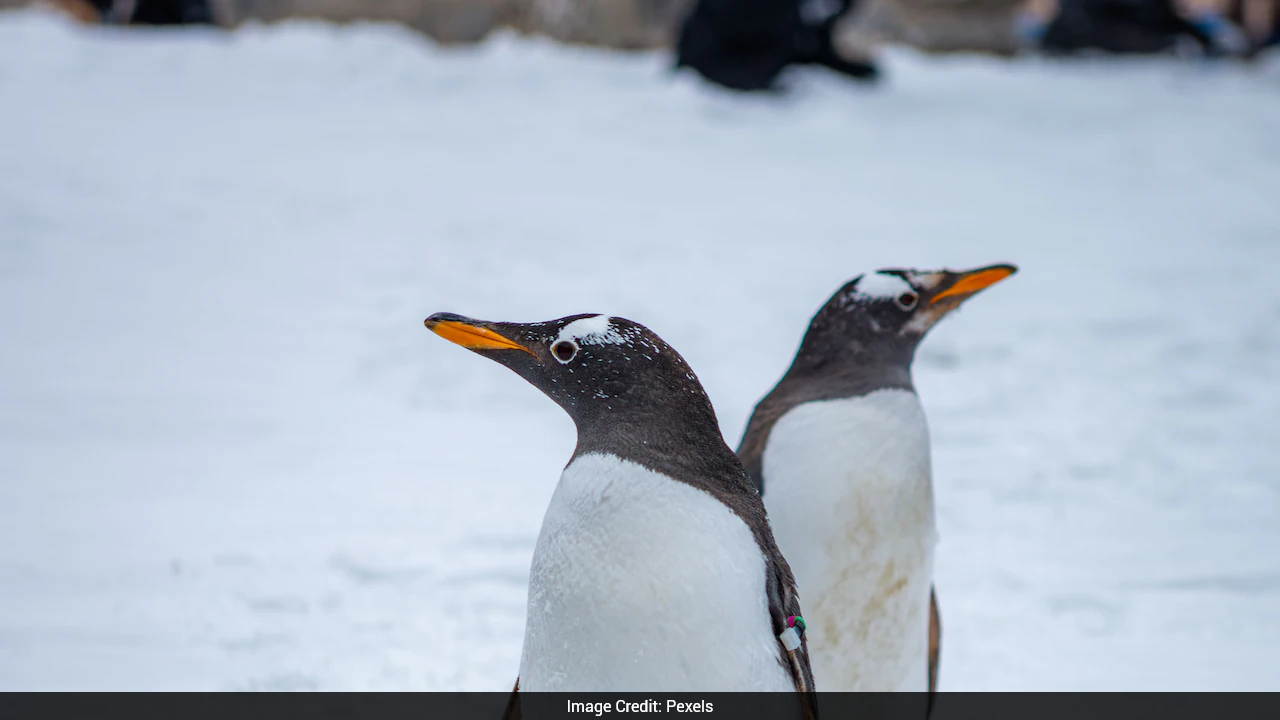
Penguins are known for surviving in the freezing conditions of Antarctica, but their droppings may be contributing to a surprising environmental problem. A new study has found that penguin poop provides nutrients to algae growing on Antarctic snow, helping it flourish and potentially speeding up snow melting, reported People.
The study, published in the Journal of Geophysical Research: Biogeosciences, found that nutrients from penguin droppings may help snow algae grow faster. As global warming continues, these algae are becoming more widespread across Antarctica and darkening the snow's surface.
According to Discover Wildlife, the colour of algae around the South Pole changes depending on the nutrients available to it. When algae lack nutrients, they turn red to protect themselves from sunlight. However, when they receive enough nourishment, sunlight becomes a resource for growth. The algae then use chlorophyll, a green pigment that helps them carry out photosynthesis.
As snow algae spread, they darken the surface of the snow. This contributes to a cycle linked to global warming, as darker surfaces can absorb more sunlight. With penguin droppings supplying nutrients to the algae, this process may accelerate.
Alia Khan, a cryosphere biogeochemist and senior author of the study, told Phys.org that the relationship between wildlife, nutrients and snow algae is an important missing part of projections about the expansion of ice-free areas in Antarctica.
She explained that failing to account for these biological effects that darken snow could lead to an underestimation of how quickly coastal snowpacks are melting and how rapidly ice-free land is expanding across Antarctica.
The findings come as Antarctica continues to lose ice amid changing environmental conditions.
A study published in the journal Scientific Data last month found that Antarctica and Greenland, Earth's two major ice sheets, have lost about 12.5 trillion tons, or 11.3 trillion metric tons, of ice over the past 47 years.
About 84 per cent of this loss was attributed to glaciers flowing into the ocean faster than previously recorded, rather than to surface melting.
Penguin droppings have also proved useful in identifying wildlife populations in Antarctica. In 2024, satellites spotted new colonies of Emperor penguins because large patches of their droppings were visible from space.
Track Latest News Live on NDTV.com and get news updates from India and around the world

