





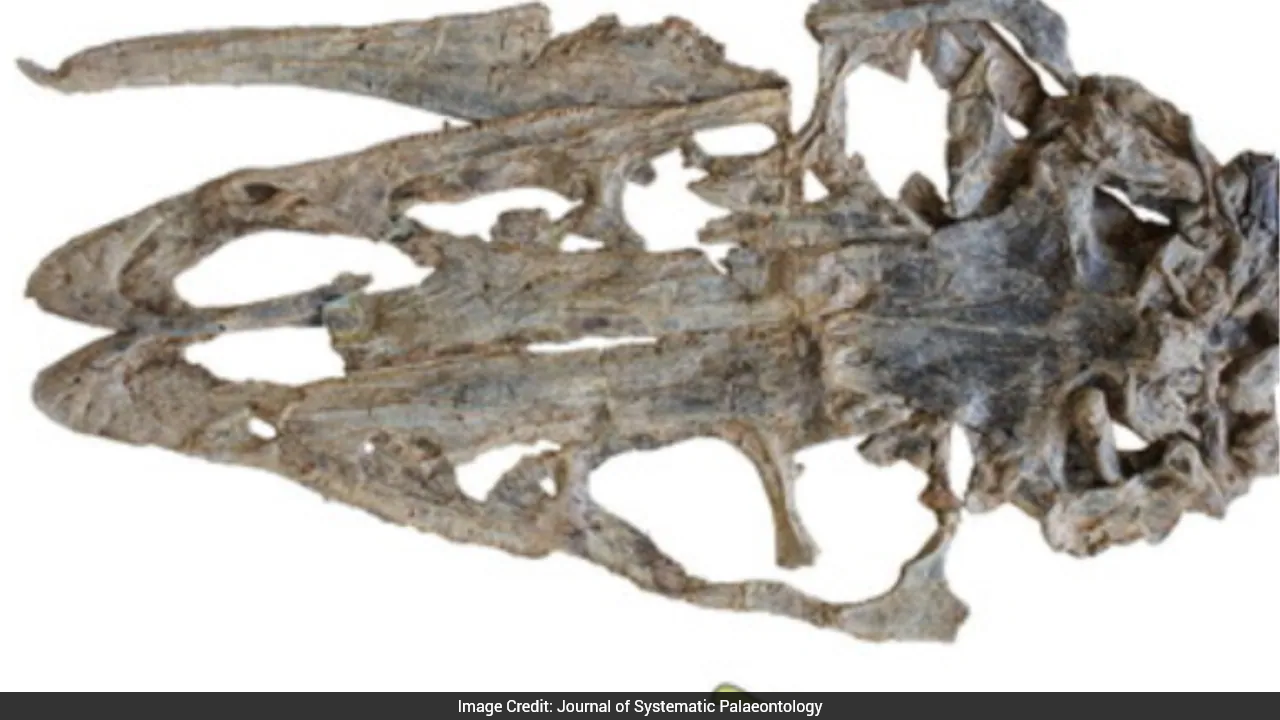
A new dinosaur species believed to have lived in western China around 125 million years ago has been discovered. Named Kayrasaurus changliensis, the dinosaur was a medium-sized therizinosaurian with giant claws and several unusual features, according to People.
Researchers described K. changliensis as a bizarre theropod. They said it might look like a feathered bear if it were alive today. The discovery is based on a nearly complete skeleton that was missing the hind limbs. Researchers published their findings in the Journal of Systematic Palaeontology.
Several features helped researchers identify K. changliensis as a new species. It had extremely small and closely packed teeth, which researchers said indicated a stronger bite and a stronger body.
The dinosaur also had strongly curved claws on three fingers. Researchers said the finger bones were relatively well preserved. The dinosaur also had a dorsally extended lip.
The fossil was discovered in the Lower Cretaceous Yixian Formation of western Liaoning, China.
The name Kayrasaurus comes from Kayra, the god of creation in Turkic Shamanism.
The species name changliensis comes from Changli, a historical place name from the Three Kingdoms period and refers to where the fossil was found. Therizinosauria is a rare group of theropod dinosaurs known for unusual body features, small heads and long necks.
Before this discovery, Beipiaosaurus inexpectus, which was about 7 feet long, was believed to be the largest therizinosaurian from this period. K. changliensis was nearly twice its size.
Researchers estimated that the newly discovered dinosaur was about 11.8 feet long.
Track Latest News Live on NDTV.com and get news updates from India and around the world

