




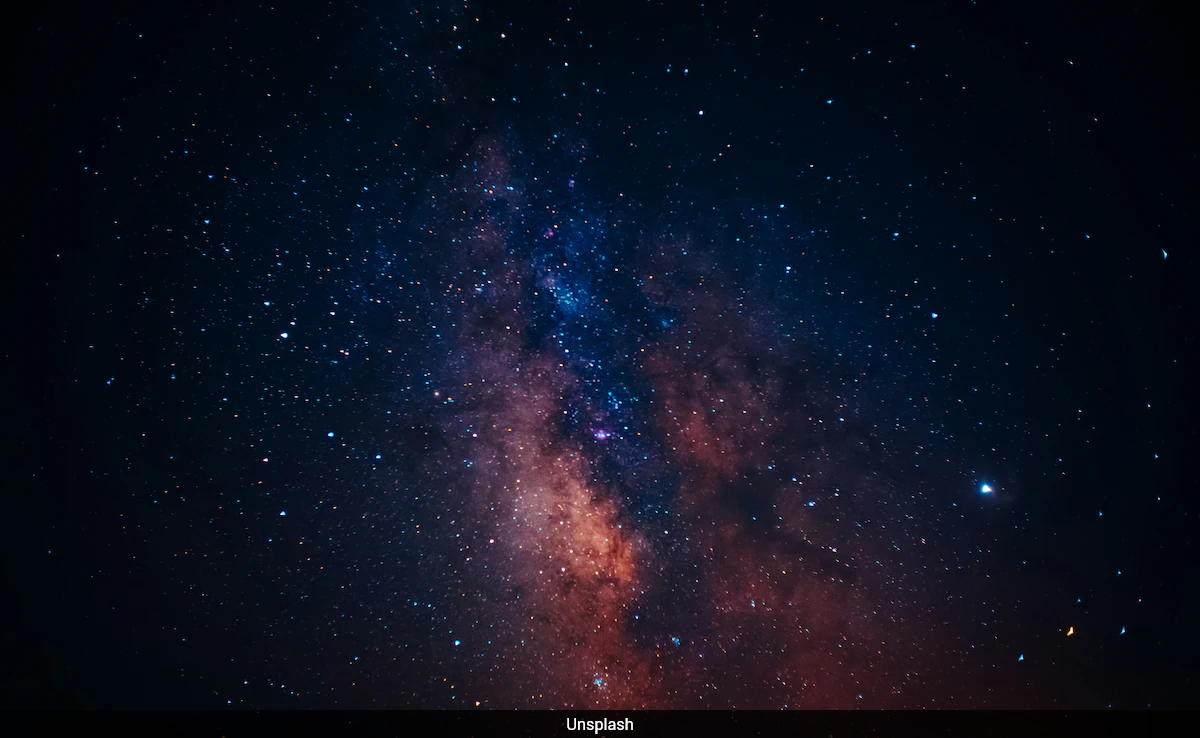
A new theoretical study suggests that a strange flash of light appearing in empty space could reveal gaps in our current understanding of gravity and the nature of the Universe.
The research, led by theoretical physicist Eugeny Babichev of the University of Paris-Saclay and published in Physical Review D, explores a surprising connection between Cherenkov radiation and so-called "ghost" instabilities in physics. Cherenkov radiation is the blue glow seen when a charged particle moves faster than light can travel through a medium such as water, commonly observed in nuclear reactors.
-

-
 Best Of NDTV World Summit 2026 | Defining Conversations, Big Ideas
-
 PM Modi Says 'Parasite' Congress Hurts 'Honest' Dissent Movements
-
 "Some Dreaming Of Disorder": PM Modi's Dig At Rahul Gandhi
-
 PM Modi Highlights India's Firsts: Fast Breeder Reactor, Hydrogen Train, Asian Games Medals
-
 "UN's Limits Clearly Visible": PM Modi Presses For 'New Solutions' At NDTV Summit
-
 "World That Relied On India's Brainpower Now Trusts Its Mindpower": PM Modi
-
 Non-Oil Trade With India Went Up 50% In 3 Years: UAE Minister At NDTV Summit
-
 "Some Dreaming Of Disorder": PM's "Failed Product Of Congress" Jibe At Rahul Gandhi
-
 'Viksit Bharat Not Just For Us': PM Modi's Top Quotes At NDTV World Summit
-
 Has Indian Cuisine Arrived At The Global Stage? What Vir Sanghvi Believes
According to established physics, such radiation should never appear in a vacuum because nothing can travel faster than light in empty space. However, Babichev argues that under certain conditions predicted by modified gravity theories, the vacuum itself could behave like a medium. In such cases, a type of instability involving negative-energy disturbances-known as physical "ghosts"-could produce a Cherenkov-like flash even in empty space.
In physics, a ghost can refer to a disturbance that carries negative energy, indicating that a system is unstable. Babichev explains that these ghost instabilities and Cherenkov radiation can be understood as two versions of the same underlying process. Both involve situations where the system lowers its total energy by creating paired disturbances, one positive and one negative.
If such radiation were ever detected in space, it would have major implications. It would suggest that the vacuum is not the lowest-energy state of the Universe, as currently believed, and that existing theories of gravity are incomplete. This could help scientists narrow down or rule out proposed modifications to general relativity.
While the idea remains purely theoretical and no detection method currently exists, researchers say the work provides a new way to think about how spacetime behaves under extreme conditions and where new physics might be found.
Track Latest News Live on NDTV.com and get news updates from India and around the world

