





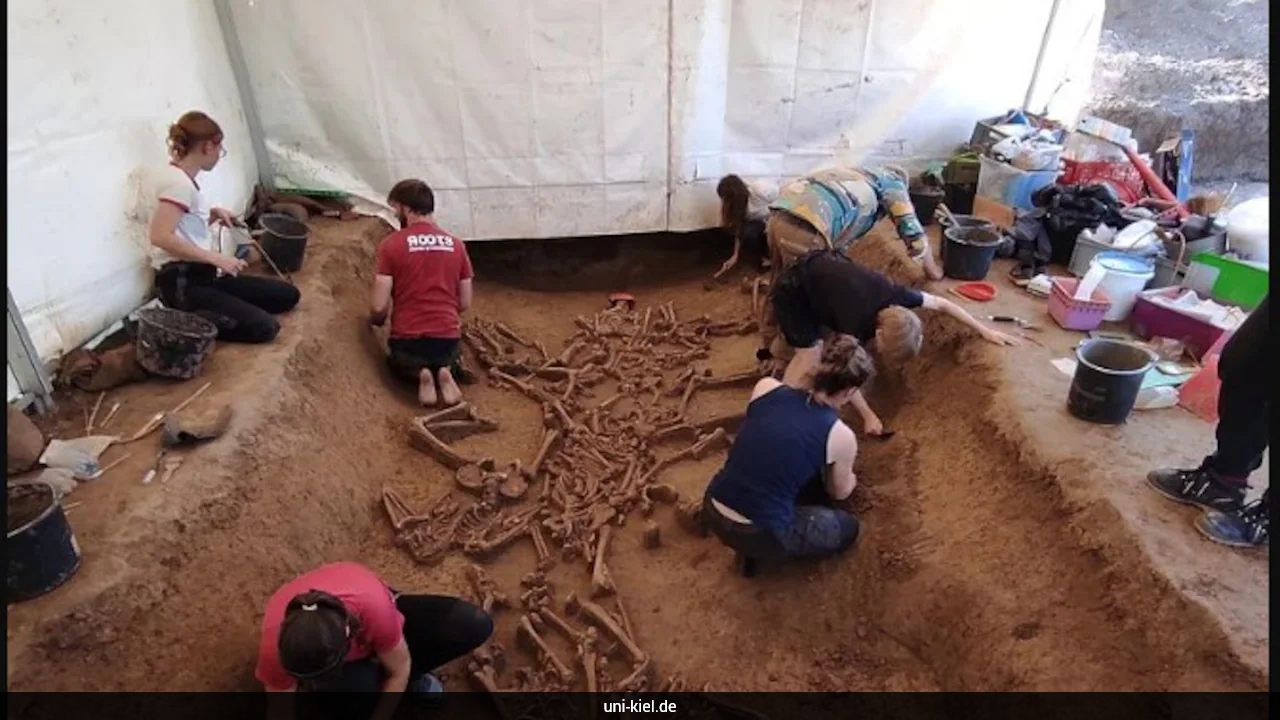
Archaeologists in Slovakia have uncovered one of Europe's most unsettling Stone Age mysteries after discovering nearly 80 human skeletons buried without their heads at an ancient settlement dating back around 7,000 years. The remains were found in a ditch surrounding the Neolithic settlement of Vrable, one of the largest early farming communities in Central Europe. Researchers identified at least 78 individuals, but only one skeleton, belonging to a young child, still had its skull intact.
The discovery has puzzled experts for years. Initial theories suggested the people may have been victims of a violent attack or massacre. However, a new study indicates that the heads were most likely removed after death as part of a deliberate ritual.
Scientists from Kiel University said there is little evidence that the people died from acts of violence. The careful way in which the skulls appear to have been separated from the bodies suggests the process was carried out by people with knowledge of human anatomy. Cut marks and the positioning of the remains point towards a planned practice rather than chaos following conflict.
Even more intriguing is the fact that none of the missing skulls have been found. This has led researchers to believe that the heads may have held special symbolic importance in the beliefs of these early farming communities.
The skeletons were discovered in unusual positions, with some lying face down and others placed in pairs. Researchers say the findings challenge long-held ideas about death and burial practices in Stone Age Europe.
Although the reason behind the decapitations remains unknown, the site offers a rare glimpse into the complex rituals and social customs of some of Europe's earliest settlers. For now, the headless dead of Vrable continue to guard their secrets from the distant past.
This research was published in the Proceedings of the Prehistoric Society.
Track Latest News Live on NDTV.com and get news updates from India and around the world

