





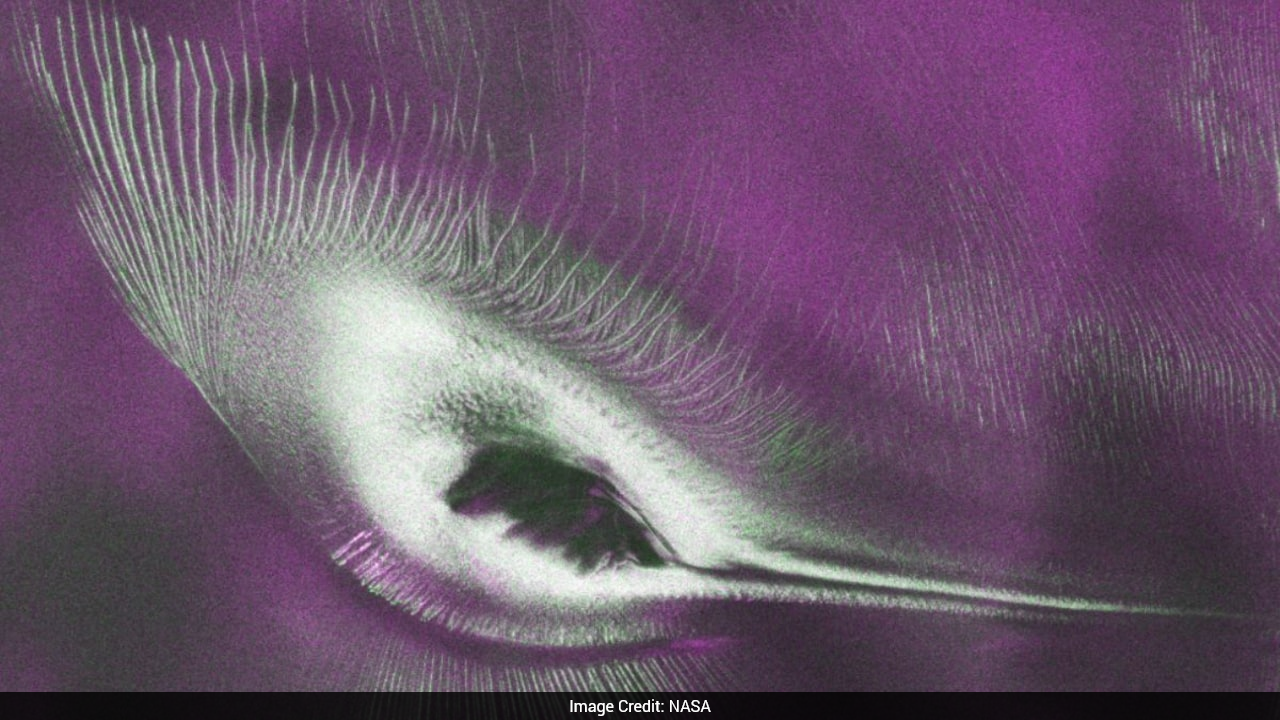
- NISAR satellite provides detailed radar images of Antarctica's ice and glaciers for research
- Public access to radar data from NISAR's L-band and S-band instruments began on July 20
- Image shows Nunatak Zaterjavshijsja mountain and crevasses formed by glacier movement
A newly released image from the NISAR satellite is giving scientists a closer look at Antarctica, showing detailed features of ice and glaciers that are difficult to see with ordinary cameras, reported NASA.
As of July 20, the public can access data from the two powerful radar instruments aboard the NISAR (NASA-ISRO Synthetic Aperture Radar) satellite. Teams in the United States and India will continue releasing files processed from the satellite's L-band and S-band radars, helping researchers and other users track the movement of Earth's land and ice masses, monitor changes in ecosystems such as forests and wetlands, and respond to natural hazards including landslides and earthquakes.
An early image released showed the fractured, barren surface of an Antarctic landscape in remarkable detail. The image also resembles a hummingbird.
The image shows Nunatak Zaterjavshijsja, a mountaintop in East Antarctica that rises above a stream of ice flowing northeast toward the ocean. As the glacier moves past the mountain, the landform creates stress in the ice, causing deep cracks known as crevasses, which appear as sharp green lines in the image.
Seongsu Jeong, the signal analysis engineer who produced the image at NASA's Jet Propulsion Laboratory in Southern California, said the image is beautiful and contains rich details that provide insights into how the glacier is moving. He added that because radar can often see through snow and deep into the ice, NISAR can observe fundamentally different properties of Antarctic ice than can be seen in optical imagery. He further said that with NISAR, scientists are seeing what is hidden beneath the surface.
The image was generated using measurements collected by NISAR's L-band instrument while mission teams from the United States and India were testing the satellite's systems. According to NASA, the "hummingbird" image reflects one of the mission's key strengths by producing highly detailed images that are both informative and visually striking.
The colours in the image show differences in the way polarised microwave signals interact with and reflect from the ice. Over Antarctica, NISAR sends radar waves toward Earth with horizontal polarisation. The returning signals, whether horizontal, vertical or both, help scientists understand the nature of the surface that reflected them.
Signals returning with horizontal polarisation most likely reflected from smoother ice surfaces and appear magenta in the image. Signals returning with vertical polarization may have passed partly through snow and ice or scattered from uneven surfaces such as crevasses. This process, known as volume scattering, is shown in green.
The white areas represent places where both magenta and green signals scatter back strongly, which may indicate an equal combination of surface and volume scattering.
In comparison, the same area viewed in optical light appears almost completely white because of the ice and snow. Only slight shadows and surface textures reveal the presence of the mountaintop and show that the surrounding ice is not completely smooth.

