





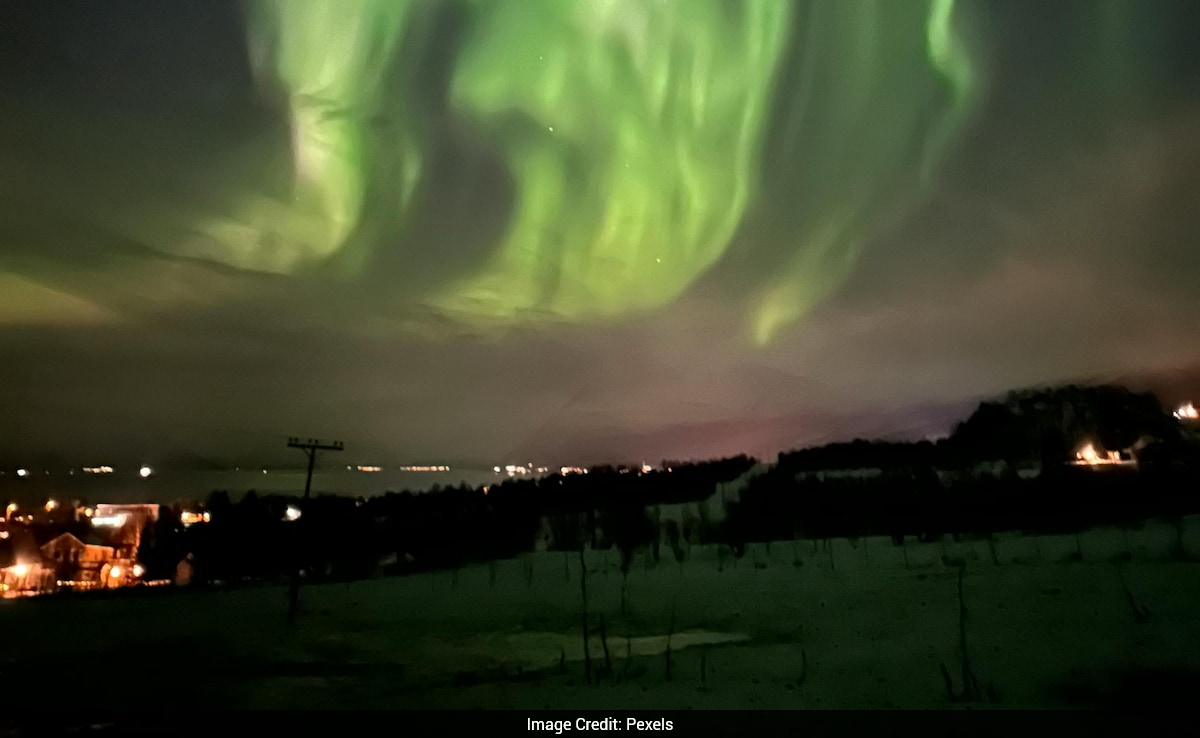
Skywatchers hoping to see the northern lights may have a special opportunity this month. Experts say that a rare combination of the March equinox and the peak of the Sun's solar activity cycle could increase the chances of witnessing the spectacular phenomenon, reported Newsweek.
This year, the vernal equinox, also known as the spring equinox, falls on March 20th. According to NASA, this event marks the beginning of astronomical spring on Earth. The space agency explains this phenomenon is caused by the tilt of the Earth's axis and its position in orbit around the Sun.
At the time of the spring equinox, the Earth's axis is at a different angle to the Sun. As a result, the nights gradually shorten until the summer solstice in June in the Northern Hemisphere. During this period, the likelihood of seeing the Northern Lights increases for a few weeks before and after the equinox.
The Equinox Effect
Scientists have long studied the relationship between the equinox and aurora activity. Researchers Christopher Russell and Robert McPherron first noted the "equinox effect" in their 1973 study published in the Journal of Geophysical Research. They found that the likelihood of aurora activity approximately doubles during the March and September equinoxes.
He explained that this condition occurs when the southward-pointing magnetic field in the solar wind balances the Earth's northward-pointing magnetic field. This makes it easier for the solar wind to move along magnetic field lines and increases the likelihood of aurora formation.
How The Northern Lights Form
The Northern Lights are formed when electrons collide with the upper layers of Earth's atmosphere. According to the National Oceanic and Atmospheric Administration and its Space Weather Prediction Center, Earth's magnetic field guides these electrons in such a way that aurorae form in two oval regions around the planet's magnetic poles.
When space weather becomes more active, aurorae can extend far beyond the polar regions. During powerful space weather events, these lights can sometimes be seen as far south as the Americas, Europe, and parts of Asia.
Solar Maximum And Increasing Activity
This March equinox also occurs near the end of the current solar maximum phase. According to NASA, the solar cycle is a natural process of the Sun, in which the Sun goes through periods of increased and decreased activity approximately every 11 years. Solar maximum is considered the most active period of this cycle.
The agency explains that during this phase, the Sun can emit powerful bursts of light, energy, and solar radiation. These events create "space weather" conditions. When the Sun is more active, such events occur more frequently and the likelihood of auroras increases, as seen during a powerful solar storm in May 2024.
Best Time To View
Scientists believe that current conditions may offer excellent opportunities for auroras in the coming years. According to the Space Weather Prediction Center, the next solar cycle, called Solar Cycle 26, is expected to begin between January 2029 and December 2032. Therefore, conditions around the March equinox could provide better opportunities for viewing the Northern Lights until the mid-2030s.
According to NASA, March and September are statistically the most favorable months for viewing aurorae. The best time to view them is usually around midnight, although when solar activity is high, they can be visible any time between sunset and sunrise.
The National Oceanic and Atmospheric Administration states that the Northern Lights typically form at altitudes of about 50 to 310 miles above the Earth's surface. If the aurora is very bright and conditions are favorable, they can be seen from as far as 620 miles away.
Track Latest News Live on NDTV.com and get news updates from India and around the world

