






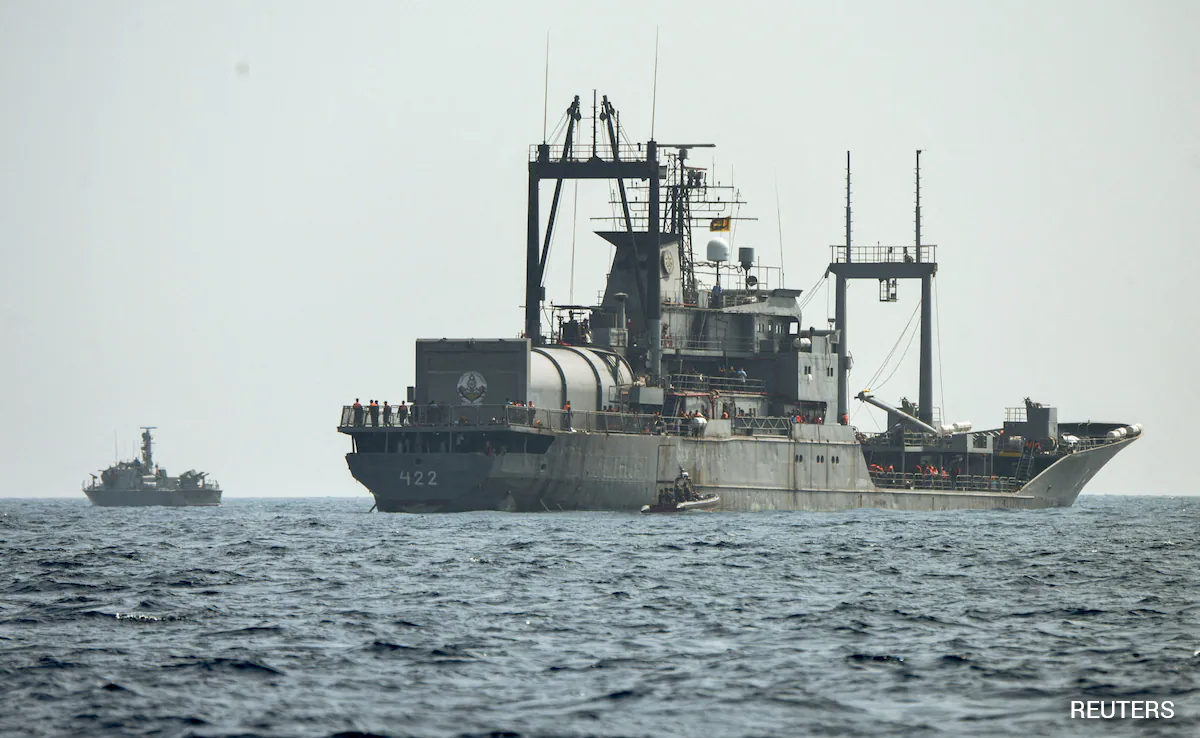
The reported sinking of an Iranian frigate by a United States submarine off the coast of Sri Lanka - and the tragic loss of Iranian sailors - has triggered intense debate across social media and sections of the traditional press. The subsequent situation involving other Iranian naval vessels and sailors stranded in India and Sri Lanka has further amplified commentary and speculation.
Much of this discussion, however, resembles Shakespeare's Much Ado About Nothing, where perception and reality differ sharply. The real story is that India and Sri Lanka appear to have responded to an unprecedented situation with a degree of strategic realism that will increasingly be required in a far more turbulent international order.
The loss of life is unquestionably tragic, and the humanitarian dimension of the situation must remain paramount. Yet from a strategic perspective, both governments have handled a delicate and complex challenge with a notable degree of restraint and prudence.
Some critics argue that India, as the region's principal security provider, should have taken a more assertive stance in response to the United States expanding the operational footprint of its conflict with Iran into the wider Indian Ocean. Others, guided by the long-standing but increasingly unrealistic notion of the Indian Ocean as a "zone of peace", insist that conflicts of this nature should not spill into these waters at all.
Such arguments overlook the strategic realities that have long shaped the region. The Indian Ocean has never been a geopolitical vacuum. It has historically hosted the presence and interests of multiple major powers. The United States, for example, has maintained a major military facility at Diego Garcia for more than half a century. Meanwhile, Djibouti today hosts military bases used by several countries, including the United States, China, Japan, France, Italy, Germany and Spain.
In this context, the expectation that the Indian Ocean can somehow remain insulated from wider geopolitical tensions is increasingly difficult to sustain.
India's External Affairs Minister has pointed to precisely this reality. The Indian Ocean is a complex strategic theatre shaped by the interests and capabilities of multiple actors. India, as the largest resident power, will inevitably play a central role in shaping its future - but it must do so within a realistic framework rather than an idealised one.
This episode also highlights the difficult realities that accompany India's frequently stated role as a "net security provider" in the region. Leadership in such a complex maritime space does not always involve dramatic gestures or public confrontation. More often, it requires quiet diplomacy, careful crisis management and the ability to balance competing interests among major powers. In such situations, restraint can sometimes demonstrate strength more effectively than overt displays of power.
Many foreign policy commentators appear reluctant to acknowledge a deeper shift now underway in global politics. The post-Second World War international order is under strain and in many respects already changing. The assumption that the world would remain governed by predictable rules and institutions is giving way to a more fluid and competitive international environment.
The emerging global landscape will likely be untidy, contested and at times dangerous - in many ways resembling the geopolitical rivalries of the nineteenth century's The Great Game rather than the relatively orderly international system that emerged after 1945.
Long before this moment, the classical realist scholar Hans Morgenthau observed that the central concept guiding international politics is "interest defined in terms of power." That insight is once again becoming evident in the behaviour of states across the world.
In responding to the present situation, both India and Sri Lanka appear to have demonstrated precisely this kind of realism - balancing humanitarian considerations with strategic prudence while avoiding unnecessary escalation.
As global tensions intensify and geopolitical competition spreads across maritime spaces, such realism will become increasingly necessary. The real challenge for countries in the Indian Ocean region will not be to wish away these realities, but to navigate them wisely.
India and Sri Lanka have taken a step in that direction. The hope must be that they, together with other regional actors, will continue to help steer the Indian Ocean through what promises to be an increasingly complex geopolitical era.
(Milinda Moragoda is a former Sri Lankan cabinet minister, diplomat and founder of the Pathfinder Foundation, a strategic affairs think tank)
Disclaimer: These are the personal opinions of the author

