





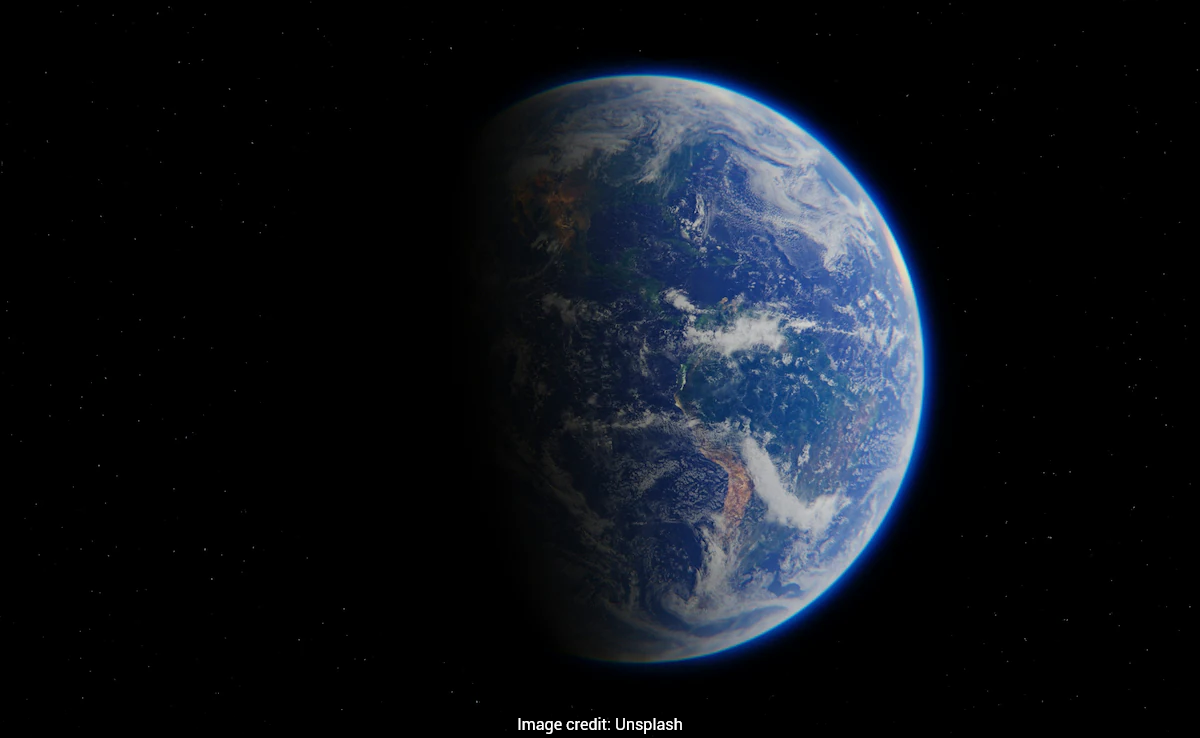
The Indian Space Research Organisation (ISRO) used the first homegrown cosmic dust detector, the Dust EXperiment (DEX), to confirm that a cosmic dust particle hits Earth's atmosphere approximately every thousand seconds (around 16 minutes).
While explaining the Interplanetary Dust Particles (IDPs), ISRO said that they are "microscopic shrapnel" from comets and asteroids that form our atmosphere's mysterious "meteor layer", and show up as "shooting star" at night.
"The 140 degrees wide-view detector successfully logged signals of orbital debris' (dust) impacts during 01 January to 09 February 2024, confirming the instrument's capability to identify and measure such events," ISRO said.
"Skimming Earth's atmosphere on a 9.5o inclination, the detector registered several hits: a cosmic invader striking every thousand seconds."
Also read | Is Interstellar Comet 3I/ATLAS Alien Tech? Astronomers Finally Answer
DEX, which is a 3-kg instrument, was launched into space on January 1, 2024, onboard the XPoSat mission. And the detection of cosmic dust was reported by scientists during the experimental tests performed in 2024.
As per ISRO, the instrument is tuned to "hear" impacts, which is capable of capturing vital data that redefines understanding of the universe. It also charts the path for safe human deep-space missions, ISRO wrote.
Also read | Watch: Snow Causes Flight Cancellations At Schiphol Airport, Staff Member Makes 'Snowman'
The findings are significant as understanding cosmic dust particles helps protect satellites and spacecraft from high-speed micro-impacts.
Data on cosmic dust particles will also aid in planning and executing India's first manned space mission - Gaganyaan mission.
DEX-like instruments are crucial in planetary exploration as they can help study the atmospheres of Venus, Mars and other celestial bodies.
Track Latest News Live on NDTV.com and get news updates from India and around the world

