





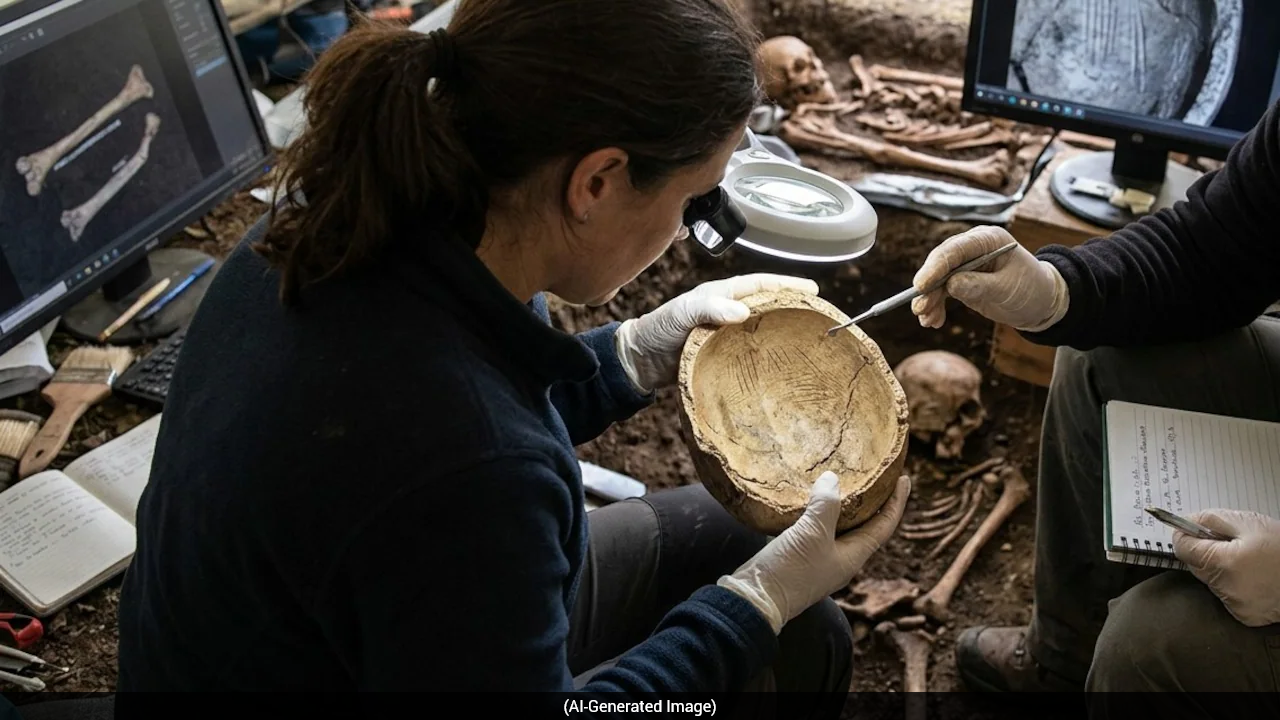
A woman who lived in Iron Age Scotland around 2,000 years ago may have had her brain deliberately removed shortly after death as part of a previously unknown burial ritual, according to a new study published in the journal Antiquity. The research was carried out by archaeologists and scientists from the United Kingdom and the United States, who examined the well-preserved remains of two individuals discovered at Loch Borralie in Sutherland, in north-west Scotland. The burial contained the remains of an adult woman, believed to have been over 30 years old, and a younger male relative.
Researchers found a series of straight, parallel cut marks on the inside of the woman's skull. According to the study, these marks were most likely made by a sharp tool used to deliberately remove the brain soon after death. The team believes this is the first clear evidence of such a practice in Iron Age Britain.
The study also revealed unusual modifications to several long bones. Parts of the arm and leg bones had been carefully shaped into sharp points, suggesting they may have been used as tools before being returned to the grave. Researchers believe these alterations were carried out as part of a funerary tradition rather than an act of violence.
To learn more about the individuals, the team combined skeletal analysis with isotope testing and ancient DNA research. The results showed that the woman and the boy were closely related, most likely maternal second cousins.
Experts say human remains from Iron Age Britain rarely survive, making the discovery particularly valuable. The unique environmental conditions in north-west Scotland helped preserve the bones, allowing researchers to study burial customs in unusual detail.
Dr Laura Castells Navarro of the University of York said the findings provide evidence of a funerary practice that was previously unknown. She noted that Iron Age communities often treated their dead with great care, and the bone modifications appear to fit within that tradition.
The researchers stress that the exact reasons for removing the brain remain unclear. However, the discovery offers a rare glimpse into the complex and sometimes surprising burial rituals practised by Iron Age people more than two millennia ago.
Track Latest News Live on NDTV.com and get news updates from India and around the world

