





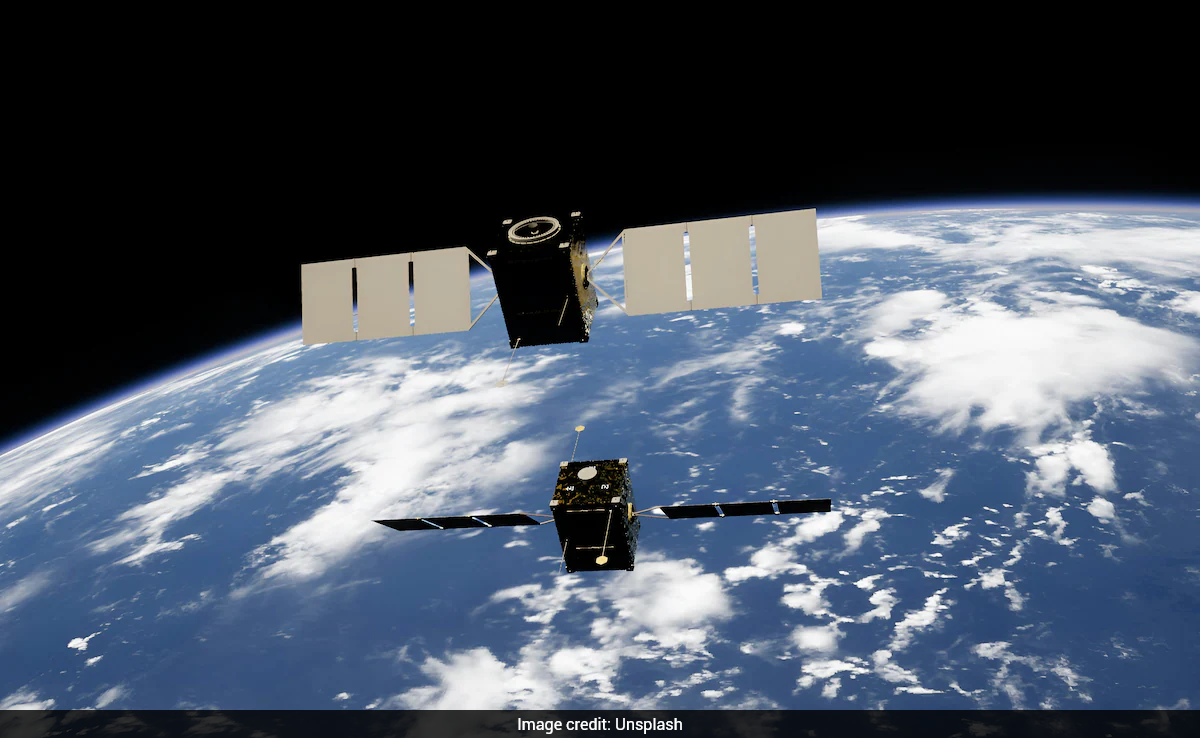
The growth of satellite launches has turned space into a "virtual crematorium" for satellites as thousands of them burn up in Earth's upper atmosphere every year. While writing for The Conversation, a group of astronomers and atmospheric scientists warned that this phenomenon is altering the upper atmosphere. Satellites, especially those in low Earth orbit, are designed to burn up in the atmosphere at the end of their life cycle, a process known as "demisability". However, the number of satellites being launched and de-orbited is causing concerns about the environmental impact, they noted, further adding that the burning process releases metals like aluminium, which form alumina particles.
Also read | From Blood Moon To Planetary Parade: 9 Must-Watch Sky Events Lighting Up March
The experts have said that the alumina particles can remain suspended in the atmosphere for years, contributing to ozone depletion. It also increases the risk of harmful UV radiation reaching Earth's surface.
The accumulation of these particles in the upper atmosphere can alter global climate patterns, although the exact effects remain poorly understood.
The increasing number of satellites and space debris raises the risk of collisions, potentially triggering a catastrophic chain reaction known as the Kessler Syndrome.
Also read | NASA Shares Stunning Image Of Cosmic "Brain" Surrounding Dying Star
The astronomers have also pointed to an old study, published in the journal Proceedings of the National Academy of Sciences, which analysed how the re-entering of satellites impacted the atmosphere by releasing metals like copper, lead and aluminium. "We are finding that the Space Age has released human-made materials in what we consider a pristine area of the atmosphere," said study co-author Dan Cziczo, a geophysicist at the University of Purdue. "And if something is changing in the stratosphere - this stable region of the atmosphere - that deserves a closer look."
The problem is likely to worsen with plans for millions of new satellites. Experts urge global regulation to manage satellite launches and disposal, emphasising the need for sustainable practices in space exploration.
"One solution being discussed is to dispose of dead satellites in orbits away from Earth. But this would require much more fuel per satellite to escape Earth's gravity, increasing both payload and the environmental impact of rocket launches. Some debris would still return to Earth," they wrote in the latest article.
Track Latest News Live on NDTV.com and get news updates from India and around the world

