





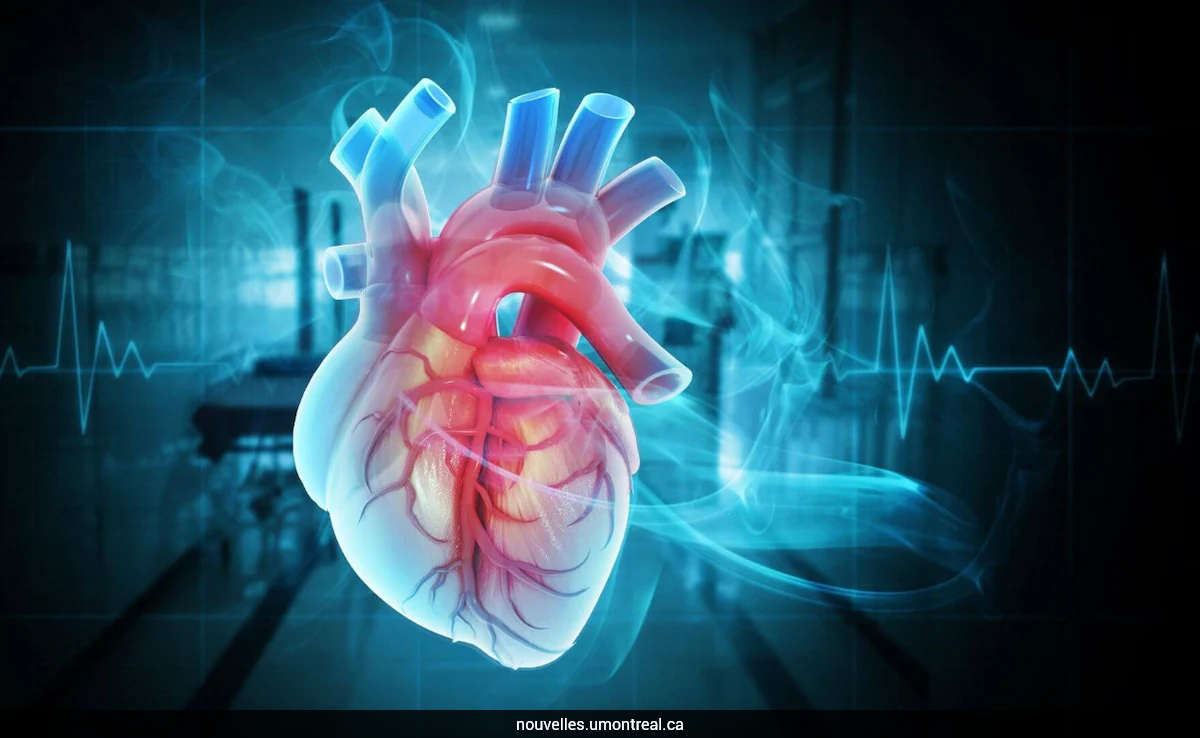
Scientists in Canada have developed a three-dimensional "heart-on-a-chip" that could mark a major step forward in tackling cardiovascular disease, the world's leading cause of death.
Researchers from the University of Montreal and other Canadian institutions created engineered heart tissue that beats on its own, mobilises calcium to trigger muscle activity and responds predictably to common medicines. Their findings were published in the journal Nano Micro Small.
-

-
 NDTV World Summit LIVE: Global Leaders To Discuss 'World Between Orders'
-
 World-Class Chefs, Food And Music: The Fun Side Of NDTV World Summit 2026
-
 AI, Consciousness And Dharma: Why Ancient Indian Wisdom Matters Now
-
 NDTV World Summit: What To Expect From PM Modi's Keynote Address
-
 NDTV World Summit 2026: What To Watch Out For | PM Modi, Jaishankar, AI And Global Power Shifts
-
 A World Between Orders: What To Expect At NDTV World Summit 2026
-
 Who Is Rajiv Mehta? Lilavati Hospital Trustee To Speak At NDTV World Summit 2026
-
 Alain Ebobisse, Africa50 CEO, To Attend NDTV World Summit 2026. All About Him
-
 Kriti Sanon At NDTV World Summit: A Look At Her Career And Business Ventures
-
 Ex-CIA Director To Decode 'War In Times Of AI' At NDTV World Summit
One of the biggest challenges in heart research is testing how human heart tissue reacts to drugs or disease without putting patients at risk. The new platform aims to solve this problem by offering detailed monitoring of heart function in the laboratory.
The key advance lies in a dual-sensing system that tracks both large-scale and cellular-level activity in real time. Earlier heart-on-a-chip models lacked this high-resolution capability. Small-scale sensing is particularly important because many cardiovascular conditions begin with problems in cardiomyocytes, the cells responsible for heart muscle contraction.
To build the model, scientists used cardiac muscle and connective tissue cells from rats. These were placed in a nutrient-rich gel and grown on small flexible silicon chips. The team embedded two types of sensors. Elastic pillars measured overall contractile strength by bending with each beat, while microscopic hydrogel droplets captured mechanical stress at the cellular level.
The researchers tested the system using norepinephrine, which increases heart activity, and blebbistatin, which reduces muscle contraction. The chip responded exactly as expected, demonstrating its potential for drug screening.
In future, the team hopes to use cells from patients with conditions such as dilated cardiomyopathy and arrhythmias. This could allow doctors to test treatments on a patient's own cells before prescribing medication, bringing personalised medicine closer to reality.
Track Latest News Live on NDTV.com and get news updates from India and around the world

