





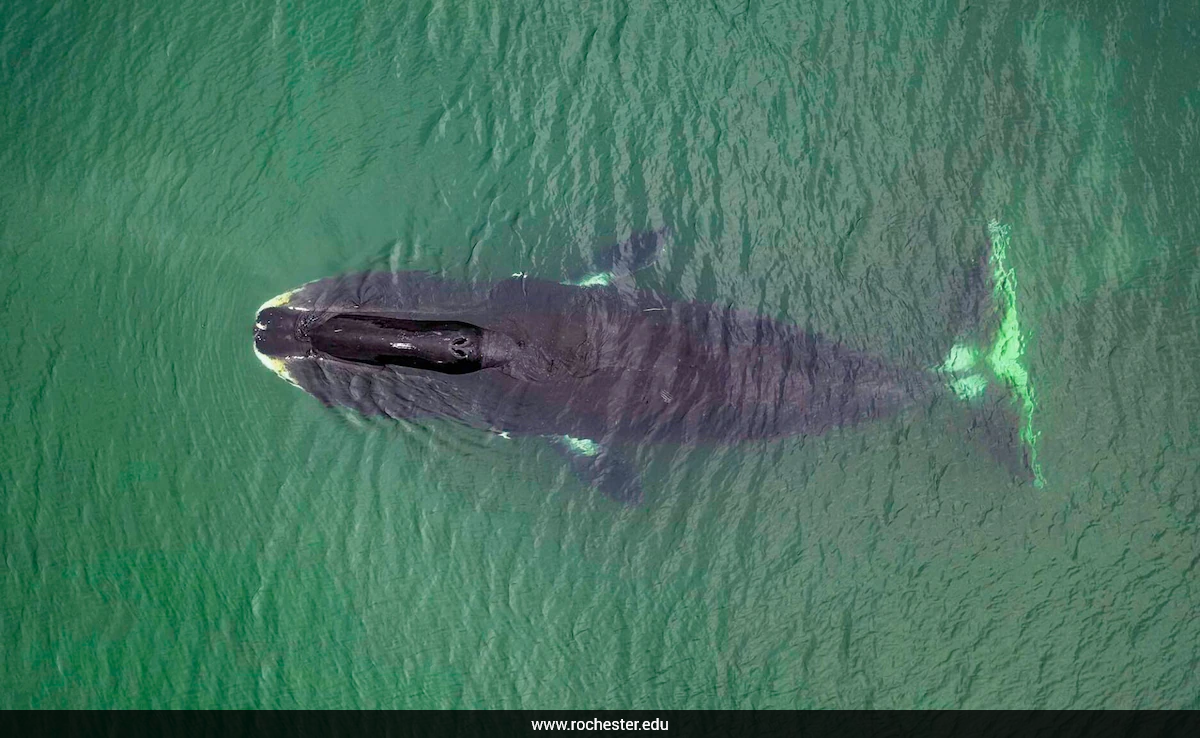
Scientists may be closing in on an important clue to extending human lifespan and it comes from one of the ocean's largest inhabitants. Bowhead whales, known for their extraordinary longevity, can live as long as 200 years while remaining unusually resistant to disease, making them a compelling focus for researchers studying the biology of aging. Now, researchers want to know if their biology could help humans do the same.
A new study published in the journal Nature, led by scientists at the University of Rochester, found that the answer may lie in a protein called CIRBP - which plays a key role in repairing double-strand breaks in DNA, a type of genetic damage that can cause disease and shorten lifespan.
What makes bowhead whales special is how much of this protein they carry. CIRBP stood out because it was present at 100-fold higher levels in bowhead whales compared to other mammals, as per a release by University of Rochester.
The results from lab experiments were striking. When scientists added bowhead whale CIRBP to human cell cultures and fruit fly cells, DNA repair improved in both cases - and in fruit flies, it even extended their lifespan.
Researchers also discovered that lower temperatures seem to enhance the CIRBP protein. This makes sense, as bowhead whales live in freezing Arctic waters where cold naturally boosts the protein's production.
Scientists are now considering multiple ways to increase CIRBP levels in humans, including lifestyle changes like cold showers, though they caution more research is needed.
The fact that a single DNA repair protein can extend lifespan in a model organism gives researchers renewed motivation to study how improving DNA repair could lead to healthier aging in humans, as per a release by University of Sheffield. While a 200-year human lifespan is still far from reality, this discovery opens a promising new door in aging science.
Track Latest News Live on NDTV.com and get news updates from India and around the world

