






Some words, once spoken in Punjab, never fully retire. They wait: Dharam Yudh Morcha. Guru Dokhi. Panth Virodhi.
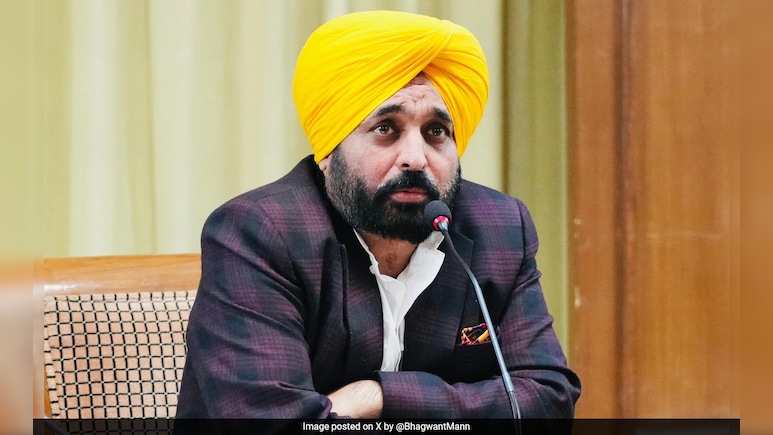
These are not ordinary political expressions. They carry religious sanction, institutional memory and the weight of decades Punjab has spent trying to put behind it. When such words resurface in the confrontation now playing out between Chief Minister Bhagwant Mann, Sri Akal Takht Sahib and the Shiromani Akali Dal, the right question is not who wins this round. It is whether Punjab is watching a dispute over one contested video or the opening moves of a wider Panthic mobilisation ahead of the 2027 Assembly election.
The clearest signal has come from Sukhbir Singh Badal, who has given the AAP government until July 19 to remove Mann, failing which he has threatened to launch a Dharam Yudh Morcha to force him out.
Punjab has witnessed many Panthic morchas, but the title Dharam Yudh Morcha refers primarily to the movement formally launched by the Akali Dal on August 4, 1982.
The phrase describes an organised struggle for what is considered a righteous cause, rather than literally meaning a "holy war". Its most consequential political use was during the Akali Dal movement under Harchand Singh Longowal, built around the Anandpur Sahib Resolution and other Punjab-related demands.
The politics of 2026 shares little with that of 1982. But the phrase does not carry politics alone; it carries memory. Once invoked, it can turn a political disagreement into a moral confrontation that is much harder to resolve or step back from.
Beyond Mann: Why June 29 could be a turning point
The confrontation enters a sensitive phase on June 29. The Five Singh Sahibans have summoned Sikh ministers and MLAs from different parties to appear before Sri Akal Takht Sahib. Non-Sikh ministers have been asked for written explanations instead.
The summons relates to the Jagat Jot Sri Guru Granth Sahib Satkar (Amendment) Act, 2026, passed allegedly without proper consultation with Panthic institutions. Bhagwant Mann has not been included because Sri Akal Takht Sahib has already issued a separate and more serious directive against him.
The stakes go well beyond one appearance. For AAP's Sikh ministers and MLAs, this creates a real conflict: between staying loyal to their party, which passed the law, and respecting the Akal Takht, which many see as the Sikh community's highest authority.
If they appear, it may look like they accept religious scrutiny over their legislative work. If they refuse, they risk being seen as disrespecting the Takht. Defending the law in person could also raise hard questions about where religious authority ends and constitutional authority begins.
It may also expose cracks within AAP, if Sikh legislators respond differently from their party's official line and making Mann look more isolated.
June 29, in short, will show whether this stays a fight about one Chief Minister, or grows into a bigger clash between the Punjab government and Panthic authority.
From video to institution
What should concern close observers is how quickly the argument has moved beyond the viral video itself and become a contest over institutional credibility.
Whose forensic process deserves public trust? Were the laboratories, methodology and complete findings made sufficiently transparent? Can an elected government question a religious finding without being seen as challenging the authority of Sri Akal Takht Sahib itself?
The dangerous catch is that a government that remains silent may appear to concede the charge and a government that pushes back risks being portrayed as hostile to the Takht -- regardless of what it actually says.
The Akali Dal's opening and its contradiction
For the Akali Dal, this controversy is an opening to recover Panthic ground it has been losing for a decade. Repeated electoral defeats, the unresolved 2015 sacrilege incidents, the police firing at Kotkapura and Behbal Kalan, and persistent allegations that Sikh institutions were politically managed during the Badal years have all cost the party its claim to be the Panth's natural custodian.
Could a morcha framed as a defence of Sri Akal Takht Sahib help the Akali Dal shift the debate from governance failures to Sikh identity, an arena where it still believes it has a natural advantage?
But the strategy sits on a contradiction the party cannot easily resolve. It is tactics wearing religious language, and Punjab's voters can see through that.
AAP's narrower trap
AAP is defending Mann. It says the Badals are using religion to bring their party back to life. This will appeal to voters who already distrust the Akali Dal.
But AAP must be careful, opine experts. It is fair to ask why the forensic report is incomplete, or why only short, edited clips of Mann's January meeting were made public. It is not fair to attack the Akal Takht itself, and AAP has not always kept these two things separate, express experts on Sikh affairs further.
Disliking the Badals is not the same as turning against the Takht. Many Sikhs who don't support the Akali Dal still deeply respect the Takht. Careless words could cost AAP their support, for no real reason.
The transparency Punjab actually needs
Both sides have a transparency problem, and neither has fully owned it. The partial release of Mann's January proceedings deepened suspicion rather than settling it - if such proceedings are normally confidential, the departure needs an explanation; if disclosure served the public interest, a curated excerpt undermines that very justification.
The same standard has to apply to the government: if it holds forensic material supporting Mann's denial, it should be placed in the open, to the extent law and privacy allow. Two press conferences making opposite claims will never substitute for an independently verifiable record.
Counting toward 2027
Take away the religious words, and an election plan appears underneath. The Akali Dal calls itself the Panth's protector. AAP says it is the victim of a political and religious attack. Congress wants to respect the Akal Takht but avoid old memories it would rather not revisit. The BJP looks for ways to attack Mann without seeming to misuse a Sikh religious matter.
In truth, every major party has jumped in, and most attacks are aimed at Mann. Smaller Panthic groups may gain the most, by saying both the Akali Dal and AAP have weakened Sikh institutions in their own ways. June 29 may show which Sikh leaders follow their party, which follow the Takht, and which try to do both.
Meanwhile, Punjab's real problems - farming, jobs, drugs, debt, education, health, and law and order - don't pause for a morcha. The Akali Dal must explain its real goal. AAP must answer with proof, not anger. The clergy must keep June 29 fair and free of bias.
(Ravinder Singh Robin is a broadcast journalist with over two decades of experience in covering Punjab, Sikh affairs and border issues)
Disclaimer: These are the personal opinions of the author

